

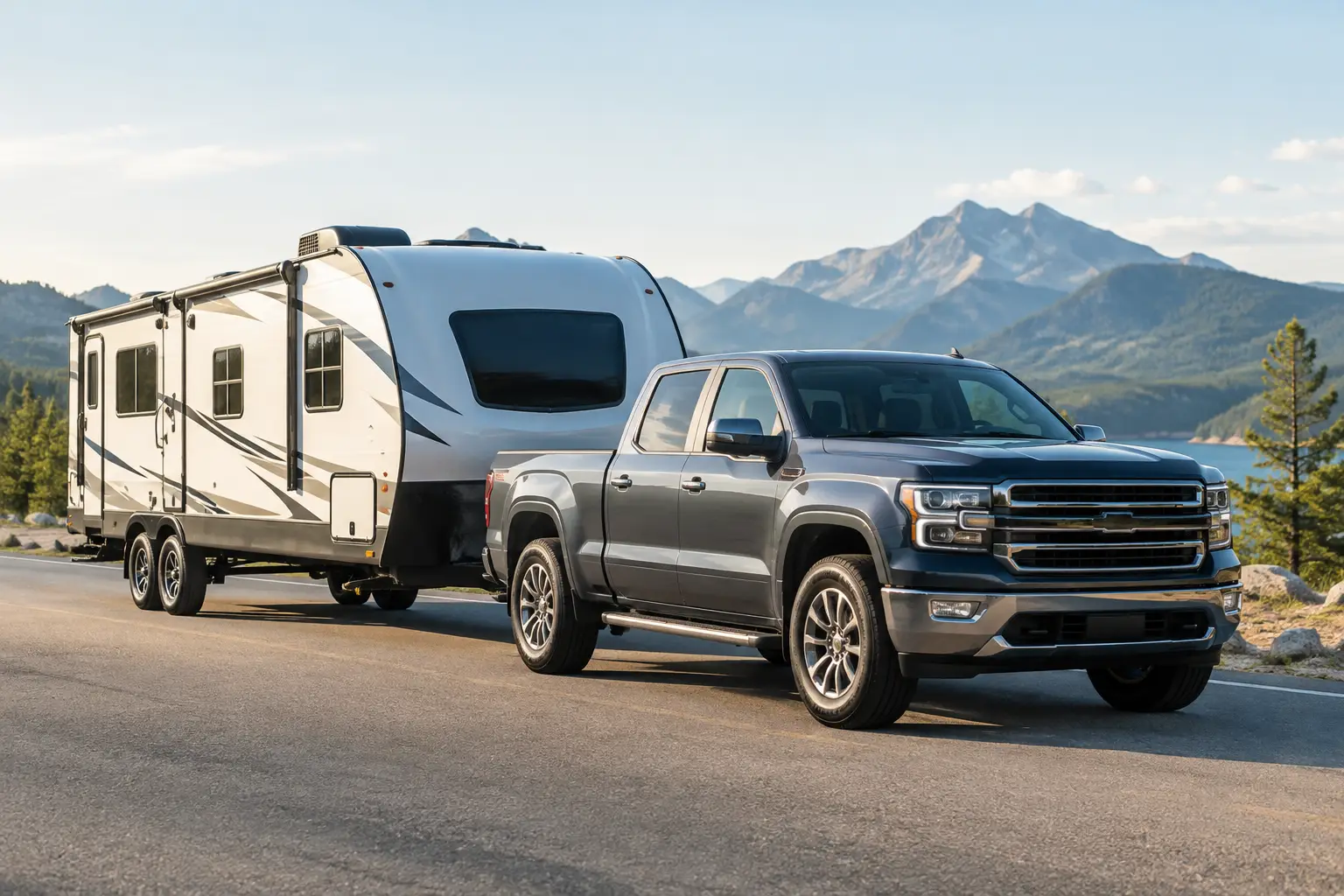
A tow capacity comparison is not about finding the biggest number in a truck brochure. It is about determining whether the truck, hitch, passengers, cargo, and RV can work together within their actual ratings on the roads you plan to travel. A setup that looks acceptable on paper can become stressful quickly when the trailer is loaded, the grades get steep, or crosswinds pick up.
For many RV owners, this is the point where professional transport makes more sense than buying, maintaining, and operating a heavy-duty tow vehicle. That is especially true for long-distance moves, dealer pickups, service appointments, seasonal site moves, and routes involving mountain grades or ferry schedules.
Tow Capacity Comparison Starts With Loaded Weight
The advertised maximum towing rating is a starting point, not the final answer. That rating is often calculated for a specific truck configuration with limited passenger and cargo weight. Change the cab, bed length, engine, axle ratio, drivetrain, tires, or equipment package, and the rating can change.
Start with the RV’s GVWR – the maximum it is allowed to weigh when fully loaded. Do not use the dry weight as your working number. Dry weight may not include batteries, propane, water, dealer-installed equipment, food, clothing, tools, outdoor furniture, or personal gear. A travel trailer that appears light at the dealership can gain a substantial amount of weight before its first trip.
For a realistic comparison, use the RV’s loaded scale weight if you have it. If you do not, use its GVWR for planning. This gives you a safer answer and avoids building a towing decision around an empty trailer that will never travel empty.
Travel Trailers and Fifth Wheels Load the Truck Differently
A conventional travel trailer generally places about 10% to 15% of its loaded weight on the hitch. A 7,000-pound loaded trailer may therefore place 700 to 1,050 pounds directly on the truck before passengers or cargo are considered.
A fifth wheel typically carries a higher percentage of its weight in the truck bed. Pin weight commonly falls around 15% to 25% of loaded trailer weight, depending on the RV’s design and how it is packed. A 12,000-pound fifth wheel can put 1,800 to 3,000 pounds on the truck. That is why a truck with an impressive trailer towing rating can still run out of payload well before it reaches its advertised maximum.
Compare Payload Before Maximum Tow Rating
Payload is often the number that decides whether a setup works. It is the amount of weight the truck can carry, and it includes far more than people sitting in the cab.
Your payload calculation needs to account for the hitch or pin weight, hitch equipment, driver, passengers, pets, tools, fuel accessories, bed cargo, and anything added to the truck. For fifth wheels, the hitch itself can weigh well over 100 pounds. That weight counts too.
The payload figure on the driver’s door certification label is more useful than a general online specification. It applies to that specific truck as built. Two trucks with the same model name may have very different payload ratings based on their options and configuration.
A weight-distribution hitch can improve handling and move some weight back toward the trailer and front axle, but it does not increase the truck’s payload, axle ratings, tire ratings, or towing rating. It is a handling tool, not a way around a weight limit.
Check the Limits That Can End the Discussion
A safe setup must stay within every applicable rating, not just one. The lowest rating is the one that controls. In practical terms, compare the loaded RV and truck against these limits:
- Truck payload rating
- Front and rear axle weight ratings
- Tire load ratings and inflation requirements
- Hitch receiver or fifth-wheel hitch rating
- Truck maximum trailer rating
- Gross combined weight rating, where provided
A public scale is the best way to confirm the result. Weigh the truck with passengers and normal cargo, then weigh the combination loaded as it travels. The numbers can reveal a rear axle or payload issue that a simple brochure comparison misses.
Why Road Conditions Change the Tow Capacity Comparison
A truck may be within its ratings and still be a poor match for a particular route or driver. Towing capacity is not only a weight question. It is also about control, braking, cooling, visibility, stopping distance, and the driver’s comfort level.
A short, relatively flat move with a lightly loaded trailer demands less than a route with long grades, tight fuel stations, city traffic, rough access roads, or strong winds. Mountain travel can expose weak points in a marginal combination: high engine temperatures, frequent downshifting, brake fade, trailer sway, and slow acceleration when joining traffic.
Western Canadian routes add their own practical factors. A move through British Columbia can involve sustained grades, changing weather, narrow campground access, and ferry coordination for Vancouver Island. Alberta routes may mean long distances, open-road winds, and tight delivery windows. The truck and RV do not need to exceed a rating for the trip to become more work than it is worth.
Braking deserves special attention. Most towable RVs use electric brakes, and the brake controller must be correctly installed and adjusted. The trailer brakes help control the trailer, but they do not eliminate the need for adequate truck brakes, tires, suspension, and safety margin. If the truck feels like it is being pushed, the combination is not comfortable or properly matched for the conditions.
A Practical Way to Compare Your Setup
Begin with the RV’s GVWR or actual loaded weight. Estimate the expected tongue or pin weight based on the trailer type, then add all truck occupants, cargo, hitch equipment, and accessories. Compare that total with the payload sticker on the exact truck you plan to use.
Next, confirm the truck’s trailer towing rating, combined weight rating, hitch rating, axle ratings, and tire limits. Read the owner’s manual and towing guide for the exact configuration, not a similar trim level. If any number is close to its limit, do not assume a few hundred pounds will not matter. A safety margin is valuable because real loads change from trip to trip.
Finally, consider the move itself. Ask how far the RV is traveling, what terrain is involved, whether you are comfortable backing and maneuvering, and whether the destination has difficult access. A truck that is technically capable may still not be the practical choice for a first-time owner, a one-way relocation, or a seasonal move.
When Professional RV Transport Is the Better Fit
Buying a properly equipped truck for occasional hauling is expensive. There is the purchase price, fuel, insurance, maintenance, hitch equipment, parking, and the time required to become comfortable with a large RV behind you. For a one-time delivery or a few scheduled moves each year, professional transport can be the more efficient option.
This is particularly useful when buying a travel trailer or fifth wheel from a dealer, moving an RV to a seasonal lot, taking it to a service center, or relocating between provinces. You can travel in your own car or SUV, arrive without towing fatigue, and avoid trying to manage a large rig through unfamiliar fuel stops, campgrounds, or ferry terminals.
GoMax RV focuses on moving travel trailers and fifth wheels up to 44 feet, with licensed, insured transport for owners who would rather leave the hauling to an experienced operator. Before requesting a quote, have the RV’s make, model, length, approximate loaded weight, pickup and delivery locations, dates, and any site-access details ready. Those details help identify the right equipment and plan the move properly.
The right towing decision is not always the one that gets closest to a maximum rating. It is the one that gives you enough capacity, control, and margin for the trip ahead – or lets you hand off the hauling so you can meet your RV where the relaxing part begins.
Comments are closed