

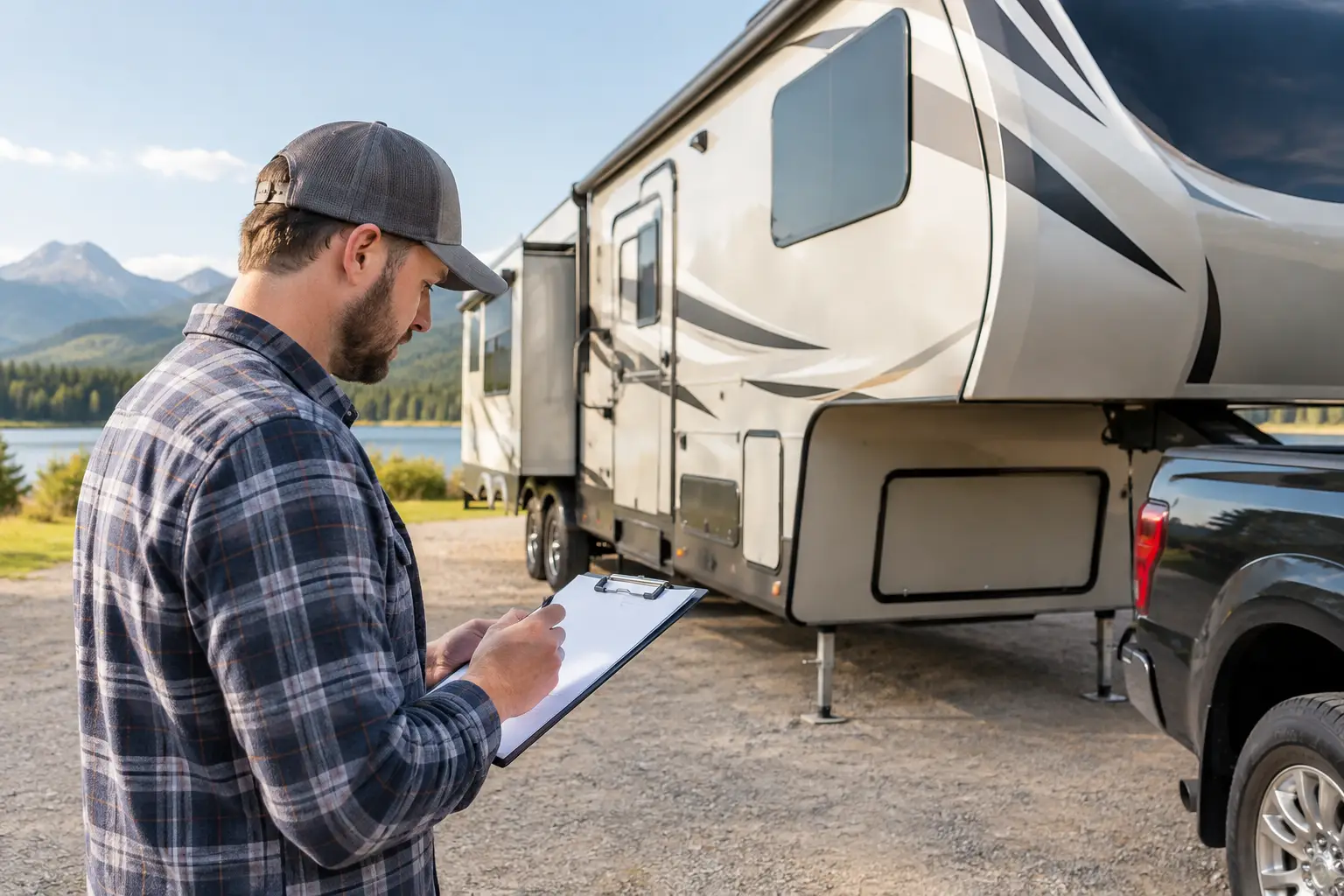
A fifth wheel can be ready for a weekend at the campground and still be unprepared for transport. Loose interior items, an inaccessible site, a flat battery, or a missing ownership document can delay pickup and create unnecessary risk. The best checklist before moving a fifth wheel is not about overcomplicating the job. It is about making sure the trailer, paperwork, route, and destination are ready before the transport driver arrives.
Whether you are taking delivery from a dealer, relocating to a seasonal site, sending your RV for service, or moving between provinces, a little preparation protects your investment and keeps the move on schedule.
Start With the RV’s Legal and Transport Details
Before anyone hooks up to the fifth wheel, confirm the information needed to move it legally and accurately. Have the registration, proof of insurance, and any documents required by your insurer or storage facility available. If the unit is being picked up from a dealer, service center, or campground, confirm who is authorized to release it.
Write down the year, make, model, overall length, and any known modifications. The listed length matters because it affects route planning, ferry reservations, site access, and turnaround space. Slide-out toppers, rear racks, ladders, solar equipment, and large air-conditioning units can affect clearance as well.
If the fifth wheel is new to you, do not assume the dealer has completed every handoff detail. Confirm that the unit has its keys, registration documents, landing-gear remote or controls, and any specialty hitch components required for transport.
Inspect the Fifth Wheel Before Moving Day
A quick walk-around catches issues that are much easier to solve while the RV is still parked. Take dated photos of all sides of the unit, the roofline as visible from the ground, tires, wheels, pin box, and existing scratches or damage. This creates a clear pre-move record and helps everyone start with the same expectations.
Pay close attention to the running gear. Tires should be inflated to the manufacturer-recommended pressure, without obvious cracking, bulges, or severe weather checking. Wheel lug nuts should be properly secured. If a tire is old, low, or damaged, address it before transport rather than hoping it holds up for the route.
Check exterior lights, including brake lights, turn signals, clearance lights, and license-plate illumination. A failed connector or corroded plug is a small repair, but it can stop a move until it is corrected. Make sure the breakaway cable and emergency brake system are present and in working condition.
The battery deserves the same attention. Landing gear needs enough power to raise and lower the front of the unit safely. If the battery is weak, have it charged or arrange another approved power source before pickup.
Secure the Interior Like the Road Is Rough
Even a careful move includes turns, grades, pavement seams, and uneven access roads. The inside of the RV needs to be secured for travel, not just tidied up.
Close and latch every cabinet, drawer, pantry door, and refrigerator door. Remove loose counter appliances, glassware, décor, folding chairs, and anything that could shift or fall. Secure televisions, close interior doors, and make sure shower doors are latched. Lower and lock any tables or movable furniture according to the manufacturer’s instructions.
Empty or secure heavy items in overhead compartments. Weight stored high in the unit can move around on rough roads, damage cabinetry, and affect how the trailer handles. If you are unsure whether a particular item can remain inside, remove it. A lighter, properly balanced fifth wheel is easier to transport safely.
Retract all slide-outs completely and confirm they are locked for travel. Do the same with awnings, entry steps, antennas, vents, and exterior television mounts. Do not rely on a quick visual check from one side. Walk around the entire unit before handoff.
Handle Water, Propane, and Utilities Properly
Water adds significant weight, and full tanks can shift weight distribution during transit. In most cases, travel with fresh, gray, and black tanks empty. Drain hoses should be disconnected, cleaned, stored, and secured. If a tank cannot be emptied because of a specific situation, disclose that before the move so transport planning can account for the extra weight.
Turn off propane at the cylinders and make sure the cylinders are secured in their compartment. Follow the transport requirements that apply to your route, ferry crossing, and RV equipment. If you are traveling to or from Vancouver Island, ferry procedures can add timing and preparation requirements, so provide accurate information early.
Disconnect shore power, water lines, sewer connections, satellite cables, and any temporary accessories. Check that cords and hoses are packed away and that nothing remains under the unit or attached to the site pedestal.
Make Pickup Access Simple and Safe
Many delays happen before the fifth wheel even leaves the property. A transport setup needs enough room to approach, align with the pin box, connect, and pull out without tight obstructions.
Move personal items, bins, patio furniture, bicycles, and other equipment away from the RV. Clear the path of low branches, loose gravel hazards, snow buildup, mud, or parked vehicles. Let the driver know in advance about steep driveways, narrow gates, sharp turns, overhead wires, soft ground, or restricted-access hours.
If the fifth wheel is in a storage compound or seasonal park, confirm gate codes, escort requirements, office hours, and rules for large-rig movement. Some locations require advance notice or restrict departure times. Providing these details ahead of time saves the driver from arriving at a locked gate or an unusable access road.
Confirm the Route and the Destination
The route is not simply the fastest line on a map. Fifth wheels need consideration for bridge clearance, road restrictions, construction, mountain grades, fuel stops, ferry schedules, and weather. This is especially relevant on western Canadian routes, where conditions can change quickly with elevation and season.
Give the transport provider the exact pickup and delivery addresses, along with the best contact person at each end. Include site numbers, gate instructions, landmark details, and a phone number that will be answered on moving day. If navigation directions send large rigs down an unsuitable road, say so before the move begins.
At the destination, verify that there is adequate room to enter, turn, back in, and position the fifth wheel. Check for low tree limbs, soft grass, narrow pad access, and utility pedestals that could limit placement. If the unit is going to a service center, ask where arrivals should check in and whether the center needs the keys left in a specific location.
Plan the Handoff With Your Transport Provider
A professional transport move goes more smoothly when there are no assumptions. Share the unit’s dimensions, weight information if available, tire condition, battery status, pickup constraints, delivery constraints, and any mechanical concerns before scheduling. Be direct about a damaged landing gear leg, an inoperative light, a low-hanging branch, or a site that is difficult to enter. Those details help determine what equipment, timing, and route are appropriate.
Be present for the handoff when possible, or appoint a reliable person who can provide access and answer questions. Give the driver all keys, gate fobs, documents, and special operating instructions in one place. Confirm how you will receive updates and who will inspect the RV at delivery.
Do not leave personal valuables, medication, firearms, important documents, or irreplaceable belongings inside the fifth wheel. Transport preparation is also a good time to remove anything you would not want out of your sight.
A Final Moving-Day Check
Before the fifth wheel leaves, take one final walk-around. Confirm slides are in, awnings are stowed, doors and compartments are locked, utilities are disconnected, landing gear is functioning, and the travel path is clear. Make sure you have removed wheel chocks and blocks only when the unit is ready to be connected and moved.
A dependable move starts well before the hitch is connected. When the RV is prepared, access is clear, and destination details are confirmed, professional transport becomes what it should be: a straightforward way to get your fifth wheel where it needs to go without taking on the stress yourself.
Comments are closed