

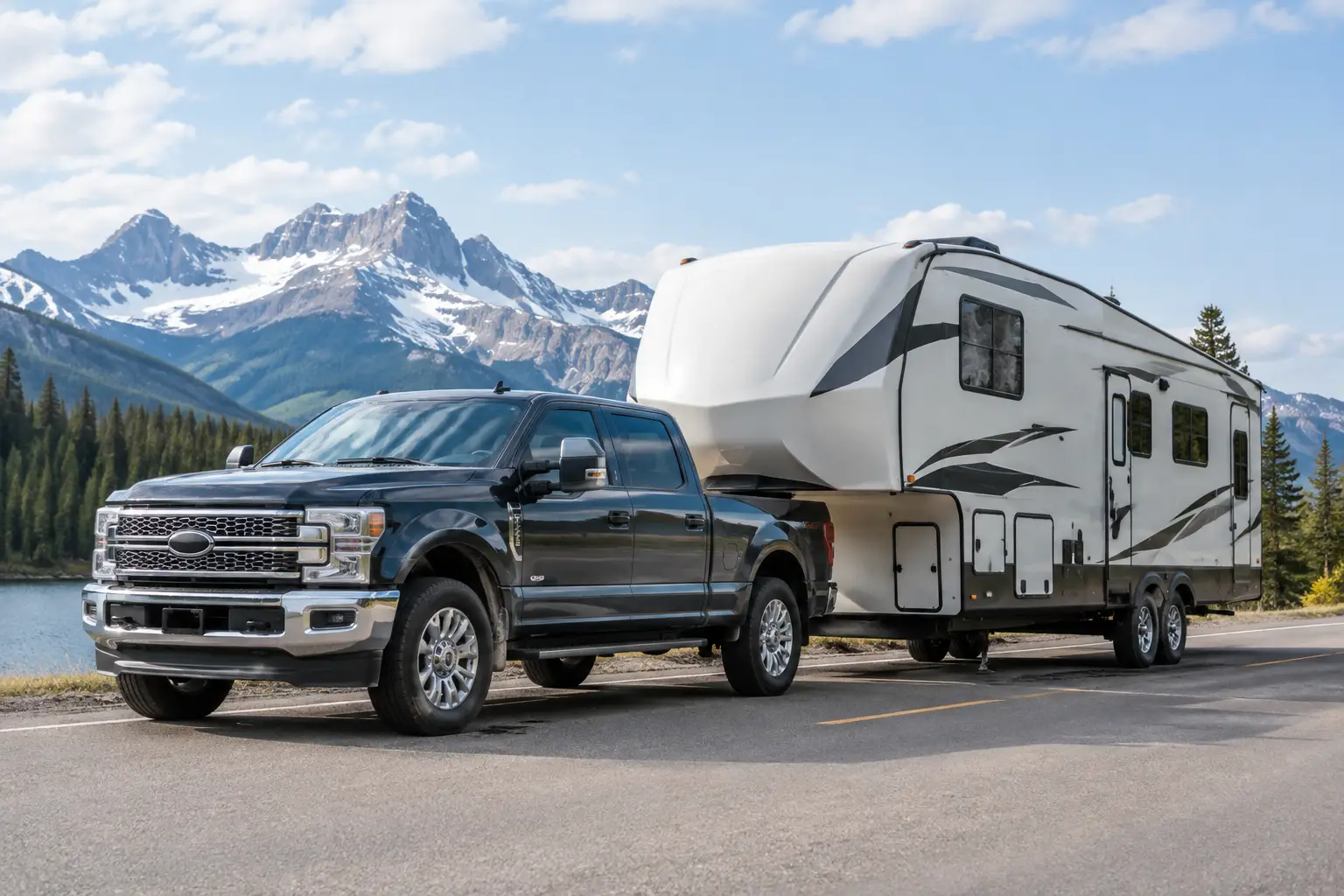
A fifth wheel can be ready for the road and still not be ready for transport. Its overall width, height, length, route, and destination can all affect the paperwork required before it moves. This guide to fifth wheel transport permits explains what owners should expect when arranging a professional RV move, especially when the trip crosses provincial lines or includes ferry travel.
The good news is that most owners do not need to become permit experts. A qualified transport provider should identify the applicable requirements, plan the route, and secure any approvals needed for the move. Your role is to provide accurate RV information early, so there are no surprises after the truck is scheduled.
When Does a Fifth Wheel Need a Transport Permit?
Permit requirements usually come into play when an RV exceeds standard legal dimensions or when a specific route has restrictions. Fifth wheels vary widely. A compact model may fit comfortably within standard limits, while a larger unit with slide-outs, a tall air conditioner, or a wide body may require special planning.
The most important measurements are the RV’s actual traveling width, overall height, total length when connected to the transport setup, and weight. Do not rely only on a brochure. Added accessories, roof equipment, replacement tires, and aftermarket modifications can change the real dimensions that matter on the road.
In many Canadian jurisdictions, a standard maximum width is around 2.6 meters, or 102 inches, though rules and exceptions vary by province. Height and length limits also vary, as do the rules for combinations of a pickup and fifth wheel. If the RV is outside standard limits, an oversize permit may be required. That permit can set conditions for travel times, approved highways, signage, flags, lighting, or escort arrangements.
A permit is not simply a formality. It is a route-specific operating approval designed to keep an oversize load away from low clearances, narrow roads, restricted bridges, congested urban areas, and unsuitable ferry connections.
Why the Route Matters as Much as the RV
A fifth wheel that can move legally on one highway may face restrictions on another. Construction zones, seasonal road bans, bridge limits, municipal streets, and mountain routes can change the plan. This is why an accurate pickup address and delivery address matter from the start.
For example, transporting a fifth wheel from a dealership to a rural seasonal site can require more than highway planning. The final few miles may include tight turns, low-hanging branches, steep gravel access, or a narrow entrance gate. Permit approval may cover the main route, but it does not make a difficult site easier to enter.
Ferry travel requires its own level of coordination. A large fifth wheel may need a specific reservation category, a particular sailing, or additional loading clearance. On Vancouver Island moves, booking the right ferry space is part of doing the job properly, not an afterthought once the RV is already on the road.
Who Handles Fifth Wheel Transport Permits?
When you hire a professional hauler, the transport provider generally handles permits that apply to the hauling operation. That includes reviewing dimensions, confirming provincial requirements, choosing a suitable route, and obtaining oversize approvals where needed.
The owner still has responsibilities. The RV should have current registration and ownership documents available if requested. Any information provided about its size, condition, and equipment needs to be accurate. If the unit has damaged tires, unsecured cargo, a non-functioning breakaway system, or slide-outs that do not fully retract, those issues should be addressed before transport day.
Insurance is another area where owners should ask direct questions. A professional provider should be properly licensed and insured for the type of RV being moved. Ask what coverage applies during transport, what documentation is available, and whether there are any limitations related to the RV’s declared value or condition.
Information Your Transport Provider Needs Before Quoting
A useful quote is based on the actual job, not just the distance between two cities. Sending complete details at the beginning helps the provider determine whether permits, special routing, or extra site planning are necessary.
Provide the year, make, model, and stated length of the fifth wheel. Include the overall height if known, whether it has slide-outs, and any equipment mounted on the roof or rear. Let the provider know the pickup and delivery locations, including whether either site has a steep driveway, limited turnaround room, a gated entrance, or soft ground.
It also helps to mention the reason for the move. A dealer pickup, service appointment, seasonal relocation, and cross-province move can each have different timing and access concerns. If your fifth wheel needs to arrive by a specific date, say so early. Permit processing, ferry space, and route conditions can affect scheduling.
A Practical Guide to Fifth Wheel Transport Permits and Timing
The right time to ask about permits is before you commit to a pickup date. Oversize approvals can be straightforward, but they are not always instant. Processing time may depend on the province, the dimensions involved, the route, and seasonal road conditions.
Spring and fall can be especially busy periods for RV transport. Owners are moving units to seasonal sites, bringing them home for winter storage, or arranging dealer deliveries. Road restrictions can also be more common during thaw periods, when certain routes limit heavy traffic to protect the road surface.
Weather may affect a permitted move as well. High winds, heavy snow, reduced visibility, and poor road conditions can make a large fifth wheel unsafe to transport even when paperwork is in order. A dependable operator will prioritize safe conditions over forcing an unrealistic schedule.
That can be frustrating when you are trying to meet a campsite reservation or service appointment. It is still the right call. Delaying a move is usually far less costly than dealing with damage, route violations, or an unsafe roadside situation.
Common Permit Mistakes Owners Can Avoid
The biggest mistake is assuming every fifth wheel is standard size because it was sold as an RV. Some models are close to legal limits before accessories are considered. Another common issue is providing a delivery address without explaining the site conditions. A map pin does not show a low tree canopy, a sharp entrance, or a narrow lane between parked units.
Owners also sometimes load the RV with loose belongings before transport. Personal items should be secured, heavy items should be placed thoughtfully, and exterior compartments must be latched. A fifth wheel can experience normal road movement during a long haul, and unsecured contents can cause preventable damage inside the unit.
Finally, do not leave insurance questions until the day of pickup. Confirm the carrier’s coverage and understand your own RV policy before the trip begins. Clear expectations are part of a professional transport plan.
What Professional Planning Looks Like
A properly planned fifth wheel move starts with a review of the unit and both locations. The provider confirms whether the RV is within normal dimensions, identifies permit needs, and plans a route that works for the load. If a ferry is involved, the crossing is coordinated as part of the schedule.
The transport setup matters too. Fifth wheels need appropriate hitch equipment, sufficient pulling capacity, working trailer brakes, and a driver who understands how long RVs respond on grades, curves, fuel stops, and tight approaches. This is specialized work, particularly on Western Canadian routes where weather and terrain can change quickly.
GoMax RV applies that practical planning to fifth wheels under 44 feet, including dealer pickups, seasonal moves, service deliveries, and ferry-inclusive Island transport. The goal is simple: move the RV safely while keeping the owner out of the permit, route, and logistics workload.
Before Your Fifth Wheel Is Picked Up
Prepare the unit as though it will travel a long distance, even if the destination is nearby. Retract and secure all slide-outs, close vents and windows, remove loose exterior items, lock storage compartments, and make sure the landing gear and breakaway components are in proper working order. Photograph the RV before pickup, including existing cosmetic marks, for your records.
Have keys, registration details, gate codes, site contacts, and delivery instructions ready. If the destination has a campground manager, storage attendant, or service advisor, make sure they know the expected arrival window and can provide access.
Permit requirements are one part of a safe fifth wheel move, but they are closely connected to every other detail. Accurate RV information, realistic timing, a workable route, and an experienced transport provider turn a complicated relocation into a straightforward handoff. When you request a quote, give the full picture of the RV and both sites so the move can be planned correctly from the first mile.
Comments are closed