

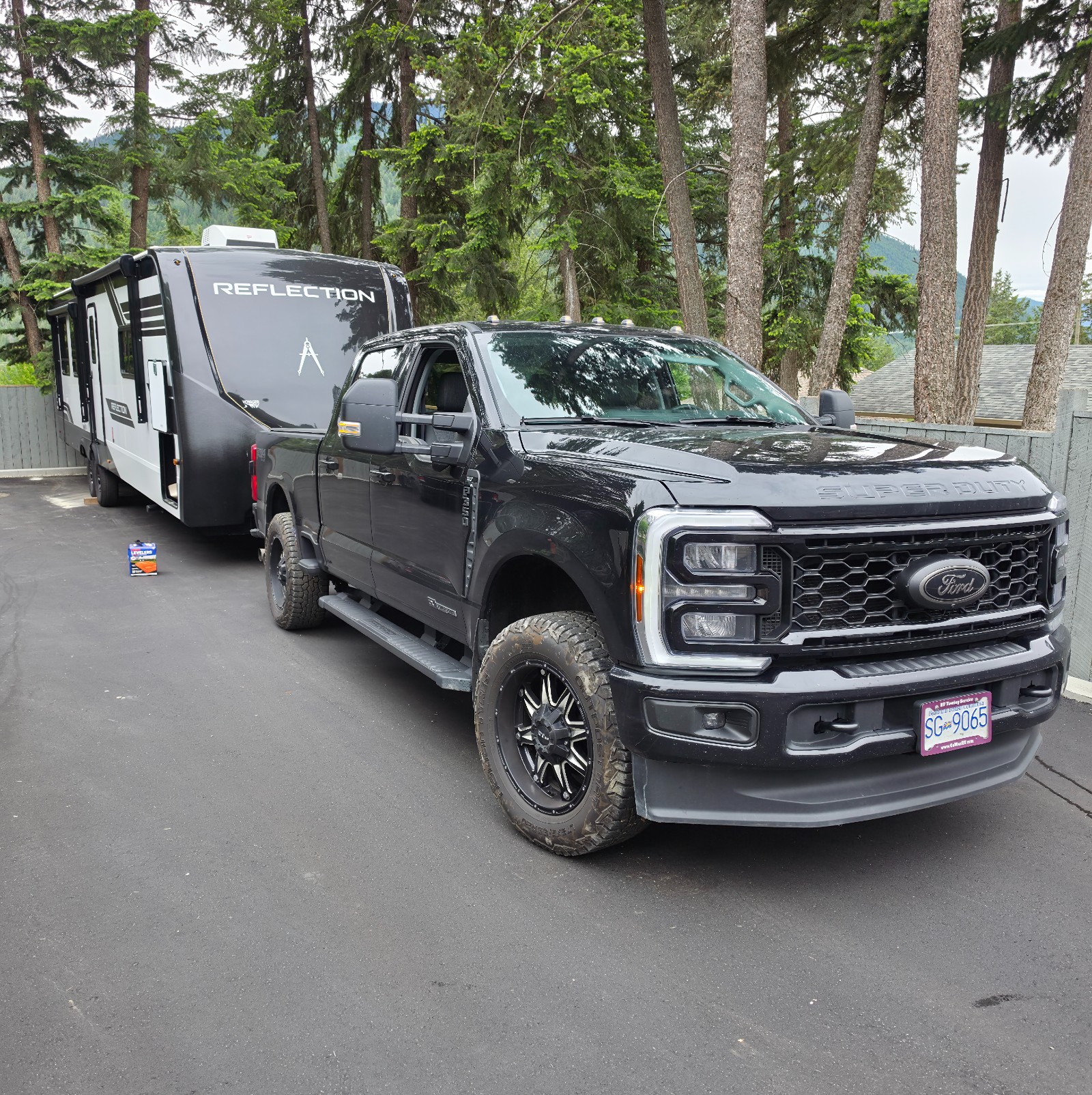
If you have ever white-knuckled a downhill grade, fought crosswinds, or tried to back into a tight campsite with an audience watching, you already know that 5th wheel vs travel trailer towing is not a minor detail. It affects the truck you need, how the RV behaves on the road, what setup work is involved, and whether towing it yourself is even worth the hassle.
For many RV owners, the real question is not which one is better in general. It is which one is easier, safer, and more practical for the way they actually use their RV. A family moving a unit to a seasonal site has different priorities than someone taking frequent weekend trips. A first-time buyer picking up a new RV from a dealership has different concerns than an experienced owner replacing an older unit.
5th wheel vs travel trailer towing: the core difference
The biggest difference comes down to where the trailer connects to the tow vehicle. A travel trailer hitches at the rear of the tow vehicle. A 5th wheel connects in the bed of a pickup truck, over or slightly ahead of the rear axle.
That single difference changes a lot. A 5th wheel typically feels more planted on the road because the hitch point is centered over the truck axle. That usually means better stability, less sway, and a more controlled feel at highway speeds. Travel trailers can tow very well too, but they are generally more sensitive to loading, hitch setup, and crosswinds.
This does not mean every 5th wheel is easy and every travel trailer is difficult. Length, weight, suspension, tire condition, road surface, and driver experience still matter. But from a pure towing-behavior standpoint, 5th wheels usually have the edge.
Stability matters more than most buyers expect
When people compare floorplans, storage, and sleeping space, towing behavior often gets pushed to the side. Then the first long drive changes the conversation.
A properly matched 5th wheel tends to track better, especially on highways and in gusty conditions. Because the pivot point is in the truck bed, the trailer follows the truck more directly. That can reduce sway and make lane changes feel less dramatic.
A travel trailer puts more emphasis on correct hitch equipment and weight distribution. If tongue weight is off, cargo is loaded poorly, or the hitch is not dialed in, the trailer can feel unsettled. Plenty of owners tow travel trailers safely for years, but they usually do best when the setup is done right from the start.
For newer RV owners, this is often where expectations and reality split. A trailer that looks manageable on paper may still feel stressful on the highway if the tow vehicle is near its limit or the hitch setup is less than ideal.
Truck requirements are often the deciding factor
The towing discussion usually ends when the vehicle question starts. Travel trailers give owners more flexibility because many can be pulled by a properly equipped half-ton pickup or large SUV, depending on weight. A 5th wheel almost always pushes you into pickup-truck territory, and often into a heavier-duty truck than buyers first expect.
That is because a 5th wheel places significant pin weight directly in the truck bed. Even if the trailer’s total weight seems reasonable, payload capacity becomes the issue. Many owners focus on tow rating and overlook payload, axle ratings, passengers, cargo, fuel, and hitch weight.
With a travel trailer, you still need to stay within ratings, but the access point is broader. That can make ownership more practical if you do not want a dedicated heavy-duty truck sitting in the driveway year-round.
This is one reason professional transport makes sense for many owners. If you only need the RV moved a few times a year – from dealer to home, home to storage, or storage to a seasonal lot – buying a bigger truck often does not pencil out.
Backing and maneuvering are different, not always easier
A lot of people hear that 5th wheels are easier to back up. There is some truth to that, but it needs context.
Because the pivot point is over the axle, a 5th wheel responds differently when backing. Many drivers find it more predictable once they get used to it. Tight turns can be easier to control, and the trailer may react less abruptly than a bumper-pull setup.
Travel trailers can feel quicker to respond, which is good in some situations and frustrating in others. Small steering inputs can produce bigger trailer movement, especially for less experienced drivers. In tight campgrounds, storage lots, or dealership pickup areas, that can raise the stress level quickly.
Still, neither type is effortless in cramped spaces. Trees, fences, soft shoulders, sloped driveways, and narrow gates do not care what kind of RV you own. Experience matters more than internet claims.
Setup, hitching, and everyday convenience
Travel trailer owners usually deal with couplers, safety chains, sway control, weight-distribution equipment, and brake connections. A 5th wheel setup is different. The hitch is larger, mounted in the truck bed, and generally more involved from an equipment standpoint.
Once installed, a 5th wheel hitch can make coupling feel secure and straightforward. But it also takes up valuable truck bed space. If you use your pickup for other work, hauling gear, or everyday tasks, that matters.
A travel trailer leaves the bed open if you are towing with a pickup, and it can be simpler from a storage and daily-use standpoint. On the other hand, getting a travel trailer hitch dialed in correctly can take more attention than some owners expect.
This is where the practical side of ownership shows up. It is not just about road feel. It is about whether you want to manage hitch equipment, loading, inspections, route planning, fuel stops, grades, and arrival setup every time the RV needs to move.
Cost is not just the trailer price
A lot of buyers compare purchase prices and stop there. Towing costs are where the gap can widen.
A 5th wheel may require a bigger truck, a bed-mounted hitch, and sometimes additional suspension support depending on the combination. A travel trailer may allow you to keep your current vehicle if the numbers truly work, but you may still need a quality weight-distribution hitch and sway control setup.
Then there are the indirect costs. Fuel use changes. Tire wear changes. Maintenance on the tow vehicle increases. Insurance and registration on a larger truck may cost more. If you only move the RV occasionally, those ownership costs can outweigh the convenience of towing it yourself.
That is especially true for owners who bought an RV for seasonal use rather than constant travel. If the trailer goes from a dealership to your property, then to a campground for the summer, then to storage or service, paying for professional hauling can be the simpler and more cost-effective move.
When a travel trailer makes more sense
Travel trailers fit a lot of owners because they offer flexibility. There are more size options, more compatible tow vehicles, and usually a lower barrier to entry. If you want an RV that is easier to match to your current setup, a travel trailer may be the more practical option.
They also make sense for buyers who do not want to commit to a heavy-duty pickup just to own an RV. That matters if the trailer is going to spend most of its time parked at a seasonal site or if you only relocate it a few times a year.
The trade-off is that towing setup becomes more sensitive. Matching the trailer correctly, balancing the load, and using the right hitch equipment are not optional details.
When a 5th wheel makes more sense
If towing stability is high on your list and you already own the right pickup, a 5th wheel can be the better road-going choice. Many owners prefer the more settled feel, especially on longer routes.
A 5th wheel also tends to appeal to buyers who want more interior space and do not mind dedicating a truck to the job. But that is the catch. The truck requirement is real, and it is often what separates a good ownership experience from an expensive mistake.
For some owners, the better approach is to choose the RV they want and leave the transport to a licensed, insured hauler with real experience moving towable RVs.
So which is easier to tow?
If all else is equal, a 5th wheel is usually easier and more stable to tow than a travel trailer. But all else is almost never equal.
The easier trailer to tow is the one properly matched to the right truck, loaded correctly, hitched correctly, and moved by someone comfortable handling it. A smaller travel trailer with a well-sorted setup can be less stressful than a large 5th wheel paired with the wrong pickup. A professionally hauled RV can be easier than both if you would rather skip the logistics, the pressure, and the risk.
For owners in places like British Columbia and Alberta, where routes can include mountain grades, ferry schedules, tight service yards, and long highway stretches, that choice becomes even more practical. Sometimes the smartest towing decision is deciding not to do it yourself.
If your RV needs to get from point A to point B safely, the best setup is the one that gets it there without turning the trip into a job.
Comments are closed