

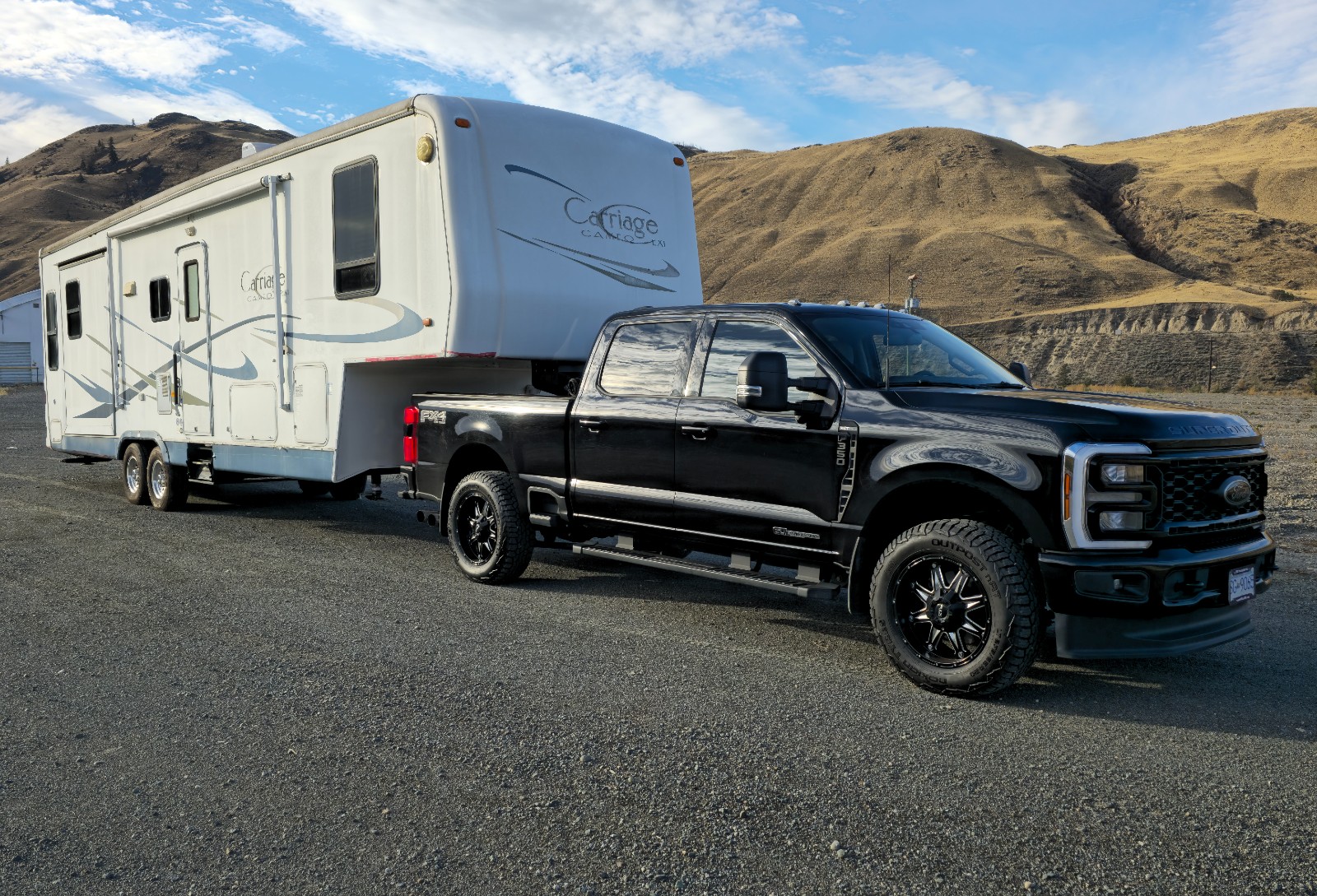
The first time most owners think seriously about how to haul a 5th wheel, it usually happens in a parking lot, not on a scenic highway. You look at the height, the length, the turning radius, and the weight, and it gets real fast. A 5th wheel can be comfortable to camp in, but moving it safely is a different job altogether.
That is where many people make the same mistake. They focus on whether the trailer can move, instead of whether the full setup is matched, legal, and manageable in the real world. On paper, a combination may look close enough. On the road, close enough is how people end up white-knuckling mountain grades, fuel stops, tight intersections, and uneven campground entrances.
How to haul a 5th wheel without creating problems
The short answer is this: you need the right truck, the right hitch, the right weight balance, and a route that suits the size of the rig. If any one of those is off, the haul gets harder, riskier, and more expensive.
A 5th wheel is not just a larger version of a bumper-pull trailer. The hitch sits in the bed of the truck over or slightly ahead of the rear axle, which changes how weight is carried and how the unit handles. That setup usually gives better stability than a rear hitch, but it also means the truck has to be properly equipped for the pin weight, bed clearance, suspension load, and brake demands.
This is why truck size matters more than many first-time buyers expect. It is not enough to say the truck can tow the trailer’s dry weight. Dry weight leaves out water, propane, batteries, cargo, tools, and all the gear owners actually travel with. In real use, the loaded weight and pin weight are what count.
Start with the truck, not the trailer brochure
If you are figuring out how to haul a 5th wheel yourself, start by checking the truck’s tow rating, payload rating, rear axle rating, and gross combined weight rating. Payload is where many setups fail. A truck may have enough advertised towing capacity, but once you add passengers, hitch hardware, cargo in the bed, and the trailer’s pin weight, the payload can disappear quickly.
Pin weight often lands around 15 to 25 percent of the trailer’s loaded weight. That means a 12,000-pound 5th wheel can put a substantial amount of weight directly into the truck bed. If the truck squats hard or exceeds its ratings, handling and braking suffer.
Single rear wheel trucks work for some 5th wheels. Heavier units often call for a dually. There is no badge-based answer that fits every setup. It depends on actual numbers, not assumptions.
The hitch setup has to match the job
The hitch itself is not an accessory you figure out later. It is central to safe hauling. The hitch must be rated for the trailer’s weight and pin weight, installed correctly, and adjusted for proper trailer height and bed rail clearance.
Short-bed trucks need extra attention. Depending on the trailer front cap and the truck’s turning geometry, you may need a sliding hitch or a specially designed pin box to avoid cab contact on tight turns. Some combinations turn fine. Others do not. This is one of those areas where guessing gets expensive.
You also need to check that the trailer sits level when hitched. Nose-high or nose-low towing can shift weight in ways that affect braking, tire loading, and stability. A level trailer usually tows better and is easier on components over distance.
Weight checks matter more than people think
A lot of owners load a 5th wheel by feel. If the truck moves it and the tires look fine, they assume they are good to go. That is not a reliable way to judge a heavy rig.
The better approach is to weigh the combination when it is loaded the way you actually plan to travel. That includes water if you travel with it, generators, tools, food, bikes, firewood, and anything else that normally goes along. Real numbers tell you whether the truck axles, trailer axles, tires, and overall combination are within limits.
Tires deserve special attention here. Underinflated or overloaded tires are one of the fastest ways to turn a routine haul into a roadside delay. Check tire condition, age, pressure, and load rating on both the truck and the trailer before any longer move.
Loading changes how the trailer behaves
Heavy items should be loaded low and secured well. You want balanced loading side to side, and you do not want loose cargo shifting during braking or cornering. Even if the trailer is technically within its total weight rating, poor cargo placement can make it feel unstable.
Water can be a factor too. Sometimes traveling with empty or partially filled tanks makes sense for weight. In other cases, a small amount of fresh water is practical if the destination is remote. There is no single rule. It depends on distance, road conditions, and where the weight sits in that specific trailer.
Route planning is part of how to haul a 5th wheel safely
The biggest towing problems are not always caused by the rig itself. Often, they come from poor route choices. A route that works fine for a pickup alone may be a bad fit for a long, tall 5th wheel.
You need to think about bridge clearances, steep grades, fuel access, construction zones, sharp town turns, and where you can safely stop. If the route includes ferry travel or urban congestion, timing matters as much as distance. Getting boxed into a tight fuel station with a long trailer behind you is not a small inconvenience. It can stop the trip cold.
Weather matters too. Crosswinds, heavy rain, snow, and early frost can change the difficulty level quickly, especially on mountain routes. A trailer that feels stable in dry conditions can become tiring to manage when wind starts pushing on the sidewall for hours.
Backing and maneuvering are their own skill set
A lot of people can pull a trailer forward. Far fewer are comfortable placing a 5th wheel into a narrow site, a sloped driveway, or a storage lane with limited room. That part of the job is often where confidence drops.
A 5th wheel generally tracks differently than a conventional trailer, and many owners like how it responds once they get used to it. Still, it takes practice. Tight backing around trees, posts, fences, or service bay doors is not something you want to learn under pressure with a valuable RV behind you.
If the pickup location or destination is awkward, that should be part of the plan before move day. It is one thing to haul a 5th wheel down the highway. It is another to place it cleanly at the final spot.
When hauling it yourself does not make sense
There is a practical side to this that many owners run into quickly. Even if you know how to haul a 5th wheel, that does not always mean you should.
If you only move the RV a few times a year, buying and maintaining a heavy-duty truck may not pencil out. The same goes for owners who bought a 5th wheel for seasonal use, dealership delivery, service appointments, or relocation to a permanent site. In those situations, the better move is often to have the RV professionally transported and keep your daily driver for everything else.
That is especially true when the route includes mountain passes, ferry coordination, unfamiliar roads, or a longer haul where fatigue becomes a factor. Experience matters, but so do licensing, insurance, and the ability to deal with the logistics that come with moving a large towable unit.
For many owners, the real value is not just avoiding the drive. It is avoiding the truck purchase, the hitch setup, the learning curve, and the stress that comes with handling a large 5th wheel in conditions that are less than ideal.
If you are weighing your options, be honest about the job. Look at the truck ratings, the trailer weight, the route, the destination access, and your comfort level. A 5th wheel should be enjoyable once it is set up where you want it. Getting it there should be handled with the same level of care.
Comments are closed