

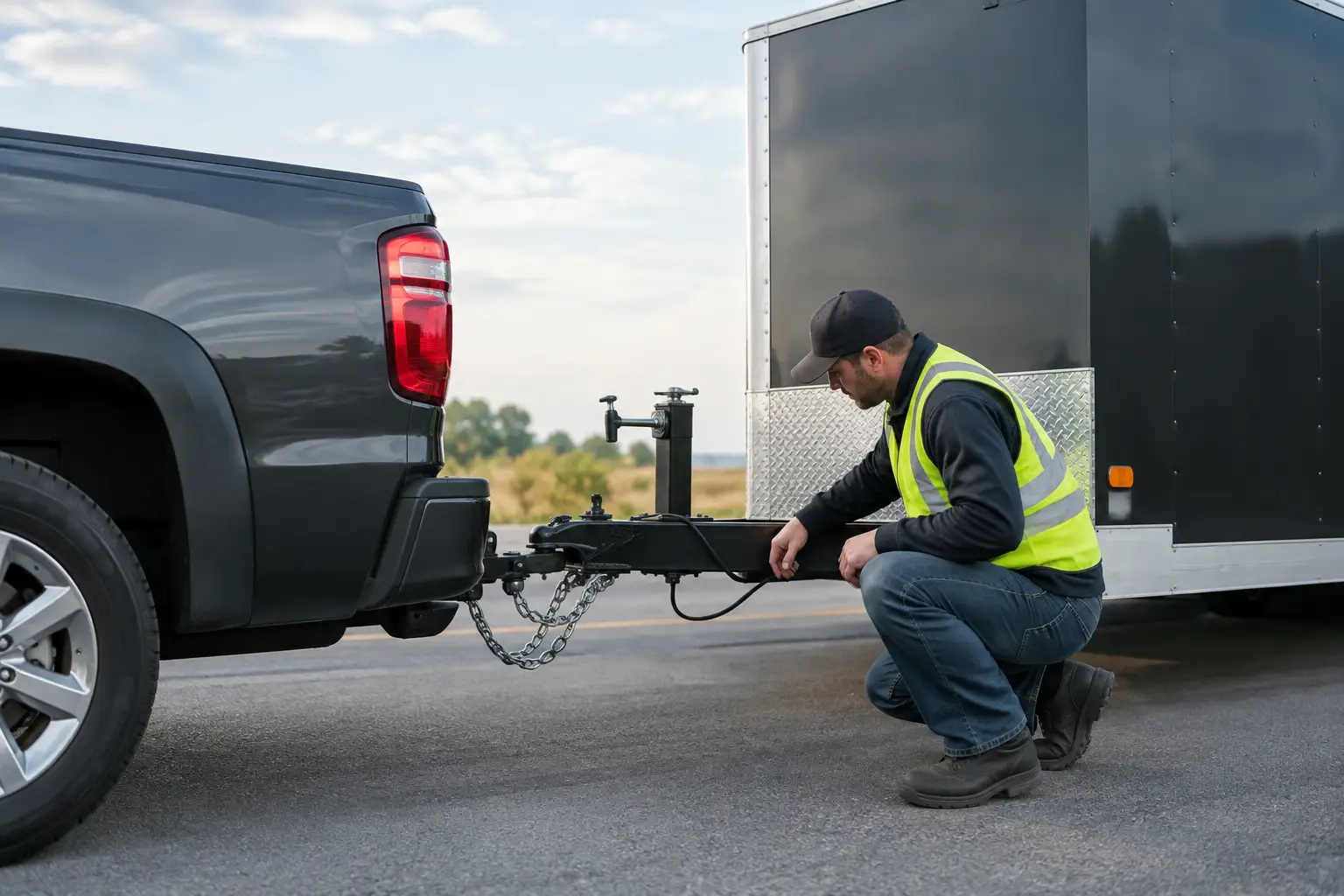
A new travel trailer looks manageable when it is sitting on a dealer lot. The reality changes once it needs to travel through mountain grades, busy city traffic, ferry terminals, fuel stops, and a tight seasonal campsite. Can professionals tow trailers safely? Yes, when the hauler has the right equipment, proven experience, proper licensing and insurance, and a disciplined process for every move.
Professional transport is not simply connecting a hitch and heading down the road. A travel trailer or fifth wheel is a large, valuable asset with its own weight, balance, clearance, brake, and route-planning requirements. The right operator manages those details before the wheels start turning.
What Safe Trailer Transport Actually Involves
Safe transport starts with matching the RV to a properly rated truck, hitch system, and driver. Trailer length alone does not tell the full story. The loaded weight, pin weight or tongue weight, axle condition, brake system, tire ratings, hitch style, and overall height all affect how the RV should be moved.
A professional hauler verifies the essential specifications instead of guessing. That includes confirming whether the unit is a bumper-pull travel trailer or a fifth wheel, reviewing the manufacturer weight information, and checking that the truck and hitch are suited to the job. An overloaded or poorly matched setup can become unstable quickly, especially in crosswinds, on downhill grades, or during an emergency stop.
The operator should also understand the difference between a trailer that can move and a trailer that is ready for a long-distance haul. A unit that has been parked at a seasonal site for months may have low tires, weak batteries, weathered seals, or brake issues that need attention before departure.
Can Professionals Tow Trailers Safely in Western Canada?
They can, but regional experience matters. British Columbia and Alberta routes can add challenges that do not appear on a flat, short trip. Mountain passes, changing weather, narrow access roads, construction zones, remote fuel stops, and ferry schedules all require planning.
A capable RV transport provider looks at the full route, not just the distance between pickup and delivery. The best route for a personal SUV may not be the best route for a 40-foot fifth wheel. Low clearances, sharp turns, steep approaches, restricted roads, and limited staging areas can change the plan.
For Vancouver Island moves, ferry coordination is part of safe transport planning. The RV needs the correct booking details, sufficient time at the terminal, and an operator who understands how large towable units are handled in those spaces. Rushing a ferry connection is not a safety plan.
Weather is another factor. Rain, wind, snow, and rapidly changing mountain conditions may require a later departure, slower travel, or an alternate route. That can be frustrating when a delivery date is on the calendar, but a professional should not treat schedule pressure as more important than the condition of the road.
The Checks That Should Happen Before Departure
The most valuable safety work often happens while the trailer is still parked. Before transport, the hauler should inspect the areas that directly affect control and roadworthiness. This is especially important for trailers coming from storage, a dealer, a repair facility, or a long-term campsite.
Key checks generally include:
- Hitch connection, locking mechanism, safety chains, breakaway system, and electrical connection
- Trailer brakes, lights, turn signals, running lights, and battery charge
- Tire condition, tire pressure, wheel condition, and visible suspension concerns
- Landing gear or stabilizers fully raised and secured, with steps, awnings, slides, and exterior compartments properly closed
- Overall height, width, length, and any loose accessories that could shift or catch wind
These checks are not paperwork for its own sake. A failed light connection makes the trailer harder for other drivers to see. An unsecured compartment door can become a road hazard. A soft tire can overheat under load. A breakaway system that has not been checked is not something to discover after a problem occurs.
Owners can help by providing accurate RV information before requesting transport. Have the make, model, year, approximate length, hitch type, pickup location, destination, and preferred timing ready. If there are known mechanical issues, a low-clearance driveway, a narrow gate, or a difficult campsite approach, say so early. Straight information allows the hauler to plan properly.
Experience Matters Most When Conditions Are Not Perfect
Most towing challenges are not dramatic. They are practical: backing into a crowded service lane, handling a long downhill grade, finding a safe place to fuel, or positioning the RV on an uneven seasonal lot. Those are the moments where regular experience pays off.
An experienced RV hauler knows that a trailer reacts differently to braking, wind, curves, and uneven pavement than a lightly loaded utility trailer. They allow more following distance, use appropriate speed for the conditions, watch mirrors continuously, and avoid sudden steering or braking inputs that can upset the trailer.
Backing and destination placement deserve the same attention as highway travel. A site may have trees, soft ground, sharp corners, narrow roads, or limited room to turn around. In some cases, the safest answer is to assess the location first, use a spotter, or agree on a practical drop point rather than forcing the RV into a space that does not allow a safe approach.
There are trade-offs. Door-to-door delivery is ideal when access is clear, but it may not be realistic at every property. A short walk from a safe staging area may be better than risking damage to the RV, landscaping, overhead branches, or the site itself.
Licensing and Insurance Are Not Small Details
Owners handing over a travel trailer or fifth wheel should ask direct questions about licensing and insurance. A professional transport provider should be able to explain that they are properly licensed for the work they perform and carry appropriate insurance coverage.
Insurance is especially important because an RV is not just another piece of equipment. It may be a family’s vacation space, a seasonal home, or a major purchase waiting for its first trip. The customer should understand what coverage applies during transport and whether there are any responsibilities they need to handle through their own RV policy.
Clear communication also matters. A reliable hauler confirms pickup and delivery details, explains timing realistically, and lets the owner know if road conditions or logistics affect the schedule. No one benefits from vague promises followed by last-minute surprises.
When Hiring a Professional Is the Safer Choice
Many RV owners are fully capable of handling a trailer. The question is whether a particular move is worth the stress, equipment cost, and risk. Professional transport is often the sensible choice when you do not own a properly rated truck, are new to towing a large RV, are relocating long distance, or need the unit delivered from a dealership to a seasonal site.
It is also useful when the RV needs to go to a service center, winter storage, or a destination that involves difficult routes and tight access. Instead of spending days on the road and arranging extra travel plans, the owner can drive separately and meet the RV at its destination.
For some people, hiring a hauler is a one-time need. For others, it becomes part of how they enjoy RV ownership. They keep the trailer at a favorite site, arrange delivery for maintenance or seasonal moves, and avoid buying, fueling, maintaining, and parking a heavy-duty truck for occasional use.
GoMax RV focuses on travel trailer and fifth-wheel transport because these moves demand that level of attention. The goal is simple: get your RV from pickup to destination with the planning, care, and practical judgment the job requires.
Before booking, share the real details of your move and ask the questions that matter. A safe haul begins with an honest assessment of the RV, the route, and the destination. That is how your trailer arrives ready for the part you actually want to enjoy.
Comments are closed