

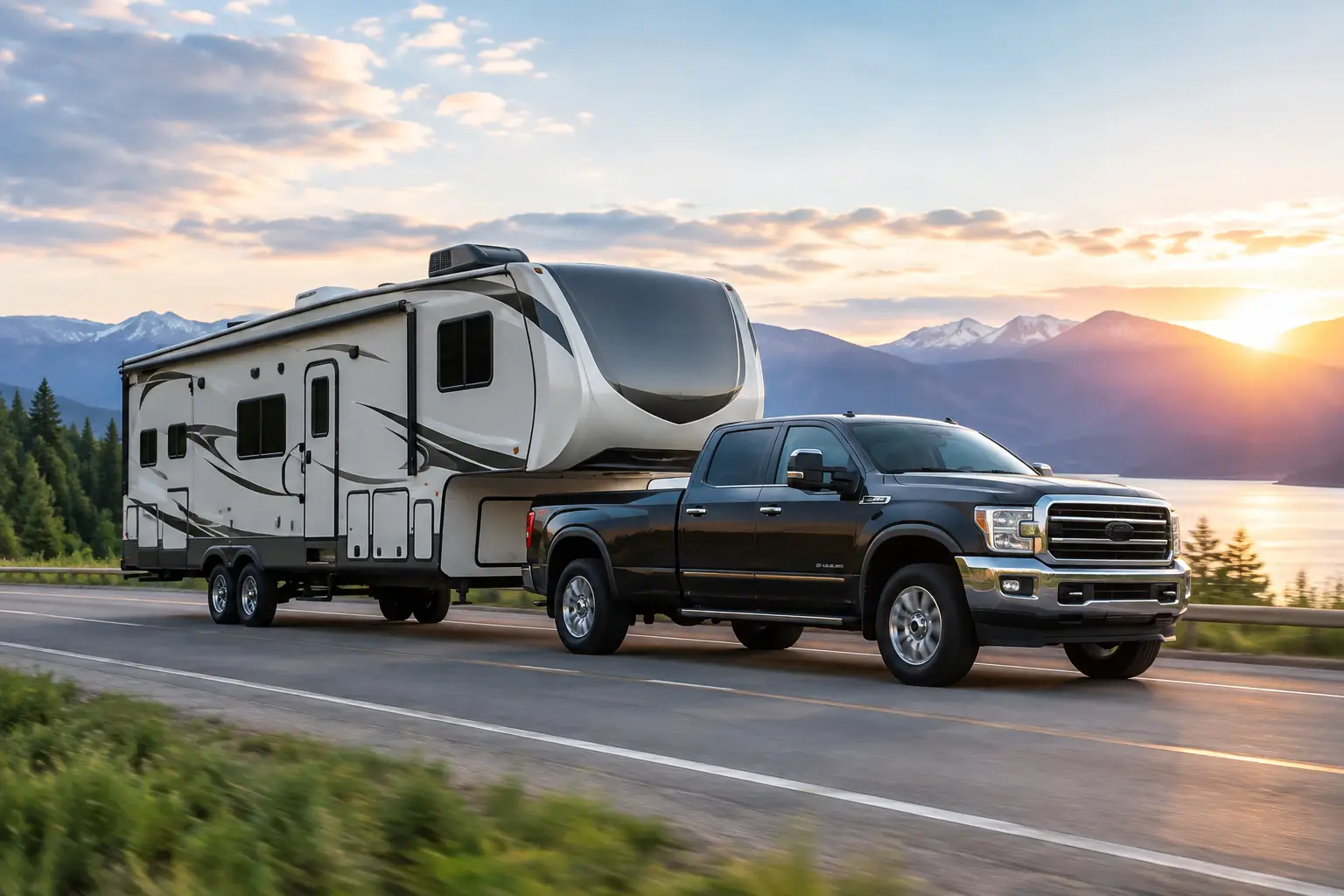
A 5th wheel can look settled and simple once it is parked at the lake, on a seasonal site, or in your driveway. Moving it is another matter. The best way to move a 5th wheel depends on its size, the route, your tow setup, and whether you want to spend the trip focused on hauling a large RV or simply meet it at the destination.
For some owners, towing it themselves makes sense. For many others, especially those buying a new unit, relocating a seasonal setup, or booking service work hours from home, professional RV transport is the safer and more practical choice. The right answer is not about proving you can do it. It is about protecting the RV, your time, and everyone sharing the road.
Start with the real job, not just the distance
A 30-mile move to a nearby service center and a 700-mile move across mountain passes are not the same job. Distance matters, but route conditions matter just as much. Steep grades, urban traffic, narrow campground roads, ferry schedules, fuel stops, weather, and restricted delivery access can turn a straightforward route into a demanding day behind the wheel.
Before deciding how to move your 5th wheel, look at the complete trip. Confirm the RV’s loaded weight, overall length, height, hitch requirements, and the access at both ends. A destination may have low branches, tight turns, a steep gravel approach, or a site where positioning the trailer takes experience.
This is particularly relevant for routes in British Columbia and Alberta, where a trip can include mountain grades, changing weather, busy city corridors, or ferry coordination for Vancouver Island. The move needs to be planned for the road that actually exists, not the easy stretch shown on a map.
The best way to move a 5th wheel begins with capacity
A 5th wheel places substantial weight in the bed of the truck through the pin box. That weight affects more than the truck’s advertised tow rating. Payload, rear axle rating, tire capacity, hitch rating, braking capability, and the RV’s loaded weight all need to work together.
A common mistake is using the trailer’s dry weight as the deciding number. Dry weight does not include water, propane, batteries, food, tools, clothes, accessories, and the gear that tends to collect in an RV over a season. By departure day, the actual weight can be significantly higher.
The truck also needs a properly rated fifth-wheel hitch installed correctly in the bed. The hitch must match the trailer’s pin weight and provide enough clearance between the trailer and the truck cab during turns. Bed length, hitch position, and the trailer’s front cap design can all affect turning clearance.
If there is any uncertainty about the numbers, do not guess. Check the truck’s door-jamb payload information, the RV’s weight labels, hitch ratings, and axle ratings. A capable-looking pickup is not automatically a suitable match for every 5th wheel.
Towing it yourself: when it makes sense
Self-transport can be a good option when you already own a properly equipped heavy-duty truck, understand your weights, and have experience handling a large RV. It is often most practical for shorter, familiar trips where you know the campground access and can travel in favorable conditions.
You also need to be comfortable with the working parts of the trip: wide turns, lane positioning, downhill speed control, backing into a site, fuel-stop planning, and dealing with crosswinds. A 5th wheel responds differently from a smaller trailer, and the height and length require constant attention.
There is a cost side as well. Even if you already own the truck, factor in fuel, wear, maintenance, time away from work, and the stress of a long haul. If buying a truck mainly to move an RV a few times a year, professional transport can be far less expensive than taking on the purchase, insurance, and upkeep of a heavy-duty tow rig.
When professional RV transport is the better call
Hiring an experienced RV hauler is often the best fit when the move is long, the terrain is demanding, or you simply do not want to handle the operation yourself. This is common for dealer pickups, seasonal relocations, warranty or repair appointments, winter storage moves, and one-way relocations.
Professional transport is also useful when your RV is ready at one location but you cannot be there for the pickup. Instead of arranging a truck, hitch, driver, and travel time, you can have the 5th wheel moved point to point while you travel separately in your own SUV or passenger vehicle.
The value is not just having somebody pull the RV. A qualified operator brings a suitable truck and hitch setup, experience with route planning and site access, proper commercial licensing, and insurance coverage. Those details matter when a valuable RV is traveling hundreds of miles through changing road and weather conditions.
At GoMax RV, the work is focused on moving towable RVs, including 5th wheels under 44 feet. That specialization matters because RV delivery involves more than getting from one address to another. It means planning the route, coordinating realistic pickup and delivery timing, and making sure the unit can be placed safely at its next stop.
What to ask before hiring an RV hauler
Do not choose a transport provider based on price alone. A low quote is not much help if it leaves questions about coverage, equipment, or delivery logistics. Ask direct questions and expect direct answers.
Confirm that the operator is licensed for the work and carries appropriate insurance. Ask whether they regularly haul 5th wheels of your size, whether ferry arrangements can be handled if needed, and what information they need about pickup and delivery access. You should also understand what is included in the quote, how timing is coordinated, and how the RV is inspected before departure.
Give the hauler accurate details from the beginning. Share the make, model, length, approximate loaded weight, hitch type, pickup address, destination address, and any access concerns. Mention gate codes, seasonal road restrictions, tight sites, steep driveways, and whether the RV needs to be moved from a dealer, storage compound, home, or service center.
Prepare the 5th wheel for a safer move
Whether you haul the RV yourself or arrange professional transport, preparation protects the unit. The goal is to prevent loose items, water damage, mechanical surprises, and delays at pickup.
Walk through the RV before moving day. Secure interior doors, drawers, pantry items, televisions, and loose furniture. Close and lock windows, vents, exterior compartments, and slide-outs. Make sure steps, antennas, awnings, and stabilizers are fully retracted. Disconnect utilities, remove or secure items around the site, and check that the landing gear and breakaway system are functioning properly.
Check tire condition and inflation, including the spare. Look for cracked sidewalls, uneven wear, or aging tires that may not tolerate a long highway run. Test the brakes and lights, confirm the battery is charged enough for the breakaway system, and make sure the hitch area is clear and accessible.
If the RV has been parked for months, give yourself extra time. Rodents, seized components, low batteries, and weather-related damage are easier to address before the transport appointment than when the driver has arrived.
Plan the handoff at each end
A smooth move depends on access. At pickup, there needs to be room to line up the truck and connect safely. At delivery, there needs to be a practical path to the final site, not just an address on a GPS screen.
Talk through the destination in advance. Is the driveway wide enough? Are there trees, low wires, soft ground, narrow bridges, sharp turns, or parked vehicles in the way? Will someone be available to open gates or guide the final placement? For remote seasonal properties, these details can save a wasted trip or an expensive delay.
Keep your registration, keys, and relevant site contact information available. If the unit is headed to a service center, confirm the receiving hours and the name of the person accepting it. If it is headed to storage, verify the space number and the facility’s access rules.
The best move is the one that arrives without drama. Give the job the same attention you gave when choosing the RV, and let the right equipment and experienced hands carry the hard part of the journey.
Comments are closed