

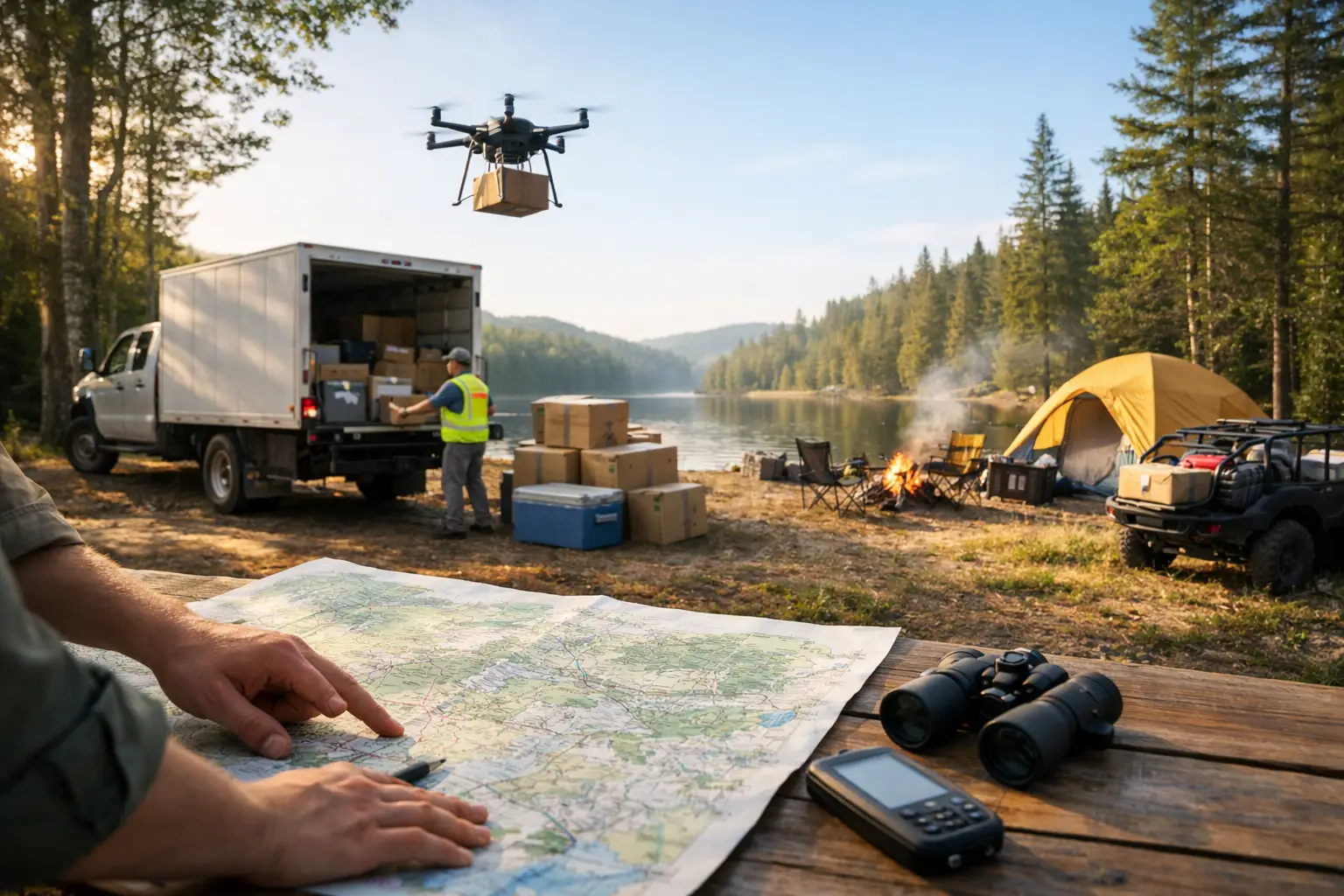
A campground reservation and a map pin do not automatically mean an RV can get there. Remote campsite delivery often involves narrow approach roads, sharp turns, uneven pads, low branches, ferry schedules, locked gates, and site rules that are easy to miss until the trailer is already on the road. A little planning before pickup protects your RV, avoids wasted time, and gives the driver a fair shot at placing the unit where you actually want it.
For owners who do not have a heavy-duty tow vehicle – or simply do not want the stress of hauling a large travel trailer or 5th wheel into an unfamiliar area – professional transport makes the move manageable. The key is treating the destination as part of the job, not as an afterthought.
What Remote Campsite Delivery Really Involves
A remote site can mean different things. It might be a seasonal lot at the end of a long gravel road, a private lakeside property with a tight entrance, an island campground that requires ferry coordination, or an off-grid location with little room to turn around. The distance from the main highway is not the only factor. Access is.
A transport route that looks simple on a phone map may not work for a towable RV. Maps do not reliably show overhead clearance, road width, steep grades, soft shoulders, washouts, or whether a gate can accommodate the trailer’s turning path. Campground roads can also be busy, especially on long weekends, when backing into a site takes more time and space.
That does not mean remote delivery is a problem. It means the job needs accurate information before it starts. An experienced RV hauler can plan around real constraints when those constraints are known upfront.
Start With the RV’s Actual Dimensions
Know the length, height, weight, and hitch type of the RV being moved. A 28-foot travel trailer and a 43-foot 5th wheel may be headed to the same campground, but they do not have the same route options or backing requirements.
Length affects cornering room and the ability to turn around near the destination. Height matters under tree limbs, power lines, bridges, and campground entrance signs. Weight affects which roads are reasonable after rain or during spring thaw. Hitch type determines the equipment needed for the move.
Do not rely only on a model name or a rough estimate from memory. Confirm the specifications from the RV documentation or manufacturer plate, and tell the transport provider about any additions that change clearance or length. Rear cargo racks, bike carriers, ladders, upgraded tires, and rooftop equipment can matter on a tight route.
If the RV is stored in a crowded lot or parked beside another unit, mention that as well. Pickup access can be just as challenging as destination access.
Give Your Transport Provider More Than an Address
A civic address is useful, but it rarely tells the whole story for a campground or private site. The most helpful information is practical: where the final turn is, which gate to use, whether the road is gravel, and where the driver can safely turn around if the site is blocked.
Photos and short videos are often valuable. A clear photo of the entrance, site approach, low branches, tight corners, and the pad itself can reveal problems that a map cannot. If the campground has a site map, provide it along with the specific site number and any instructions from the manager.
It also helps to identify a local contact who can answer the phone on delivery day. At some locations, the person at the gate knows which roads are suitable for larger RVs and which routes should be avoided. At private or off-grid sites, a family member or caretaker may need to unlock access or guide the final approach.
Be Honest About the Last Mile
The last mile is where many deliveries become complicated. A road that is passable for a pickup truck may not be suitable for a large trailer. Soft ground can pull a trailer toward the shoulder, while a steep, loose grade can limit traction. Overhanging branches may scratch the RV exterior, and narrow roads leave little margin for correction.
If you have never brought an RV into the site before, say so. There is no benefit in guessing. The transport plan may need a different approach route, an earlier delivery time, or a drop point closer to the main road. In some cases, the safest decision is to deliver the RV to a nearby accessible area rather than force it into a location that cannot safely accommodate it.
Prepare the Site Before Delivery Day
A professional driver can handle the transport, but the site still needs to be ready to receive the RV. Clear the approach of loose equipment, firewood, outdoor furniture, hoses, and vehicles. Trim branches only where permitted and only with enough clearance for the RV’s full height and width.
Make sure the pad is firm and reasonably level. Fresh gravel, muddy ground, or a soft shoulder can look solid until a heavy RV rolls onto it. If the site has recently had heavy rain, snowmelt, or construction work, report those conditions before the scheduled move.
Check the location of utility hookups, posts, trees, picnic tables, retaining walls, and septic covers. These features can limit where the RV can be placed and how it needs to be angled. If you expect the trailer door, slide-outs, or awning to open toward a particular view or patio area, consider that before arrival. Once the RV is positioned on a tight site, moving it again may require another planned transport move.
You should also make sure gates are unlocked and that campground staff know a delivery is expected. Some parks restrict arrival hours, require proof of insurance, or prohibit large-rig movement during quiet times. Those rules are easier to handle before a driver reaches the entrance.
Plan for Weather, Ferries, and Seasonal Road Conditions
Remote routes are affected by conditions that do not show up in a basic distance quote. Mountain weather can change quickly. Gravel roads develop potholes and washboard sections. Early-season roads may have weight restrictions, while late-season snow can narrow already tight access.
Ferry travel adds another layer of timing. A trailer delivery involving Vancouver Island, for example, needs realistic sailing plans, terminal arrival time, and a clear understanding of the campground’s check-in window. A delayed sailing can affect site access if a gate closes early or if the park limits arrivals after dark.
This is why flexibility matters. The best delivery date is not always the date that looks most convenient on a calendar. It may be the day when the road is dry, the ferry schedule works, the campground is less congested, and someone is available to receive the RV.
Know What You Are Paying For
Remote delivery quotes are based on more than mileage. Equipment requirements, RV size, route complexity, ferry costs, wait times, access challenges, and the need for return positioning can all affect the final price. A clear quote starts with clear details.
Ask what information the hauler needs, what is included, and whether the destination has conditions that could change the scope of the job. This is particularly useful for seasonal moves, dealer pickups, service-center transfers, and long-distance relocations across British Columbia or Alberta.
The cheapest option is not always the most cost-effective one. A poorly planned move can result in a failed delivery attempt, unnecessary delays, or damage risk on a route that was never appropriate for the RV. Licensed, insured RV transport is about reducing those risks before the wheels start moving.
Delivery Day: Keep Communication Simple
On delivery day, keep your phone available and make sure the destination contact does the same. Confirm the gate access, site number, and any last-minute changes such as roadwork, fallen branches, or a neighboring vehicle blocking the approach.
Before the RV arrives, remove anything that narrows the path. If you plan to meet the driver, choose a safe, easy-to-find location rather than asking them to search unfamiliar campground loops. Once on site, give the driver room to work. Tight backing and placement require attention, and extra people standing near the trailer can make the final approach harder, not easier.
After placement, inspect the RV exterior and confirm the site position before the driver leaves. You can then level the unit, connect utilities, set up your camp area, and get on with the part of RV ownership you actually enjoy.
A remote campsite should feel like a getaway, not the final obstacle in a transport job. Provide the real details early, prepare the access route, and use a hauler who understands towable RVs and regional road conditions. That is how GoMax RV helps turn a difficult destination into a practical delivery plan.
Comments are closed