

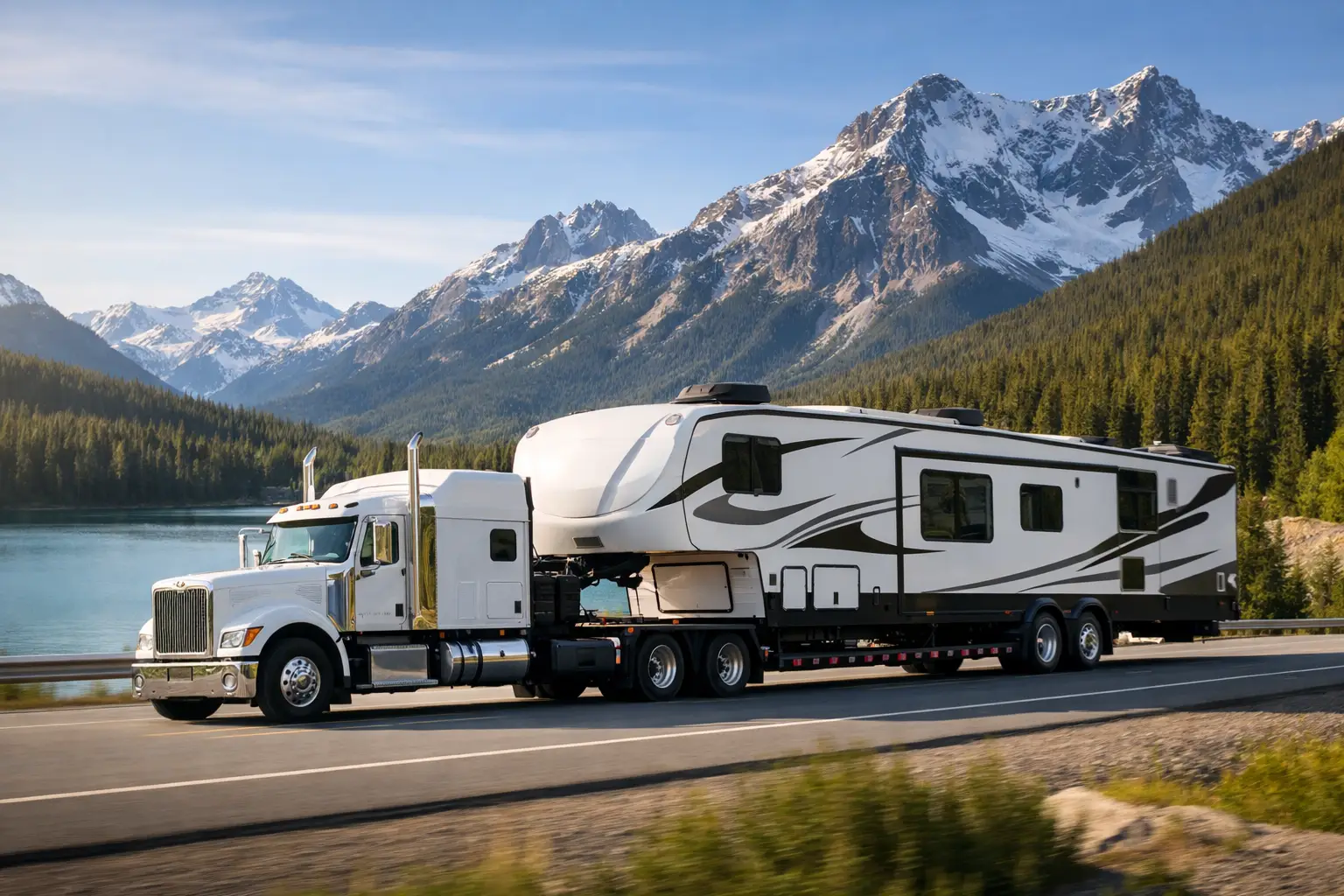
A new fifth wheel is waiting at the dealership. Your seasonal site is booked. Or your travel trailer needs to get to a service center before the weather turns. In each case, British Columbia RV transport can save you from buying, operating, and storing a heavy-duty tow vehicle for a job you may only need done once or twice a year.
For many RV owners, the issue is not whether the trailer can be moved. It is whether they want to handle mountain grades, tight fuel stops, city traffic, ferry reservations, backing into an unfamiliar site, and the responsibility that comes with moving a valuable unit. Professional transport gives you another option: drive your own SUV or personal vehicle, fly ahead if needed, or simply meet the RV at its destination.
When Professional RV Transport Makes Sense
Hiring a professional is practical in more situations than a long-distance relocation. Dealer delivery is one of the most common. You may have found the right trailer at a dealership several hours away, but you do not own a truck matched to its weight and hitch requirements. Having the unit delivered lets you start using it without making a major vehicle purchase first.
Seasonal moves are another good fit. A trailer that spends summer at a lake lot and winter in storage still has to make the trip twice a year. The route may include steep grades, busy highways, or a ferry crossing. A professional hauler can take on that work while you focus on opening or closing your site.
Service transport is equally useful. RV service appointments often involve leaving the unit for days or weeks, which can create an awkward two-vehicle problem if you tow it yourself. Delivery to and pickup from a service center keeps the job simple, particularly when the trailer is not road-ready for a return trip until repairs are complete.
Relocations also change the equation. Moving from one community to another, or between British Columbia and Alberta, is already a full schedule. Sending the RV separately means you are not trying to coordinate a loaded trailer with household moving plans, hotel stops, and family travel.
What Affects British Columbia RV Transport Pricing
Transport pricing is not just a mileage calculation. Distance matters, but the trailer itself, the pickup conditions, and the destination access all affect the quote. A clear set of details upfront helps avoid surprises and lets the hauler plan the right equipment and route.
The most important details are the RV type, overall length, approximate weight, hitch style, pickup address, destination address, and preferred dates. Travel trailers and fifth wheels have different hookup requirements, and a 28-foot trailer does not create the same logistical demands as a 40-foot fifth wheel. Units under 44 feet are generally within the range of specialized towable RV transport, but exact dimensions should always be confirmed.
Access is often the hidden factor. A wide paved driveway is straightforward. A narrow rural lane, steep site entrance, low branches, mud, soft ground, or a crowded storage compound may require more time and a different approach. Let the transport provider know if the unit is in a tight location. Honest information is useful, not inconvenient.
Timing can also matter. If your dates are flexible, a return-haul opportunity may provide a more cost-efficient option than a dedicated trip. If you need the RV delivered on a specific day for a campsite booking, service appointment, or possession date, scheduling early gives you more control.
Ferry Crossings Need Their Own Plan
Vancouver Island transport adds another layer: ferry coordination. Ferry space for a tow vehicle and RV is not something to leave until the day of travel. Reservation availability, trailer length, sailing times, terminal arrival requirements, and seasonal traffic all need to be considered.
A ferry-inclusive quote is useful because it puts the crossing into the transport plan from the start. It also helps avoid the common mistake of comparing a mainland-only price with a final destination price that does not include ferry costs or the time involved. If your RV is headed to Vancouver Island or returning to the mainland, mention that immediately when requesting a quote.
Preparing Your RV for Pickup
Professional hauling reduces the work on your end, but the trailer still needs to be ready to travel. Think of pickup day as a road-trip departure, even if you will not be in the driver’s seat.
Start with the basics. Secure all interior items, latch cabinets and doors, close roof vents, retract slides, and make sure exterior storage compartments are locked. Remove or secure loose accessories that could shift, flap, or fall during travel. If your trailer has a power awning, verify it is fully retracted and locked.
Check the running gear before pickup. Tires should be properly inflated and in good condition, wheel bearings and brakes should be maintained, and all lights should work. The breakaway cable, safety chains, coupler, and landing gear need to be usable and accessible. For a fifth wheel, make sure the front landing legs can be raised and lowered properly.
Water and cargo deserve attention too. Emptying holding tanks reduces unnecessary weight and limits the chance of leaks. Avoid loading the RV with heavy household goods before transport unless you have discussed it with the hauler. Added cargo changes weight distribution and may create problems on rough roads or mountain grades.
Have keys, registration, insurance information, and destination contact details ready. If the unit is in storage, confirm gate codes, access hours, and any site rules before pickup. A transport provider cannot make up time lost waiting for a locked gate or an unavailable site manager.
Why Licensing and Insurance Matter
Your RV is not just another piece of equipment. It is a major purchase, often carrying personal belongings, upgrades, and plans for the season ahead. That is why licensing and insurance should be part of the decision, not an afterthought.
Ask direct questions about commercial insurance coverage and the type of transport being provided. A professional operator should be comfortable explaining how the work is handled and what information is needed before the move. Experience matters as well, especially with fifth wheels, long travel trailers, ferry procedures, and Western Canadian road conditions.
There is a difference between someone who has occasionally pulled a trailer and someone who understands the full transport process. Proper loading and hitching, route selection, fuel planning, weather awareness, site delivery, and communication all affect whether the move is routine or stressful.
GoMax RV focuses specifically on moving travel trailers and fifth wheels, with more than 20 years of personal towing experience behind the service. That specialization matters when the job involves a dealership pickup, a difficult seasonal site, or a route that requires ferry coordination.
Choosing the Right Delivery Arrangement
Point-to-point transport is usually the cleanest option: the RV is collected from one confirmed location and delivered to another. Before booking, make sure the receiving location can accept the unit on the planned date. This is especially important for campgrounds, storage facilities, service centers, and private lots with limited access hours.
You should also be realistic about final placement. Delivering an RV to a property is not always the same as positioning it perfectly on a pad. Tight turns, trees, soft ground, parked equipment, and slope can limit what is safely possible. Share photos or a clear description of the destination if access looks challenging. A little planning before departure is far easier than solving an access problem after arrival.
Weather is another variable in British Columbia. Rain, snow, wind, wildfire-related closures, and mountain pass conditions can affect timing. A dependable transport plan includes room for safety decisions when the road conditions do not support the original schedule. The right move is not always the fastest move.
When you request a quote, provide accurate RV details, both addresses, date flexibility, and any access or ferry requirements. That gives the transport provider what they need to offer a realistic plan instead of a guess. With the logistics handled properly, your RV can arrive where it needs to be, ready for the part of ownership you actually bought it for: using it.
Comments are closed