

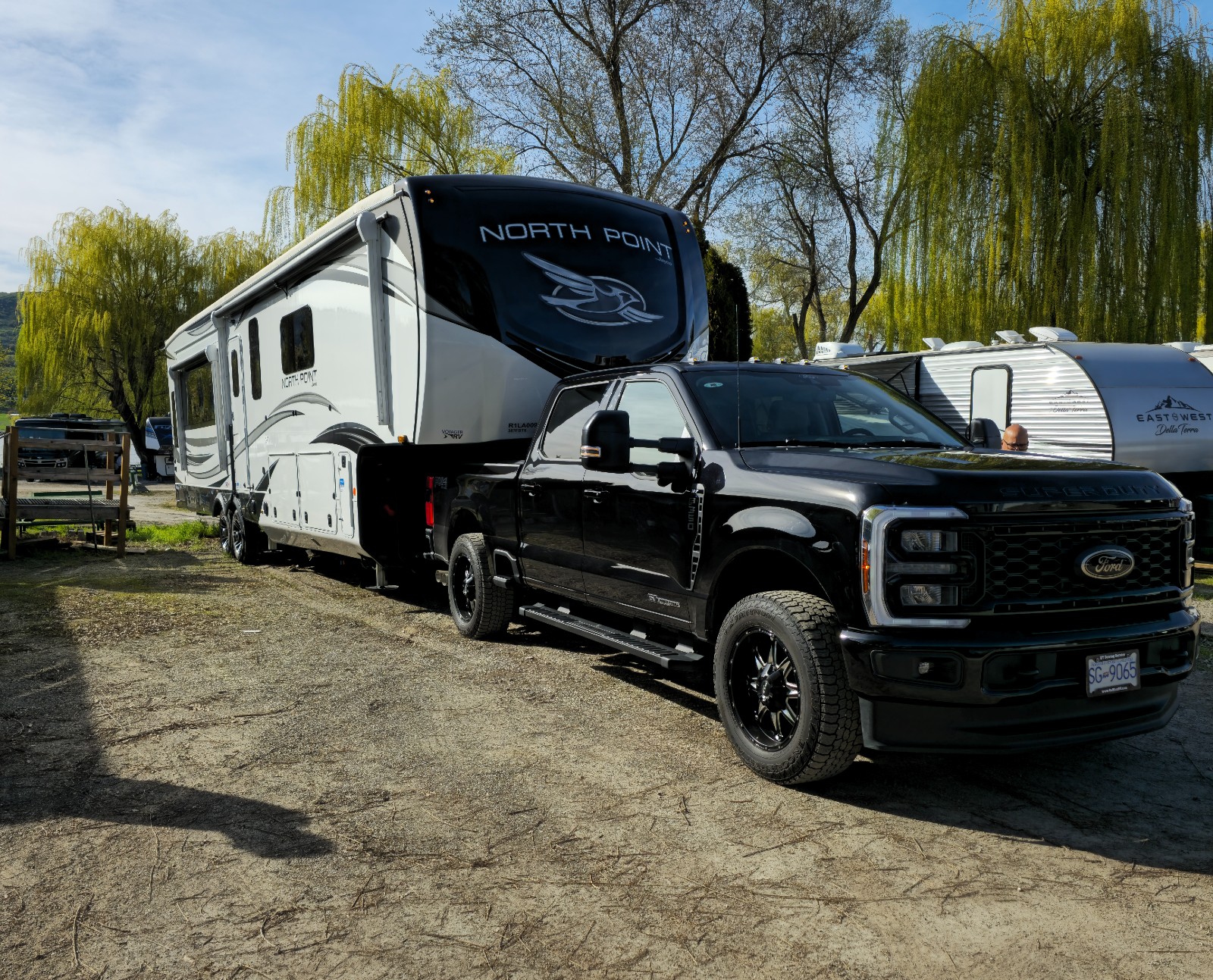
A new travel trailer or 5th wheel can look affordable until the delivery conversation starts. The real question is often not whether you can afford the RV. It is whether hiring an RV hauler versus buying a truck makes better sense for the way you actually plan to use it.
For many owners, especially those buying their first larger towable RV, a heavy-duty truck becomes an unexpected second purchase with its own payments, insurance, maintenance, parking needs, and operating costs. For others who move their RV often, owning the right truck can provide useful flexibility. The right answer comes down to frequency, distance, trailer size, confidence behind the wheel, and how much time you want to spend managing the trip.
The real cost of buying a truck
The purchase price is only the starting point. A truck capable of handling a travel trailer or 5th wheel safely may need a suitable tow rating, payload capacity, hitch setup, brake controller, mirrors, tires, and other equipment matched to the RV. A truck that can pull a trailer is not automatically the right truck for that specific trailer.
Then come the ongoing costs. A larger pickup generally uses more fuel than a daily commuter vehicle, and insurance, maintenance, tires, repairs, registration, and depreciation all add up. If the truck is primarily used to move the RV a few times each year, it may spend most of its life sitting in a driveway or storage space while still costing money.
There is also the practical issue of owning a big truck year-round. It can be less convenient in city parking lots, tighter campgrounds, ferry lineups, fuel stations, and everyday errands. Some RV owners are happy with that tradeoff because the truck serves other purposes. Others would rather keep the SUV, crossover, or passenger vehicle they already enjoy driving and arrange RV transport when needed.
Hiring an RV hauler versus buying a truck: when hauling wins
Professional hauling tends to make the most sense when the RV is moved occasionally or for a specific job. Common situations include dealer pickup, delivery to a seasonal site, transport to a service center, relocation to a new property, winter storage moves, or bringing an RV home after a purchase.
In these cases, you are paying for a defined move instead of carrying the cost of a truck every month. A quote also gives you a clear number to compare against the annual cost of truck ownership. That comparison is often more revealing than simply comparing a hauling fee with a monthly truck payment.
Professional transport also removes the operational work. The hauler handles the route planning, fuel stops, hitching process, road conditions, and destination delivery. For routes involving Vancouver Island, ferry scheduling and terminal procedures add another layer of planning. A hauler familiar with those routes can coordinate the move rather than leaving the owner to work through the details for the first time.
This approach is especially practical for people who want to enjoy the RV once it is set up, not spend hours learning how to maneuver a long trailer through traffic, backing into unfamiliar sites, or finding room to refuel. That is not a lack of RV experience. It is simply deciding where your time and attention are best spent.
What a professional hauler brings to the job
A reputable RV hauling company is not just providing a truck and a driver. The service should include appropriate licensing, commercial insurance, equipment suited to the job, and experience with travel trailers and 5th wheels. Those details matter when you are entrusting a valuable RV to someone else.
Experience is particularly valuable with larger units and more complicated routes. Weight distribution, hitch connections, turning clearance, grades, wind, road surfaces, and destination access all affect a move. An experienced operator recognizes potential issues before the RV is on the road and can ask the practical questions that prevent surprises at pickup or delivery.
For example, the destination may have a narrow entrance, soft ground, a steep driveway, low branches, or limited turnaround space. A good transport plan accounts for those conditions early. It may also involve confirming the RV is ready to move, checking that slide-outs are secured, ensuring loose items are stored, and verifying the site contact is available when the hauler arrives.
GoMax RV focuses specifically on moving towable RVs, including travel trailers and 5th wheels under 44 feet, so the conversation stays centered on the equipment and route involved rather than a generic freight solution.
When buying a truck may be the better choice
Owning a properly matched truck can be worthwhile if you move your RV frequently throughout the season. If you regularly take weekend trips, change campgrounds several times a year, or want the freedom to leave whenever plans change, hiring a hauler for every move may become less convenient and more expensive over time.
A truck may also be the sensible choice if it already fits your lifestyle outside RV ownership. Some owners use one for work, property maintenance, hauling equipment, or winter driving. In that case, the RV capability is one benefit among several rather than the sole reason for the purchase.
Still, frequent travel does not automatically mean you need to buy. Some owners keep their RV at one seasonal site for most of the year and only need one move in and one move out. Others prefer to have the RV delivered to a destination, then use a separate everyday vehicle for local driving. The useful question is not, “Could I use a truck?” It is, “How many times will I realistically need it for this RV?”
Do not base the decision on tow rating alone
A truck’s advertised maximum tow rating is only one part of the picture. Payload, hitch weight, trailer configuration, passengers, cargo, and installed equipment all affect whether a setup is appropriate. This is particularly relevant with 5th wheels, where pin weight can place significant weight in the truck bed.
Buying too little truck can create a stressful and unsafe arrangement. Buying more truck than you need can mean paying for capability that sits unused. Before purchasing, get the RV’s actual loaded weight and confirm the truck and hitch combination are suitable. Do not rely only on a brochure dry weight or a salesperson’s quick estimate.
If you hire a hauler, provide accurate RV details when requesting a quote: make, model, length, type of hitch, pickup location, destination, and any access concerns. Clear information helps the company assign appropriate equipment and price the job properly.
Compare annual ownership costs with your actual moves
The best way to make this decision is to put real numbers beside your actual plans. Estimate how many moves you expect in the next 12 to 24 months, including dealer delivery, seasonal relocation, service appointments, storage moves, and camping trips. Then compare professional hauling quotes with the full annual cost of owning and operating a truck.
Include more than the payment. Account for fuel, insurance, maintenance, tires, accessories, parking or storage, and the value lost as the truck depreciates. Also consider the personal cost: time off work for a long delivery day, hotel stays if the route requires an overnight stop, and the stress of handling a large RV on unfamiliar roads.
The result will not be identical for every owner. A family that travels with a trailer every other weekend may benefit from ownership. A buyer who wants a new 5th wheel delivered to a permanent lot and moved only for service may save substantially by hiring the job out.
Make the choice around how you want to use your RV
An RV is supposed to create more time outdoors, more flexibility, and fewer reasons to put off a trip. If a heavy-duty truck supports that lifestyle and will earn its keep beyond RV moves, ownership can be a solid decision. If the truck would exist mainly to handle a handful of transport days each year, professional hauling is often the cleaner and more cost-conscious option.
Before committing to either route, map out your next few moves and request a detailed hauling quote based on the actual RV, route, and site conditions. A clear plan for getting the RV where it needs to be lets you focus on the part that matters: arriving ready to enjoy it.
Comments are closed