

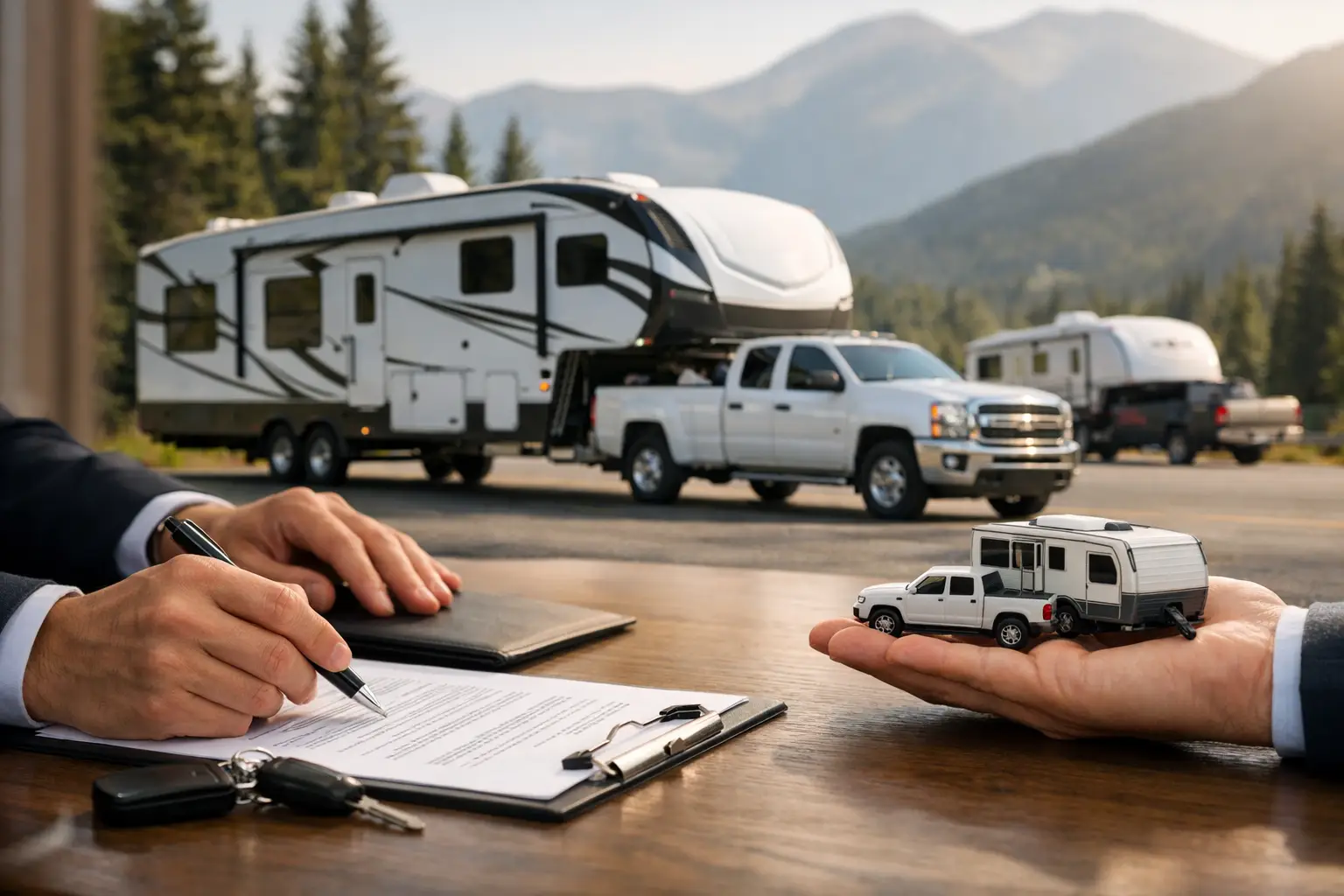
Handing over the keys to a travel trailer or fifth wheel is a big decision. These units are valuable, often customized, and sometimes headed hundreds of miles to a dealer, service center, seasonal site, or new home. So, what does RV hauling insurance cover? The short answer is that it should protect against specific losses while the RV is being professionally transported, but the exact protection depends on the hauler’s policy, limits, and the circumstances of the move.
The word “insured” is reassuring, but it is not a complete answer by itself. Before booking an RV transport, owners should understand which policy responds to an accident, what damage is included, whether deductibles apply, and where their own RV policy fits into the picture.
What Does RV Hauling Insurance Cover in Practice?
A professional RV hauler typically carries commercial insurance designed for the work of moving customer-owned RVs. Coverage commonly includes liability for damage or injuries caused to others during the transport, as well as coverage intended to address physical damage to the customer’s RV while it is in the hauler’s care.
That distinction matters. Liability coverage generally responds when the hauling operation causes harm to another person’s property or injuries to another party. Physical damage, cargo, or care-custody-control coverage is the part most owners want to understand because it may apply if the trailer or fifth wheel is damaged during the trip.
For example, if an insured hauler is involved in a road accident that damages the RV being moved, the appropriate coverage may respond to the repair cost, subject to policy terms, limits, and deductibles. The same may be true for certain losses during loading, unloading, hookup, or delivery. But no two policies are identical, and coverage should never be assumed based on a quick verbal assurance.
A properly insured transport provider should be able to explain the kind of coverage they carry and provide confirmation when requested. That conversation is part of choosing a professional, not an inconvenience.
The Main Types of Protection to Ask About
Commercial liability coverage
Commercial liability is there to address third-party claims arising from the hauling operation. If a transport incident damages someone else’s property or causes an injury, this coverage is generally the first line of protection for those claims.
For the RV owner, commercial liability is still relevant because a serious incident can involve more than the RV itself. It can affect the delivery schedule, create claims questions, and complicate a move across provincial or state lines. A professional operator carries appropriate commercial coverage because the responsibility of moving a large towable RV is not the same as taking a personal trailer out for the weekend.
Coverage for the RV in the hauler’s care
Owners should specifically ask how the RV itself is protected while it is being transported. Depending on the insurer and policy language, this may be described as cargo coverage, physical damage coverage, or care, custody, and control coverage.
The name matters less than the practical answer: if the trailer or fifth wheel is damaged while the hauler has possession of it, what policy applies and up to what dollar amount? Ask whether the limit is enough to cover the actual value of your RV, including any installed upgrades that materially raise its value.
A policy with a limit far below the RV’s replacement or repair value may leave a gap after a major loss. This is particularly worth checking for newer fifth wheels, premium travel trailers, and units with solar systems, generators, upgraded suspension, or expensive interior modifications.
Loading, hookup, and delivery protection
The trip itself is only one part of the job. Damage can also occur while coupling the RV, adjusting the hitch, moving through a tight lot, backing into a seasonal site, or delivering to a service facility.
Ask whether the hauler’s coverage applies from pickup through final delivery, including normal handling connected with the transport. If the destination has a narrow access road, steep grade, soft ground, low branches, or a difficult backing area, disclose that early. Good planning reduces the chance of damage and gives the hauler a fair opportunity to identify any site-specific limitations.
Theft, fire, weather, and other losses
Whether coverage applies to theft, fire, vandalism, falling objects, wind, hail, or severe weather depends on the policy. These events are not always treated the same way as collision damage.
For a long-distance move, especially one involving overnight stops or ferry schedules, it is reasonable to ask how the RV is secured when it is not actively moving and what coverage applies if an unexpected event occurs. A direct answer is better than discovering a limitation after the fact.
What Hauling Insurance May Not Cover
Insurance is not a promise that every issue with an RV will be paid for. Policies contain exclusions, conditions, deductibles, and maximum limits. The most dependable way to avoid surprises is to discuss those points before pickup.
Pre-existing damage is a common issue. A dented skirt, cracked window, worn tire, damaged awning, water intrusion, or mechanical problem that existed before transport is not something a hauler’s policy would normally fix. That is why a condition report and clear pickup photos are practical protections for both the owner and the hauler.
Mechanical breakdown is another area to clarify. Transport insurance generally is not a maintenance plan. If a tire fails because it was old or underinflated, a wheel bearing has been neglected, or the RV has a structural problem unrelated to the hauling operation, coverage may be limited or unavailable. The cause of the damage matters.
Personal belongings can also be a gray area. Some policies do not cover loose items inside the RV, and unsecured belongings can cause interior damage during travel. Remove valuables, secure cabinet doors, latch drawers, lower antennas, and follow the hauler’s preparation instructions. Your own RV or homeowners policy may be relevant for belongings, but confirm that directly with your insurer.
Finally, coverage can be affected by inaccurate information. An RV that is longer, heavier, or in worse condition than described may create operational and insurance problems. Provide the actual year, make, model, length, weight, hitch type, pickup location, and delivery conditions when requesting a quote.
Your Own RV Policy Still Matters
A professional hauler’s insurance does not automatically replace your personal RV insurance. Keep your own policy active unless your insurer tells you otherwise. Your policy may provide physical damage protection, coverage for certain personal property, or protection that applies if there is a dispute over responsibility.
Call your insurer before the move and tell them the RV will be transported by a professional. Ask whether your coverage remains in force during commercial transport, whether any restrictions apply, and what deductible would apply if you had to make a claim. If both policies could respond, insurers may sort out responsibility afterward, but you do not want to learn that your own policy had a transport exclusion after a loss.
This is also the time to verify your declared RV value. If your policy is based on an outdated amount, you may be underinsured even if the hauler carries solid commercial coverage.
Questions Worth Asking Before You Book
You do not need to become an insurance expert, but you should get clear answers. Ask whether the hauler is commercially licensed and insured for RV transport, what coverage protects your RV while it is in their possession, and what the policy limit is. Confirm whether there is a deductible, who is responsible for it, and whether coverage includes pickup, transit, and delivery handling.
Also ask how pre-existing condition is documented and what preparation is required before pickup. If your route includes a ferry, remote access roads, mountain passes, or a seasonal property with tight turns, discuss those details in advance. They affect both the plan and the risk.
At GoMax RV, the practical approach is to assess the RV, route, and delivery conditions before the move rather than treating every haul as identical. That is especially useful for owners moving between British Columbia and Alberta, where distance, weather, ferry timing, and site access can change the job quickly.
A Better Standard Than “Fully Insured”
“Fully insured” is a starting point, not the finish line. The better standard is knowing what is insured, for how much, during which parts of the move, and under what conditions. A qualified RV hauler should welcome those questions because clear expectations protect everyone involved.
Before your next RV move, take a few minutes to confirm coverage, document the unit’s condition, and prepare it properly for transport. That small amount of work can make the handoff far less stressful and let you focus on where the RV is going, not what could go wrong getting it there.
Comments are closed