

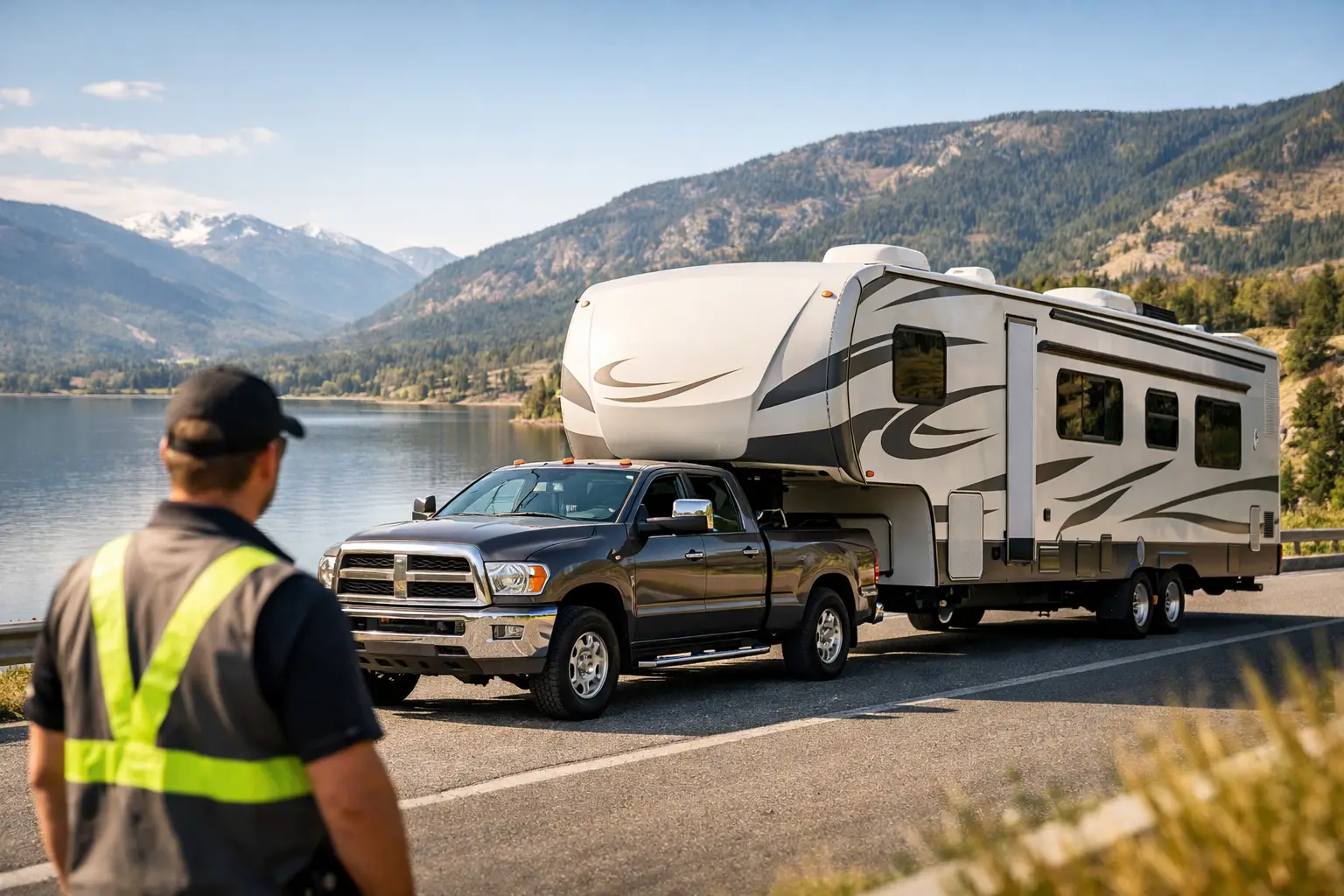
A trailer can be ready for the road while its owner is not. Maybe you bought a new fifth wheel from a dealer across the valley, your seasonal site is opening, or the unit needs to get to a service center before the busy season. RV towing Okanagan owners arrange professionally solves the part of RV ownership that often causes the most stress: moving a large towable unit safely, on schedule, without buying and operating a heavy-duty truck.
The Okanagan is built for camping, but it is not always easy towing country. Highway grades, changing weather, busy city corridors, narrow access roads, campground gates, and tight storage compounds can turn a straightforward move into a long day. For travel trailer and fifth wheel owners, professional transport is often the practical choice, not a luxury.
When RV Towing in Okanagan Is the Right Call
Hiring a professional makes sense whenever the move requires more truck, more experience, or more time than you want to commit. A common example is dealer delivery. You can complete the purchase, handle the walkthrough, and have the RV delivered to your driveway, storage location, or seasonal site while you drive your personal vehicle.
Seasonal moves are another frequent reason. Many owners keep a trailer at a lake lot or campground for the summer, then move it to storage, service, or a different site when the season changes. That move may be only a few hours on the map, but it still involves planning around site access, check-in windows, road conditions, and the size of the RV.
Service transport is equally useful. If a trailer needs warranty work, repairs, winterizing, or an inspection, getting it to the right facility should not require you to rearrange work, borrow a truck, or learn how to manage a combination you are not comfortable pulling. A point-to-point transport lets you focus on the repair and use your own time where it matters.
Relocation is the other major situation. Owners moving between communities in British Columbia or into Alberta may want their RV to travel separately from the household move. It avoids adding a large trailer to an already complicated relocation day and allows the family to travel in a vehicle that is comfortable for them.
The Real Cost of Towing It Yourself
Owning a towable RV does not automatically mean owning the right equipment to move it. A half-ton pickup may be suitable for some lighter travel trailers, but a fifth wheel or larger unit can demand significantly more towing and payload capacity. The tow vehicle, hitch setup, trailer brake controller, tires, cooling capacity, and weight ratings all need to work together.
Buying a capable truck solely for occasional use is a major expense. There is the purchase price, insurance, maintenance, fuel, registration, and the practical reality of parking and driving a large truck the rest of the year. For many owners, professional RV transport costs less than making that investment for a few annual moves.
There is also the experience factor. Safe towing is not just about getting the trailer connected. It means managing turns, lane position, downhill braking, fuel stops, tire checks, backing into difficult sites, and the extra stopping distance required by a heavy combination. If the trip includes unfamiliar highways or a destination with limited room to maneuver, the savings of doing it yourself can disappear quickly.
What a Professional RV Transport Should Handle
A professional transporter should begin with the details that determine whether the job can be completed safely. That includes the RV type, overall length, approximate weight, hitch style, pickup and delivery addresses, access conditions, and required timing. Travel trailers and fifth wheels do not have identical connection requirements, so the equipment and plan need to match the unit.
Licensed, insured service matters because an RV is a significant asset. Ask direct questions about coverage, towing experience, and the type of trailers regularly moved. A provider who specializes in towable RVs understands the practical differences between a compact travel trailer, a long fifth wheel, and a unit that needs careful placement at a seasonal site.
The destination matters as much as the route. A large, open dealership lot is different from a sloped driveway, a wooded campground, or a storage compound with narrow lanes. Sharing clear arrival instructions early helps prevent surprises. If there is a gate code, site contact, restricted arrival time, or difficult turn, provide it before transport day.
For moves involving Vancouver Island, ferry coordination needs to be part of the quote and schedule. Trailer length affects ferry space, reservations can be limited, and timing at the terminal matters. Ferry-inclusive RV transport saves owners from trying to coordinate a large rig through terminal traffic on their own.
Prepare the RV Before Pickup
The owner still has a few important jobs before a scheduled move. Secure loose items inside the RV, close and latch exterior compartments, retract slides and awnings, and make sure the hitch area is accessible. Remove personal items that could shift or break during travel. Confirm the trailer has a current registration, functioning lights, properly inflated tires, and a battery with enough charge for the breakaway system.
If the RV is at a campground, check whether the site has a departure window or requires notice at the office. At the delivery end, make sure someone can provide access if the destination is gated or the exact placement requires direction. These small steps keep the move efficient and reduce the chance of a delay.
Choosing the Right Okanagan RV Towing Provider
Price matters, but the lowest quote is not always the lowest-risk option. A useful quote should reflect the distance, RV size, pickup and delivery conditions, route requirements, and any ferry or scheduling needs. Be cautious of vague pricing that does not establish what is included or how unexpected access problems are handled.
Experience in the region has value. The Okanagan includes busy highway stretches, rural roads, lake communities, steep grades, and campgrounds designed around tight internal roads. A driver who has handled long towable RVs knows that route planning is more than selecting the fastest line on a map.
It is also reasonable to ask about communication. You should know the planned pickup date, what needs to be ready, and how delivery timing will be coordinated. The goal is not a complicated process. It is clear expectations from the first call through final placement.
GoMax RV focuses on travel trailer and fifth wheel transport under 44 feet, bringing more than 20 years of personal towing experience to moves across British Columbia and Alberta. That specialization matters when the job is not simply getting from one address to another, but getting a valuable RV there safely and placed where it needs to be.
A Better Way to Start the RV Season
There is a difference between being capable of towing an RV and wanting to take on every move yourself. Some owners enjoy the drive and have the equipment for it. Others would rather meet their trailer at the campsite, handle the setup, and start the weekend without white-knuckling traffic, grades, or a difficult backing job.
For dealer pickups, service appointments, seasonal relocations, and long-distance moves, request a quote early with the RV details and both addresses. A well-planned professional transport gives you back the time and confidence to enjoy the part of RV ownership you bought the trailer for.
Comments are closed