

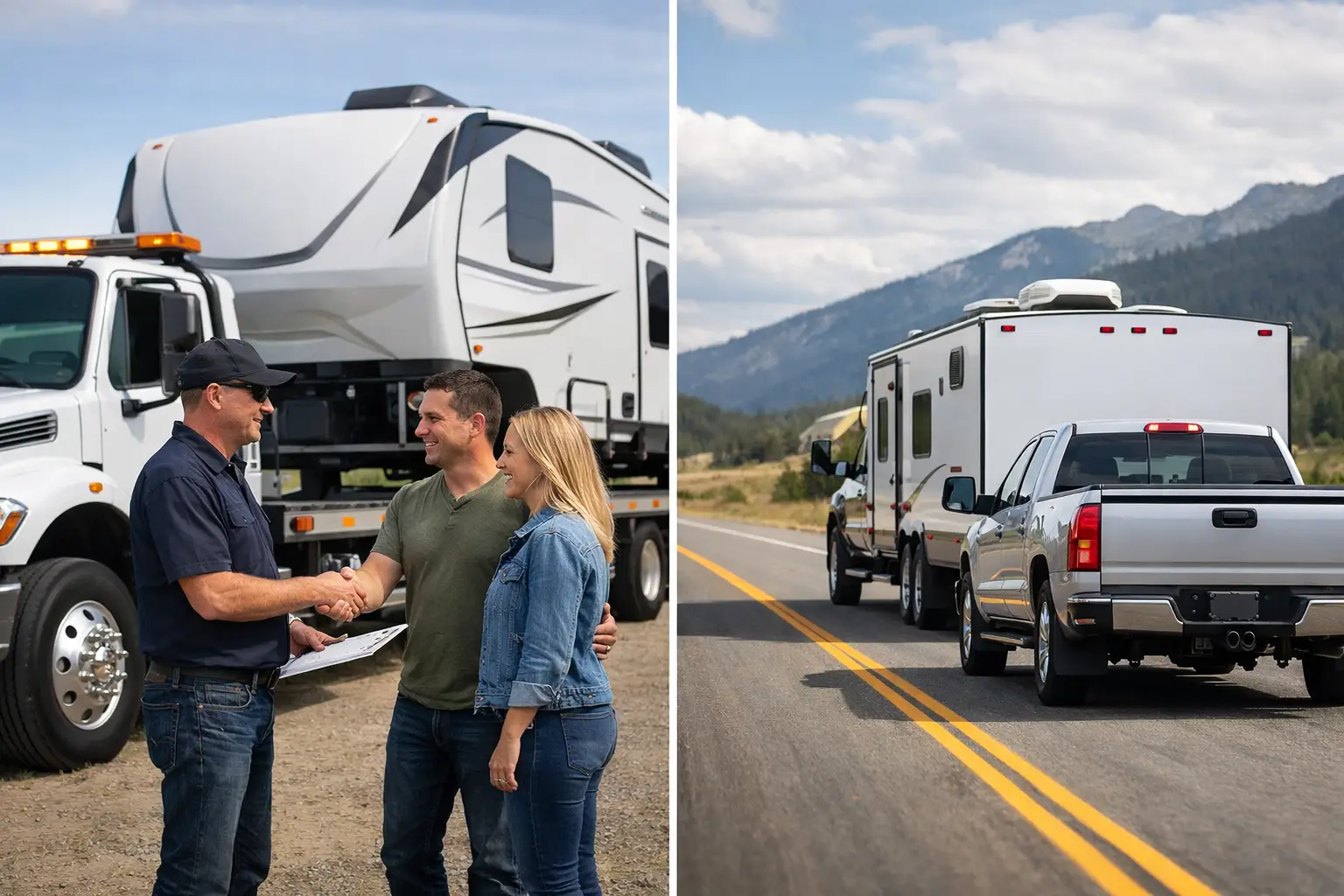
A new travel trailer is ready at the dealership. Your seasonal site is booked. Then comes the part that can change the whole experience: getting a large RV safely from point A to point B. When weighing RV delivery versus self towing, the right choice is not always about whether you are capable of towing. It is about the equipment you own, the route ahead, the value of your time, and how much responsibility you want to take on during the trip.
For some owners, towing is part of the RV lifestyle. For others, it is the one part they would gladly hand off. Both approaches can make sense, but they come with very different costs, risks, and logistics.
RV Delivery Versus Self Towing: Start With the Real Job
A short, flat trip to a nearby campground is not the same job as moving a fifth wheel through mountain passes, onto a ferry, or across provincial borders. Before deciding, look at the actual move: the RV’s loaded weight and length, pickup and delivery access, road conditions, fuel stops, timing, and whether you need to make the same trip yourself.
Self towing means you provide the truck, hitch setup, insurance, fuel, driving time, and route planning. You are also responsible for handling tight turns, steep grades, backing into the destination site, and any delays along the way.
Professional RV delivery means an experienced hauler handles the transport while you drive your own personal vehicle, fly to your destination, or simply meet the RV there later. This is often the more practical option when the RV is being moved for a one-time purchase, service appointment, seasonal relocation, or long-distance move.
The best decision comes from comparing the full picture, not just the price of a single trip.
The Truck Cost Is Bigger Than It First Appears
Many travel trailers and fifth wheels require more than a standard SUV or light-duty pickup. A properly matched tow vehicle needs sufficient towing capacity, payload capacity, hitch capacity, braking capability, and stability for the specific RV. Fifth wheels especially can place substantial weight in the bed of the truck, which affects payload before passengers, cargo, tools, and fuel are even considered.
If you already own the right truck and use it regularly, self towing may be a sensible choice. But buying a heavy-duty truck solely to move an RV a few times a year can change the math quickly. The purchase price is only the start. There is also registration, insurance, maintenance, tires, fuel consumption, hitch equipment, and depreciation.
A professional delivery quote is easier to compare when you put it beside those ownership costs. It can be especially cost-effective for owners who keep their trailer on a seasonal site, use it as a destination unit, or only need transport for dealer pickup, repairs, winter storage, and occasional relocations.
There is also a practical benefit that does not show up neatly on a spreadsheet: you can own the vehicle that fits your everyday life. A family SUV, crossover, or standard pickup may be all you need when a professional handles the RV move.
Safety Depends on More Than Confidence
Towing experience matters, but so does repetition. A professional RV transporter spends time managing trailer length, brake response, wide turns, weight distribution, fuel planning, crosswinds, grades, and safe stopping distances. Those details become more demanding when weather changes, traffic builds, or the delivery point has limited room to maneuver.
Self towing can be safe when the truck and RV are properly matched, the equipment is correctly set up, and the driver has the skill and comfort level for the route. It may be a good fit for an owner who tows frequently, understands the limits of their setup, and prefers to stay in control of every part of the trip.
But confidence should not be confused with preparation. A driver who has towed a utility trailer or a small camper may still find a long travel trailer or fifth wheel very different on a downhill grade, in a busy fuel station, or when backing through a narrow campground entrance.
Professional transport removes that driving burden. It also gives owners the reassurance that the person moving their RV is licensed, insured, and focused on the job from pickup through delivery.
Time and Travel Stress Have Real Value
A long RV move rarely takes only the hours shown on a map. Towing changes the pace of every part of the day. Stops take longer. Parking choices are limited. You need to leave more room in traffic, watch your route for low clearances and restricted roads, and avoid getting boxed into tight urban areas.
Then there is the return trip. If you move your RV to a seasonal site several hours away, you still need a way to get home. Some owners arrange a second driver, leave another vehicle at the destination, or make a separate trip later. Those arrangements can work, but they add time and coordination.
RV delivery gives you options. You can drive your own vehicle directly to the site, travel separately, or schedule the transport around your work and family commitments. If your RV is headed to a service center, you do not have to spend a day or more managing the trip yourself.
For owners in British Columbia and Alberta, route conditions can add another layer. Mountain grades, changing weather, ferry schedules, and busy seasonal travel periods are not minor details. A hauler who regularly plans RV moves understands that an efficient route is not always the shortest route on a map.
When Self Towing Is a Good Fit
There is no reason to outsource every move if towing is something you enjoy and are set up to do safely. Self towing can be the right option when you have a properly equipped truck, a well-matched hitch system, current towing experience, and a manageable route. It also makes sense for frequent campers who move their RV often and want the flexibility to change plans at the last minute.
The key is to be honest about the job. If the trip includes unfamiliar mountain roads, a long-distance relocation, difficult site access, or a trailer that sits close to your truck’s limits, the convenience of doing it yourself can disappear fast.
A useful question is this: if the move were not connected to your vacation, would you still want to spend the day driving it? If the answer is no, delivery is worth considering.
When Professional RV Delivery Makes More Sense
Professional delivery is often the better choice for a new RV purchase. Dealership pickup can be stressful for first-time owners, especially when the route home includes highways, city traffic, or a long drive. Having the RV delivered lets you focus on learning the unit, preparing your site, and starting your first trip without a high-pressure towing day.
It is also a strong option for seasonal moves. If your trailer stays at a campground for months at a time, there is little benefit in owning and operating a large truck simply for opening and closing weekend transport. The same applies to service moves, warranty work, storage transfers, and relocations between provinces.
Ferry travel is another situation where coordination matters. An RV transport provider can account for trailer dimensions, reservations, check-in timing, and the added planning required for Vancouver Island deliveries. That means fewer moving parts for the owner to manage.
GoMax RV transports travel trailers and fifth wheels under 44 feet on routes throughout Western Canada. With more than 20 years of personal towing experience, the focus is straightforward: get the RV picked up, moved, and delivered with the right equipment, proper coverage, and a realistic plan for the route.
Prepare the RV Before Either Type of Move
Whether you tow it yourself or arrange delivery, the RV should be ready before pickup. Secure interior items, latch cabinets, close roof vents, retract steps and slides, and make sure compartment doors are locked. Check that the tires are in usable condition and inflated correctly, and confirm that the brakes, lights, breakaway system, and hitch connection are functioning as they should.
You should also tell the transporter about anything that affects access. Low branches, sharp turns, soft ground, narrow gates, steep driveways, or an uneven site can all affect delivery planning. Clear information before the move helps prevent delays at the destination.
For a quote, have the pickup and delivery locations, RV year, make, model, length, approximate weight, and preferred dates ready. If a ferry crossing, dealership appointment, service deadline, or campground check-in is involved, include that as well. Those details make it possible to plan the move properly instead of guessing.
The best RV move is the one that gets your trailer where it needs to be without turning the trip into a source of stress. Choose self towing when you have the right setup and genuinely want the responsibility. Choose professional delivery when your time, safety margin, and peace of mind are worth protecting.
Comments are closed