

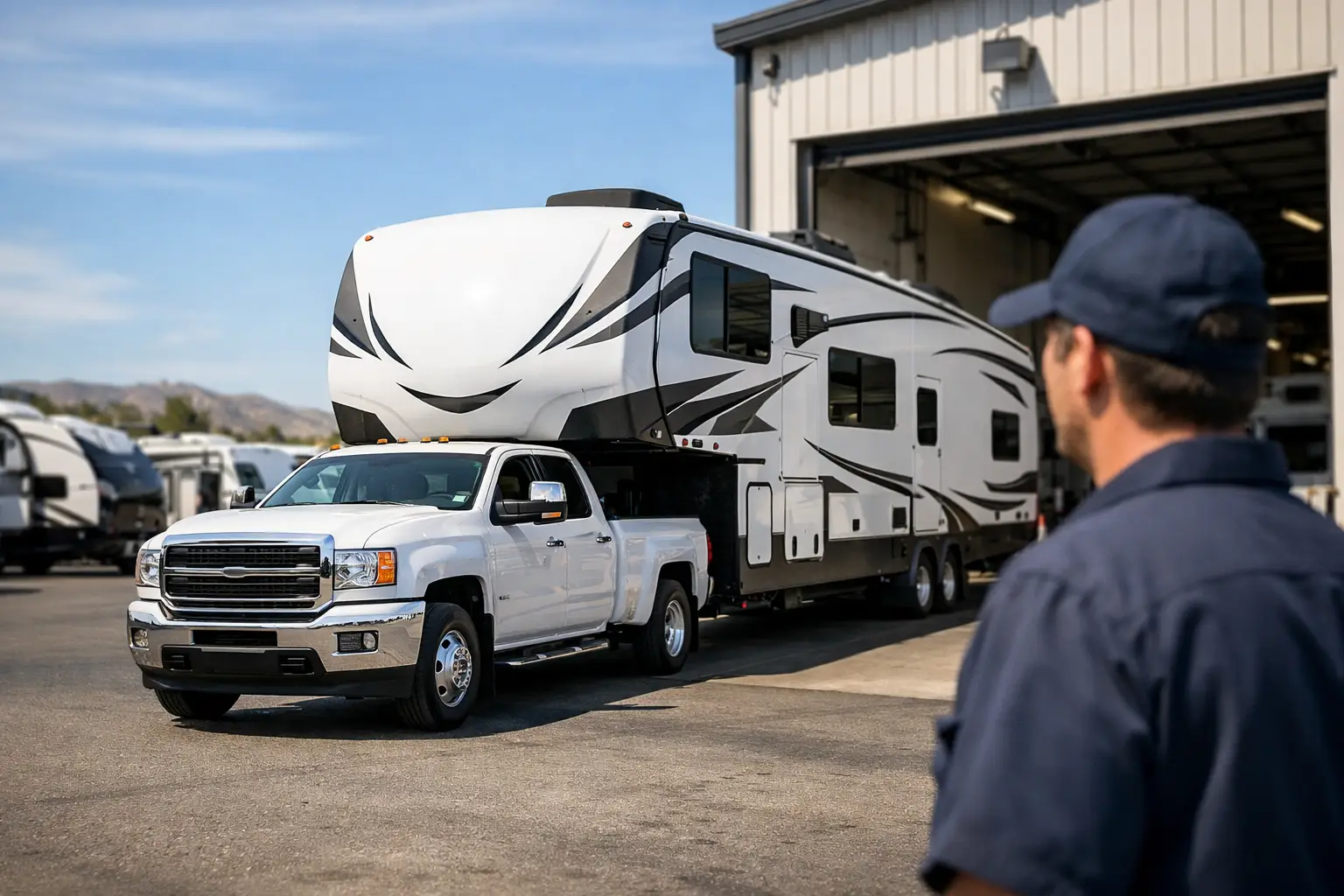
A lot of RV service appointments get complicated before the work even starts. The repair shop is booked, the trailer is due in by a certain date, and now you have to figure out how to get it there without rearranging your whole week, borrowing a truck, or white-knuckling the drive yourself. That is where rv transport to service center becomes the practical solution.
If your travel trailer or 5th wheel needs warranty work, collision repair, appliance service, winterizing, or a full inspection, the biggest problem is often the move itself. Many owners have the RV but not the right truck, not the time, or not the confidence to haul it safely through traffic, mountain routes, construction zones, or ferry schedules. A professional transport service handles that part so you can focus on getting the unit repaired and back in use.
When rv transport to service center makes sense
Some situations are obvious. If your RV is not road-ready, has brake issues, tire concerns, slide damage, or other mechanical problems that make towing risky, hiring a professional is the smart move. The same goes for owners who bought a larger trailer than they want to pull regularly. You may be comfortable towing to a campground a few times a year, but a tight service yard or busy city route is a different kind of job.
There are also everyday cases where it just saves time. Maybe the service center is across the region and you cannot burn a full workday dropping it off. Maybe you are managing a seasonal site and the unit needs annual maintenance before opening weekend. Maybe the dealer scheduled a warranty repair and you do not want to deal with fuel stops, hitching, and maneuvering through unfamiliar streets. In those cases, transport is less about emergency help and more about keeping RV ownership simple.
For many owners, the math is straightforward. If you do not own a heavy-duty tow vehicle, using professional transport for occasional service appointments can cost less than buying, insuring, maintaining, and fueling a truck you barely use.
What a professional RV transport service should handle
Not every hauling company understands towable RVs the same way. Travel trailers and 5th wheels have their own requirements, and those details matter when your unit is headed to a shop for expensive work.
A proper service should be experienced with hitch setup, weight considerations, clearance issues, route planning, and arrival coordination with the service center. That includes confirming who is receiving the RV, what hours the facility accepts drop-offs, and whether the site has enough space for backing and placement. Small mistakes at the destination can create delays, missed appointments, or unnecessary risk.
Insurance and licensing matter too. This is not a detail to gloss over. If someone is moving your RV on public roads, you want to know they are properly covered and qualified for the job. That gives you a clear line of accountability and helps protect one of the more expensive assets you own.
If your route includes added logistics, experience matters even more. In places like British Columbia, that can mean mountain driving, weather changes, and ferry coordination for Vancouver Island deliveries. Those are normal parts of the job for an operator who does this regularly, but they are not small details.
How to prepare your RV for transport to a service center
The smoother the handoff, the smoother the appointment. Before the move, make sure the service center knows the unit is arriving by professional transport and confirm the date, time window, and contact person. If the shop has intake instructions, get those in writing and pass them along.
Inside the RV, secure loose items. Even a short move can shift contents around, especially on rough roads or through stop-and-go traffic. Lock cabinets, latch the fridge, secure any aftermarket accessories, and remove valuables. If the service request involves an interior issue, take a few photos before transport so you have a record of condition.
On the exterior, check that storage compartments are closed and locked, steps are retracted, awnings are secured, and the hitch area is accessible. If the unit has a battery disconnect, propane shutoff, or any service-specific notes, make those easy to find. You do not need to overcomplicate it, but you do want the transporter and the shop to receive a unit that is ready for a clean drop-off.
It also helps to provide the basics up front: year, make, model, length, pickup location, service center address, and any known concerns about the trailer. If there is tire damage, limited ground clearance, a weak jack, or a problem with lights or brakes, say so early. Good transport planning depends on accurate information.
Common service scenarios owners run into
A lot of service transport jobs are not dramatic. They are routine and time-sensitive.
Warranty appointments are one of the most common. New owners often have repairs or adjustments that need to be done at a dealership service department, but they may not have a tow-capable truck yet. Professional delivery to the shop bridges that gap without delaying the work.
Seasonal maintenance is another common case. Owners with trailers parked for long stretches may need transport for bearing service, brake inspection, roof work, appliance repair, or winterizing. In those situations, moving the RV to and from the service center is simply part of keeping the unit in good shape.
Then there are the less convenient problems – a damaged axle, a tire issue, suspension concerns, or body damage after a close encounter with a post, gate, or campsite obstacle. Even if the RV can technically be moved, that does not always mean it should be hauled by the owner. A professional move lowers the stress and reduces the chance of making a bad situation worse.
What affects the cost of RV transport to a service center
Distance is the obvious factor, but it is not the only one. RV size, trailer type, pickup and delivery access, route complexity, timing, and whether the unit needs to be returned after service all play a role.
A straightforward move from a home driveway to a nearby service center is one thing. A pickup from storage with limited access, followed by a longer route, a ferry crossing, or a scheduled handoff at a busy shop is different. The same goes for a 5th wheel versus a smaller travel trailer. Different equipment and planning may be involved.
This is why quote-based pricing makes sense. Accurate pricing depends on the real job, not a generic mileage estimate. If you want a useful quote, give complete information from the start. That usually gets you a faster answer and fewer surprises.
Choosing the right transporter for the job
When your RV is going in for service, reliability matters as much as price. You need the unit to arrive when promised and in the same condition it left. That means working with a company that specializes in RV hauling, not one that treats it like just another trailer move.
Ask practical questions. Are they experienced with travel trailers and 5th wheels? Are they licensed and insured? Do they understand service center coordination and delivery windows? Have they handled routes like yours before? Clear answers usually tell you a lot.
This is one area where niche experience pays off. A company like GoMax RV is built around moving towable RVs, which means the job is approached with the right equipment, the right planning, and the right expectations. That is what most owners actually want – less hassle, less guesswork, and a clean handoff from pickup to service intake.
Why professional transport is often the easier call
A service appointment should fix a problem, not create three new ones. If getting your RV to the shop means borrowing equipment, taking time off, navigating roads you would rather avoid, or worrying the whole way there, the transport decision is pretty simple.
Professional rv transport to service center gives you a workable option when the move is the hardest part of the job. It keeps the process organized, protects your time, and helps make sure your trailer or 5th wheel gets where it needs to go without unnecessary stress. If your next appointment is on the calendar, the best first step may be arranging the move before it becomes the problem.
Comments are closed