

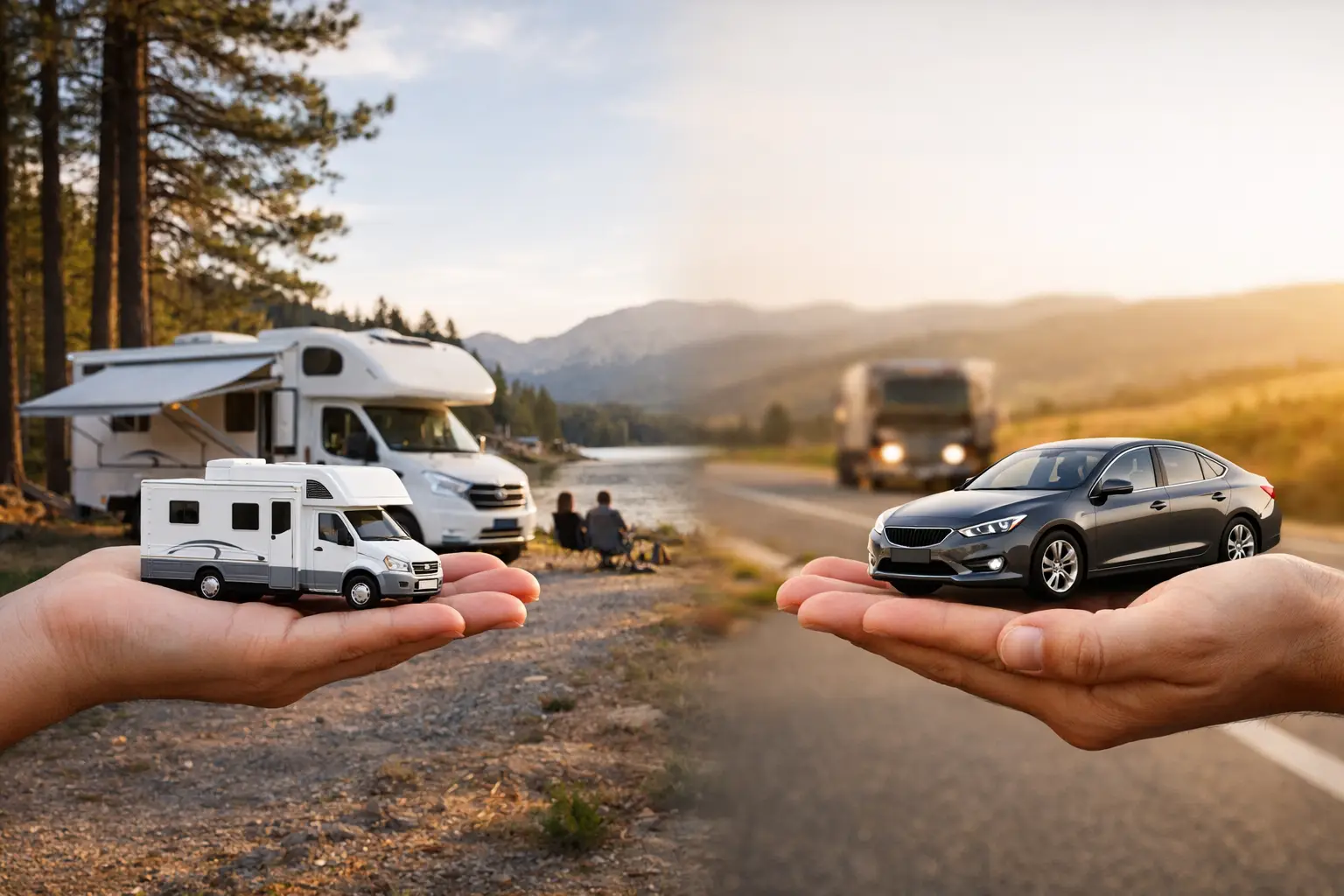
A professional RV move should not leave you guessing about who is responsible if something goes wrong between pickup and delivery. RV insurance versus carrier coverage is not a matter of choosing one over the other. They are different forms of protection, written for different risks, and both deserve a close look before your travel trailer or fifth wheel leaves the site.
For an owner, the goal is simple: know what your own policy protects, what the transport company’s coverage protects, and where exclusions, deductibles, or limits could affect a claim. A clear conversation before the move is far easier than sorting out coverage after damage has occurred.
RV Insurance Versus Carrier Coverage: The Core Difference
Your RV insurance is coverage you purchase for your trailer or fifth wheel. Depending on the policy, it may include physical damage protection, such as collision and comprehensive coverage, along with other options like contents coverage, emergency expenses, or roadside-related benefits. The details vary by insurer and policy, but the trailer is the insured asset.
Carrier coverage belongs to the company transporting the RV. A professional hauler may carry commercial liability insurance and cargo or carrier’s legal liability coverage. These policies are designed to respond to losses connected to the hauler’s operations, subject to the policy terms, limits, and the carrier’s legal responsibility for the loss.
That distinction matters. Carrier coverage is not automatically a replacement for your own RV insurance. It may not cover every type of damage, every circumstance, or the full value of your RV. Your own policy may still be the most direct path for repairing damage to your unit, even if another party may ultimately be responsible.
What Your RV Policy May Cover During Transport
Many owners assume their RV policy stops applying once a professional takes over. That is not always the case, but you should never rely on assumptions. Call your insurer before booking transport and explain exactly what is happening: a licensed company will be hauling your travel trailer or fifth wheel from one location to another, without you present.
Ask whether your collision and comprehensive coverage remain in force while the RV is being professionally transported. Also ask whether there are restrictions on commercial hauling, long-distance moves, unattended RVs, provincial travel, ferry travel, or storage before and after delivery.
If damage occurs and your policy responds, you may be responsible for your deductible. Your insurer may then investigate whether it can recover costs from the transport company or its insurer. That process can take time, which is one reason owners should understand their policy rather than assuming the carrier’s coverage will handle everything immediately.
Personal belongings are another common blind spot. Built-in components such as appliances and permanently attached equipment may be treated differently from clothing, cookware, electronics, tools, camping gear, or other contents inside the RV. Some policies limit contents coverage, while others exclude certain valuables. If you are moving a unit for service, seasonal placement, or a long-distance relocation, remove high-value and breakable items whenever practical.
What a Professional Carrier’s Coverage Is Meant to Do
A legitimate RV transport company should be prepared to explain its licensing and insurance in plain language. Commercial liability coverage addresses third-party claims arising from the company’s operations. Cargo coverage or carrier’s legal liability coverage is more closely connected to the RV being transported, but the exact protection depends on the policy and the circumstances of the loss.
The phrase “carrier coverage” can sound broader than it is. A policy may have a maximum limit per unit, a deductible, exclusions for pre-existing damage, conditions related to loading and unloading, or requirements for prompt reporting. Some coverage responds only when the carrier is legally liable for the loss. It is not a blank check for any damage found after delivery.
This is why the lowest transport quote is not always the best value. A company that can clearly confirm its commercial coverage, operates within the right licensing requirements, and understands RV-specific handling is offering more than a pickup and delivery date. It is reducing the uncertainty around a valuable asset.
At GoMax RV, the focus is on professionally moving towable RVs, including travel trailers and fifth wheels, with the operational planning that job requires. That includes discussing the route, pickup conditions, delivery access, and coverage expectations before the move begins.
Where Coverage Gaps Can Show Up
The most frustrating insurance problems often come from details that were never discussed. Pre-existing damage is a clear example. If a trailer has an old scrape, cracked lens, soft spot, damaged awning, or worn tire before pickup, it should be documented. Without a record, it can be difficult to determine when the issue occurred.
Mechanical failure can also complicate matters. A tire blowout, bearing issue, brake problem, or structural defect may not be covered the same way as damage caused by a collision or handling incident. Maintenance-related issues are generally different from accidental loss. If the RV has known concerns, disclose them before transport so the move can be planned properly.
Weather and road conditions are another area where “covered” is not always straightforward. A qualified carrier will make safe operational decisions around wind, snow, visibility, road closures, and ferry schedules. But insurance outcomes depend on the facts, the policy language, and whether damage resulted from an insured event. No responsible hauler should promise that every imaginable event is automatically covered.
Ferry travel deserves its own discussion for moves involving Vancouver Island. The transport company may coordinate the ferry crossing, but owners should still confirm that their RV policy applies throughout the route and ask how any damage discovered during the move would be documented and reported.
Questions to Ask Before You Schedule an RV Move
You do not need to become an insurance expert. You do need straightforward answers from both your insurer and the carrier. Start by confirming that your RV policy remains active during commercial transport and ask what deductible would apply if you had to make a claim.
Then ask the carrier what commercial liability and cargo-related coverage it carries, whether there is a stated limit for the RV being moved, and whether the coverage is based on declared value or legal liability. Ask how damage claims are reported, who you contact first, and what documentation the company provides at pickup and delivery.
It is also reasonable to ask about the practical side of the job. Will the RV be inspected before departure? Are pickup and drop-off photos taken? What happens if access at the destination is tighter than expected? How are delays caused by road conditions, ferry schedules, or site access handled? Clear answers are a good sign that the carrier understands the work, not just the route.
Protect the RV Before It Leaves the Site
Insurance is one layer of protection. Good preparation reduces the chance that it will be needed. Before pickup, walk around the RV and take date-stamped photos of all sides, the roofline if practical, windows, awnings, storage doors, tires, hitch area, and any existing marks. Photograph the interior as well, especially if there are items that could shift during transport.
Secure loose items, latch cabinets, close and lock exterior compartments, retract steps and awnings, and make sure slides are fully retracted. Check that the unit is ready to travel according to the manufacturer’s requirements. If you have wheel locks, site-specific accessories, unusual gate instructions, or a difficult access road, let the carrier know in advance.
At delivery, complete another walk-around before signing off whenever possible. If you notice a concern, document it immediately with photos and written notes. Prompt reporting helps preserve the facts and gives both insurers a clearer starting point if a claim is necessary.
The right question is not whether RV insurance or carrier coverage is better. The practical answer is that each protects against different parts of the risk. Confirm both before transport, document the RV’s condition, and work with a hauler that is willing to discuss the details clearly. That is how you hand off your RV with confidence and receive it ready for the next trip.
Comments are closed