

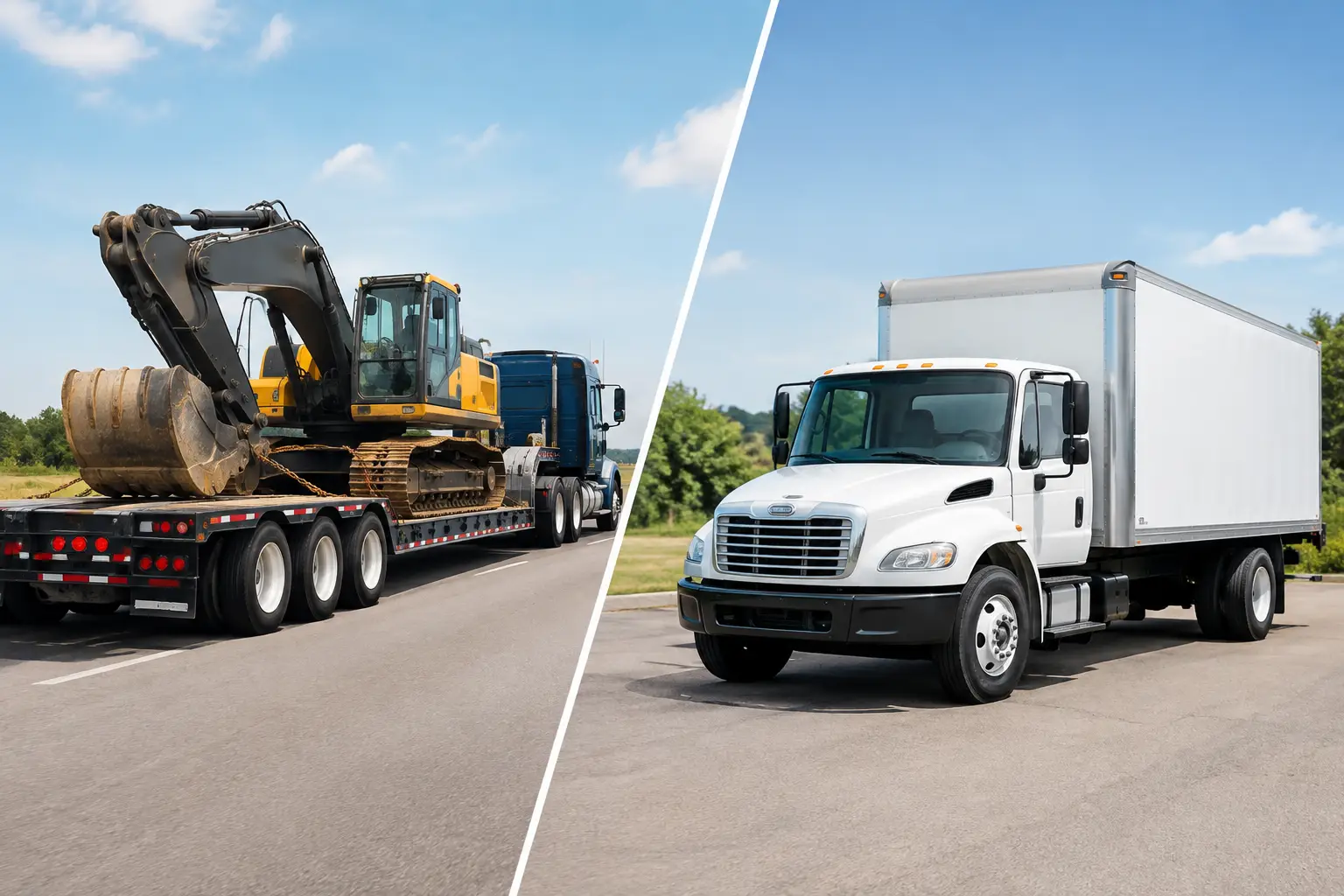
A new travel trailer is ready at the dealership. Your seasonal site is booked, the family is making plans, and then the practical question lands: how does the RV get there? For many owners, professional trailer transport vs rental truck is not simply a price comparison. It is a decision about equipment, risk, time, and whether the first trip with the RV starts relaxed or overloaded.
A rental truck can look like the straightforward answer, especially for a one-time move. But an RV is a large, high-value load with its own hitch requirements, weight ratings, brake needs, route restrictions, and delivery challenges. Professional transport costs more than a basic truck rental on paper, yet it can remove expenses and problems that are easy to miss before pickup day.
Professional Trailer Transport vs Rental Truck: The Real Difference
The biggest difference is not that one option provides a truck and the other provides a driver. The difference is who takes responsibility for the move.
With a rental truck, the owner is responsible for selecting a suitable truck, confirming its towing capacity, arranging the proper hitch setup, checking payload limits, learning how the rig handles, loading personal gear correctly, planning fuel stops, and getting the trailer safely into its destination. If the route includes mountain grades, busy urban corridors, narrow campground roads, or a ferry crossing, those details become part of the job as well.
With professional RV transport, the transport provider supplies the appropriate tow vehicle, the experience, and the operational planning. The owner can meet the driver at the pickup point and destination, or coordinate access where appropriate. This is particularly useful when the trailer needs to move from a dealer to a home, storage facility, service center, or seasonal lot while the owner is working or traveling separately.
For a travel trailer or 5th wheel, the question is not whether you can rent a truck. It is whether the specific rental truck, hitch configuration, and operator are genuinely suited to the RV and the route.
A Rental Truck Has Limits That Matter
Rental availability does not automatically mean rental suitability. Large towable RVs can place serious demands on a truck. The published towing number is only one part of the equation.
The truck must be rated for the trailer’s actual loaded weight, not just its empty brochure weight. It also needs enough payload capacity for hitch weight, passengers, cargo, and equipment. Travel trailers require the correct receiver, ball mount, brake controller, and properly adjusted weight-distribution setup when applicable. A 5th wheel requires a compatible in-bed hitch and a truck configured for that type of connection.
That can narrow the rental options quickly. Some rental fleets do not allow certain towing configurations, do not provide specialized hitches, or have restrictions that make them impractical for a larger RV. Even when equipment is available, the person behind the wheel may have little or no experience handling a long trailer in crosswinds, on steep descents, or while backing into a tight site.
A professional transporter works with towable RVs as the job, not as an occasional add-on to a move. That experience shows up in the small but important decisions: how the trailer is inspected before departure, how turns and fuel stops are planned, where to position for a difficult delivery, and when conditions call for extra caution.
Compare the Full Cost, Not Just the Daily Rate
A rental truck’s daily rate is easy to see. The complete cost is often less obvious.
Start with the rental period. A longer route may require more than one day, especially if the owner is unfamiliar with towing or must work around pickup and drop-off hours. Add mileage charges where applicable, fuel consumption, rental insurance, hitch or equipment charges, and possible hotel costs. If the RV needs to cross by ferry, there may be separate costs and reservation issues for both the truck and trailer.
Then account for your time. A dealer pickup that looks like a simple afternoon can turn into a full day of paperwork, equipment setup, fuel stops, careful driving, and campsite delivery. A longer relocation can consume several days that could otherwise be spent at work, with family, or preparing the destination.
Professional transport is generally quoted as a complete job based on the RV, origin, destination, route, and access conditions. That makes it easier to compare the real out-of-pocket number. It also avoids the surprise of realizing partway through the move that the rental setup is not ideal for the trailer or that a destination requires more maneuvering skill than expected.
The rental option can still make sense for a small, lightweight trailer and an owner who already has solid towing experience, understands weights and hitch setup, and is comfortable with the route. It becomes less attractive as trailer size, distance, terrain, and delivery complexity increase.
Safety Is About More Than the Highway
Most people think about highway driving first. That matters, but RV moves are often won or lost at the pickup and delivery points.
Dealership lots can be busy and tight. Storage compounds may have limited turning space. Service centers may require precise scheduling. Seasonal sites can involve narrow lanes, tree branches, soft ground, uneven pads, and other parked units. A driver who regularly moves travel trailers and 5th wheels understands that arriving at the gate is not the same as completing the delivery.
There is also the matter of road behavior. Larger RVs react differently to wind, passing traffic, grades, lane changes, and sudden braking. Proper trailer brake function, tire condition, hitch connection, lights, safety chains, and breakaway equipment all need attention before leaving. Professional transport does not remove every road risk, but it puts the move in the hands of someone whose work depends on managing those risks properly.
For owners in British Columbia and Alberta, route conditions can change quickly with elevation, weather, construction, and seasonal traffic. Moving an RV through mountain terrain or coordinating a Vancouver Island ferry crossing is far different from a short, flat trip on familiar roads. Regional experience is worth considering when the route is demanding.
When Professional Transport Is the Better Call
Professional transport is usually the practical choice when you are buying a new RV and do not own a suitable truck, relocating a trailer to a seasonal site, moving a unit for repairs or winter storage, or making a long-distance move between communities or provinces.
It is also a strong option when the trailer is near the upper end of what you would feel comfortable handling, when the destination has difficult access, or when you simply do not want the responsibility of towing an unfamiliar RV. Many owners enjoy their trailer without wanting to make heavy hauling part of the ownership experience. That is a reasonable line to draw.
A professional service is not just for owners who lack confidence. It is for people who have better uses for their time and prefer to keep the move separate from the trip itself. You can drive your own SUV, arrive without the stress of managing a large rig, and start setting up while the transport side has been handled properly.
What to Have Ready Before Requesting a Quote
A clear quote depends on clear details. Provide the year, make, model, length, and approximate weight of the RV, along with whether it is a travel trailer or 5th wheel. Share the exact pickup and delivery locations, preferred dates, and any access issues such as steep driveways, gated compounds, ferry travel, or tight campground roads.
It also helps to confirm that the RV is ready to move. Personal items should be secured, loose exterior equipment stored, slides retracted, and keys or access arrangements available. If the trailer has been sitting for a while, basic condition checks on tires, brakes, lights, and battery condition can prevent avoidable delays.
GoMax RV handles point-to-point transport for towable RVs under 44 feet, including dealer pickups, service moves, seasonal relocations, and routes that require ferry coordination. The right plan begins with the actual trailer and actual route, not a guess based on a rental counter conversation.
Before booking a rental truck, put the whole move on the table: the RV’s real weight, the equipment required, your comfort level, the route, the destination, and the value of your time. If the move deserves experienced hands, getting a transport quote is a practical next step.
Comments are closed