

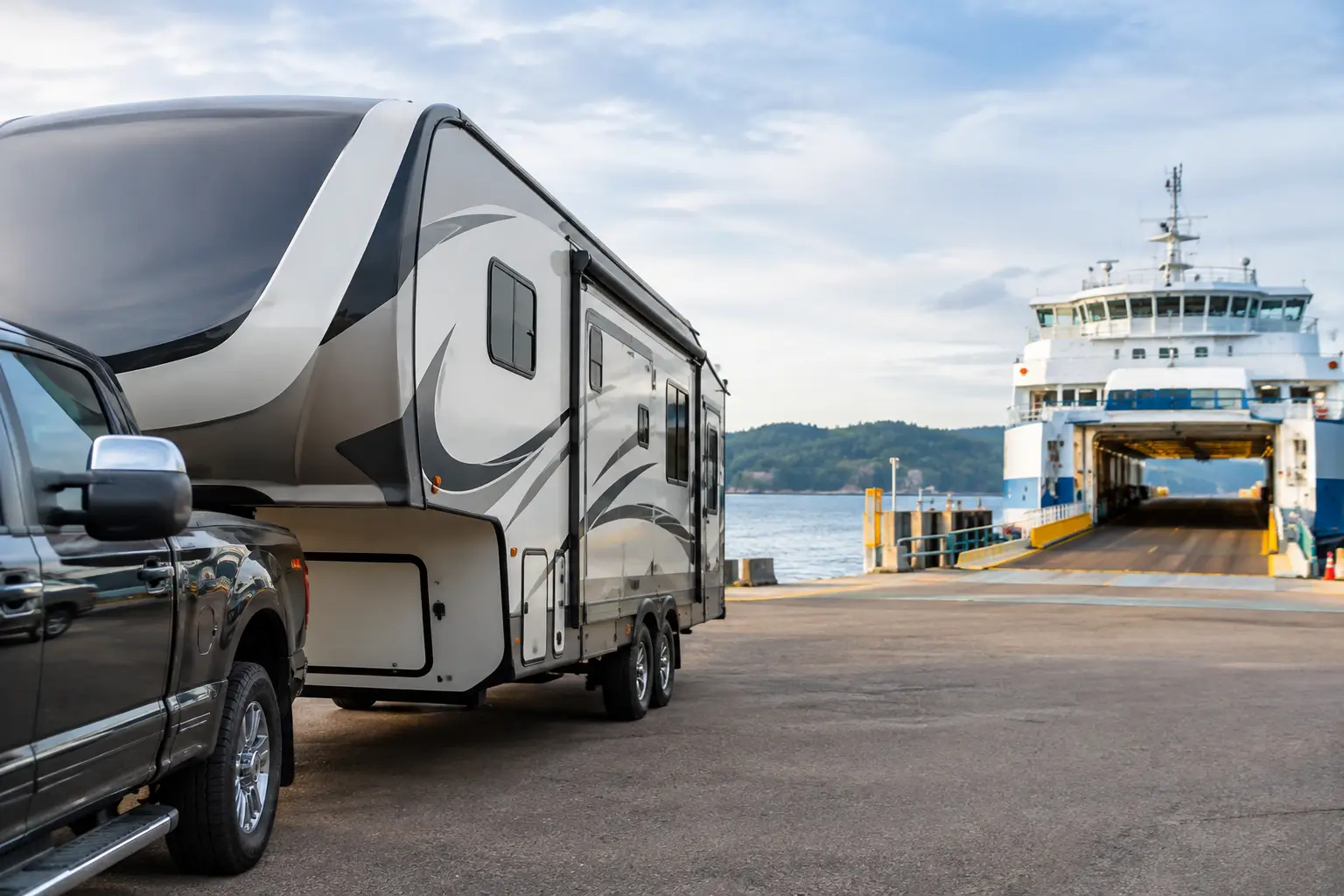
A ferry crossing can be the simplest part of moving an RV to Vancouver Island or another coastal destination – if the fifth wheel is ready before it reaches the terminal. To prepare a fifth wheel for ferry travel, focus on accurate dimensions, secure equipment, clear booking details, and the ferry operator’s current rules. Small oversights can mean a delayed sailing, a difficult loading lane, or an avoidable issue on the vehicle deck.
For owners arranging professional RV transport, good preparation also helps the driver load, cross, and deliver the unit efficiently. A fifth wheel is a large, valuable piece of equipment. Treat the ferry portion of the move with the same care you would give the road portion.
Confirm the fifth wheel’s true travel measurements
Ferry reservations are based on the space your complete rig occupies, not just the fifth wheel’s brochure length. The booking information generally needs the overall length of the tow vehicle and RV combination, along with the height and width of the fifth wheel. Do not guess, and do not rely solely on a model name.
Measure the unit in travel position. Include anything that extends beyond the main body, such as rear ladders, bike racks, cargo trays, bumpers, spare tires, or a generator rack. Make sure the front landing gear is fully raised and the slide-outs are fully retracted before confirming the length and height.
Height deserves extra attention. A fifth wheel may clear ordinary roads without issue but still need accurate clearance information for terminal lanes, deck assignments, or overhead structures. If an air-conditioning unit, satellite dome, solar equipment, or raised vent is the highest point, that measurement is the one that counts.
A professional hauler will verify dimensions needed for the reservation, but owners can prevent surprises by providing the RV make, model, year, stated length, known modifications, and clear photos of the front, rear, and both sides. If you have added equipment after purchase, mention it.
Prepare fifth wheel for ferry loading and deck travel
Loading onto a ferry involves turns, ramps, close spacing, and controlled stops. The RV must be road-ready before arriving at the terminal. This is not the place to leave stabilizer jacks partly down, loose patio furniture in storage bays, or a pin box that has not been checked.
Start with the basics. All slide-outs, awnings, steps, roof vents, windows, exterior doors, and storage compartment doors should be secured for travel. Lock the entry door and confirm the keys are available to the person handling the move if access is required later.
Inside the RV, secure anything that can shift. Cabinet latches should be engaged, loose items should be placed low and contained, and heavy objects should not be left on countertops or tables. A ferry crossing may be calm, but loading ramps and deck movement can still create enough motion to move unsecured gear.
Before departure, inspect the hitch connection, safety equipment, electrical plug, breakaway system, tires, wheel lugs, lights, and brakes. The landing gear must be fully retracted and pinned or secured according to the manufacturer instructions. Chocks must be removed and stored. If the fifth wheel has a leveling system, confirm it is fully in travel mode.
This is also a good time to inspect the underside and rear of the RV for low-hanging items. Sewer hoses, cords, loose straps, and accessories can drag or catch during ramp transitions. A fifth wheel with low rear clearance needs particular care when boarding and leaving the vessel. The angle of a ramp can vary with tide, vessel, deck position, and loading conditions.
Check propane, fuel, and hazardous-material rules
Ferry operators set their own rules for propane cylinders, fuel containers, batteries, and other potentially hazardous materials. These rules can change, so review the requirements for the specific sailing before the move. Never assume that a rule from a previous crossing still applies.
In most cases, installed propane cylinders should be properly secured and their valves turned off. Portable fuel cans, propane bottles, fireworks, chemicals, and similar items may have separate limits or declaration requirements. Do not leave loose fuel containers in an open truck bed or unsecured RV compartment.
If the fifth wheel has a generator, verify that it is switched off and that any fuel system is in proper travel condition. Let the transport provider know about generators, auxiliary fuel tanks, large battery banks, or unusual equipment well before the reservation is made. A clear conversation in advance is far better than trying to sort out a restriction at the terminal.
Give the ferry booking the details it needs
Ferry space is limited, especially during summer weekends, holiday periods, and popular departure windows. A fifth wheel requires a reservation that matches the actual rig, and the driver needs enough time to arrive, check in, and follow terminal instructions.
Provide the pickup point, delivery point, preferred travel date, overall rig dimensions, and any flexibility in your schedule. Flexibility can make a major difference when sailings are full or weather affects operations. If your fifth wheel is going to a seasonal site, confirm the campground or property can accept delivery on the planned day.
The destination details matter as much as the ferry reservation. Provide the exact address, gate codes, site number, contact name, and any instructions for access. Tell the transporter about narrow roads, steep driveways, low branches, sharp turns, soft ground, or limited turnaround space. An RV can arrive at the island terminal without issue and still face a difficult final mile if the delivery site has not been assessed.
For deliveries to storage compounds, dealerships, or service centers, confirm their receiving hours. A fifth wheel that arrives after a gate closes may need to be held elsewhere, adding time and cost to the move.
Plan for weather, timing, and a few real-world variables
Ferry travel is scheduled, but it is not immune to weather, mechanical interruptions, traffic, or changing terminal conditions. Wind can affect sailings, and heavy rain can make an already tight site entrance more challenging. Build reasonable time into the move rather than scheduling a service appointment or campsite arrival with no margin.
The condition of the fifth wheel matters too. A unit that has been sitting for months may need more than a quick walk-around. Check tire pressure and tire age, look for signs of bearing or brake issues, test exterior lights, and inspect the roof and seals for anything that could worsen in wet weather. If the RV is coming out of storage, make sure pests, branches, covers, and winterizing materials have been addressed before transport day.
Owners should also remove or secure personal valuables. Professional transport is about getting the RV from point A to point B safely, but personal items should not be left visible or loose inside the unit. Keep important documents, medications, and valuables with you rather than in the fifth wheel.
When professional ferry-inclusive transport makes sense
Many owners are comfortable using their fifth wheel at a campground but do not want to manage a long highway run, a busy terminal, or unfamiliar island roads. That is especially understandable for a new purchase, a service appointment, a seasonal relocation, or an RV that has been parked for an extended period.
Using an experienced transport provider means the ferry crossing is coordinated as part of the larger move. The key is to share complete information early: RV dimensions, equipment, pickup and delivery access, ferry timing preferences, and any concerns about the unit’s condition. At GoMax RV, that upfront planning helps prevent last-minute complications and keeps the transport focused on a safe, efficient delivery.
A fifth wheel does not need to be perfect to travel by ferry, but it does need to be honestly represented, properly secured, and ready for the road. A few careful checks before pickup give the entire move a better start and let you look forward to meeting your RV at its destination instead of worrying about the crossing.
Comments are closed