

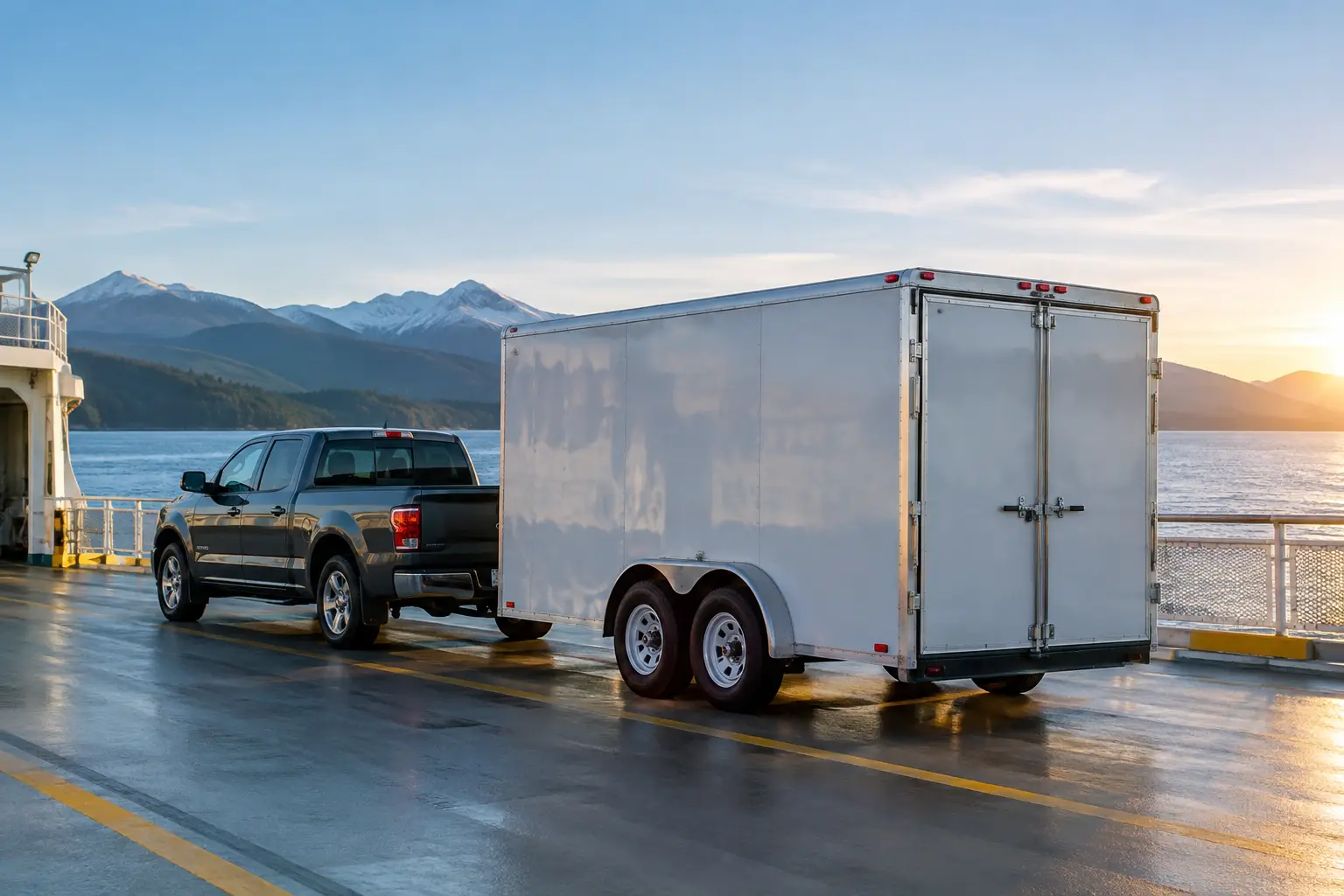
A ferry trailer transport success story is rarely about one dramatic moment at the terminal. It is about the planning that happens before the trailer leaves the driveway: confirming dimensions, securing the right sailing, preparing the RV for the road, and knowing exactly where it needs to go after the ferry ramp drops. For an RV owner moving a travel trailer to a Vancouver Island seasonal site, those details are what turn a stressful trip into a job handled properly.
This type of move is familiar to owners who want the enjoyment of a trailer at the destination without buying a heavy-duty truck, arranging ferry logistics, or pulling a large unit through unfamiliar traffic. Ferry travel adds another layer to RV transport. The schedule is fixed, terminal procedures matter, and a missed sailing can affect the whole day.
The Move: A Trailer, a Ferry Booking, and a Tight Window
The job began with a travel trailer that needed to move from the Lower Mainland to a seasonal campground on Vancouver Island. The owners had purchased the unit for family weekends and longer summer stays, but they did not want to handle the crossing or the final delivery themselves.
Their destination had a practical restriction: the campground had a preferred arrival window. Staff needed to know when the trailer was coming, the access lane was narrower than a typical city street, and late arrival would have meant waiting until the next day to position the unit. The owners also wanted the trailer delivered ready to set up, not left at a nearby lot for them to deal with later.
This was not simply a matter of attaching a trailer and heading toward the ferry. The transport plan had to account for trailer length, loading requirements, sailing availability, terminal arrival time, fuel planning, destination access, and the condition of the unit before departure.
Why Ferry RV Transport Needs More Planning
A ferry terminal is a controlled environment. RVs and trailers are assigned space based on their size, and operators need accurate information when booking. Guessing at the overall length of a trailer combination can lead to a booking that does not match the equipment arriving at the terminal.
For this move, the trailer specifications were confirmed in advance. That meant checking the trailer’s stated length, hitch setup, height, and weight information, then matching the transport equipment to the job. It also meant booking a sailing that allowed enough time for terminal check-in without rushing through pre-trip checks.
Rushing is where avoidable problems start. A trailer may need its tires inspected, lights tested, breakaway system checked, propane handled according to ferry rules, and loose items secured inside. Slide-outs must be fully retracted and locked. Exterior compartments need to be latched. If a trailer has been sitting at a storage site, the condition of the batteries and brakes should not be assumed.
A professional transport plan builds time for those checks. It also allows for the reality that sailing schedules, traffic, weather, and terminal operations can shift. The goal is not to promise that nothing can change. The goal is to have enough preparation that a change does not turn into a major delay.
The Pre-Trip Check That Protected the Schedule
Before departure, the trailer was inspected for the basics that matter on a long haul: tire condition and pressure, wheel and brake operation, running lights, safety chains, coupler connection, and breakaway cable. The trailer was also checked for clearance concerns and any exterior equipment that could move in the wind.
Inside, the owners had already removed fragile loose items and secured cabinet doors. That small bit of preparation makes a difference. A travel trailer is built for the road, but it still needs to be packed for it. Heavy items should be low and distributed sensibly, while loose gear should not be left on counters, beds, or in open storage areas.
The trailer was ready before the scheduled pickup time. That gave the driver room to complete the final connection and inspection without putting the ferry departure at risk.
At the Terminal, Accuracy Matters
Arriving early is not wasted time when transporting a trailer by ferry. It provides a margin for check-in, lineup direction, and any instructions from terminal staff. It also avoids the pressure of trying to solve a booking or equipment issue with minutes to spare.
Once at the terminal, the trailer was positioned according to staff direction and prepared for the crossing. Ferry crews manage many types of commercial and recreational traffic, so clear communication and accurate booking details help the process move efficiently.
For the owner, this was one of the biggest benefits of hiring out the transport. There was no need to navigate a large trailer through terminal lanes, calculate turning room under pressure, or worry about whether the rig was properly staged. They were able to travel separately and meet the trailer at the destination.
That flexibility matters for families. Some owners prefer to take their personal SUV, make a stop for groceries, travel on a different sailing, or arrive at the campsite early to handle registration. The trailer does not have to dictate every part of the day.
The Island Delivery Is Where Experience Shows
The ferry crossing is only one section of the route. After arrival, the job continues through local roads, campground access points, and the final approach to the site.
In this case, the seasonal campground had a tight entrance and a site that required careful positioning. The destination contact had been confirmed ahead of time, along with the site number, arrival window, and any gate instructions. That prevented a common problem: reaching the campground with a trailer and discovering that the office is closed, the gate code is missing, or the site assignment has changed.
The final delivery was handled at a controlled pace. That is the right approach when backing and positioning a travel trailer in a campground. Speed does not help. Clear space, communication, and a driver who understands trailer movement are what matter.
Once the trailer was placed at the site, the owners could take over the setup they wanted to do themselves. Depending on the arrangement, that may include leveling, connecting site services, extending slide-outs, and setting up outdoor gear. Transport and campsite setup are different tasks, and it helps when everyone is clear about where one ends and the other begins.
What Made This Ferry Trailer Transport Success Story Work
The successful result was not luck. It came from treating ferry transport as a coordinated route, not just a road trip with a boat ride in the middle.
Several decisions made the difference:
- The trailer’s dimensions and transport requirements were confirmed before booking the crossing.
- Pickup was scheduled with enough time for a proper pre-trip inspection.
- The owners prepared the interior and exterior for highway travel.
- The ferry reservation and terminal timing were built into the route plan.
- Destination access, campground instructions, and delivery timing were verified before the trailer arrived.
There are trade-offs with any ferry move. The cheapest sailing is not always the best option if it creates a late arrival or leaves no margin for a terminal delay. A destination that is easy to access in daylight may become much more difficult after dark. In some cases, it makes more sense to schedule delivery for the following morning rather than force a rushed final approach.
That practical judgment is part of professional RV transport. The right plan depends on the trailer, the route, the season, the sailing schedule, and the delivery location.
Planning Your Own Ferry Trailer Move
If your travel trailer needs to cross to Vancouver Island, start planning before the preferred sailing fills up. Have the trailer make, model, overall length, pickup address, destination details, and preferred delivery dates ready when requesting a quote. Mention any access restrictions at the pickup or delivery location, such as narrow driveways, gated storage compounds, campground arrival rules, or steep grades.
It is also worth being clear about the trailer’s current condition. If it has been parked for months, needs a battery charge, has soft tires, or is waiting at a service center, say so early. Straight answers allow the transport plan to match the real job.
GoMax RV handles towable RV moves with the licensing, insurance, ferry coordination, and regional experience these routes require. A properly planned delivery lets you focus on arriving ready to enjoy the site, rather than spending the trip worrying about the next turn, the terminal lineup, or whether the trailer will make the sailing.
Comments are closed