

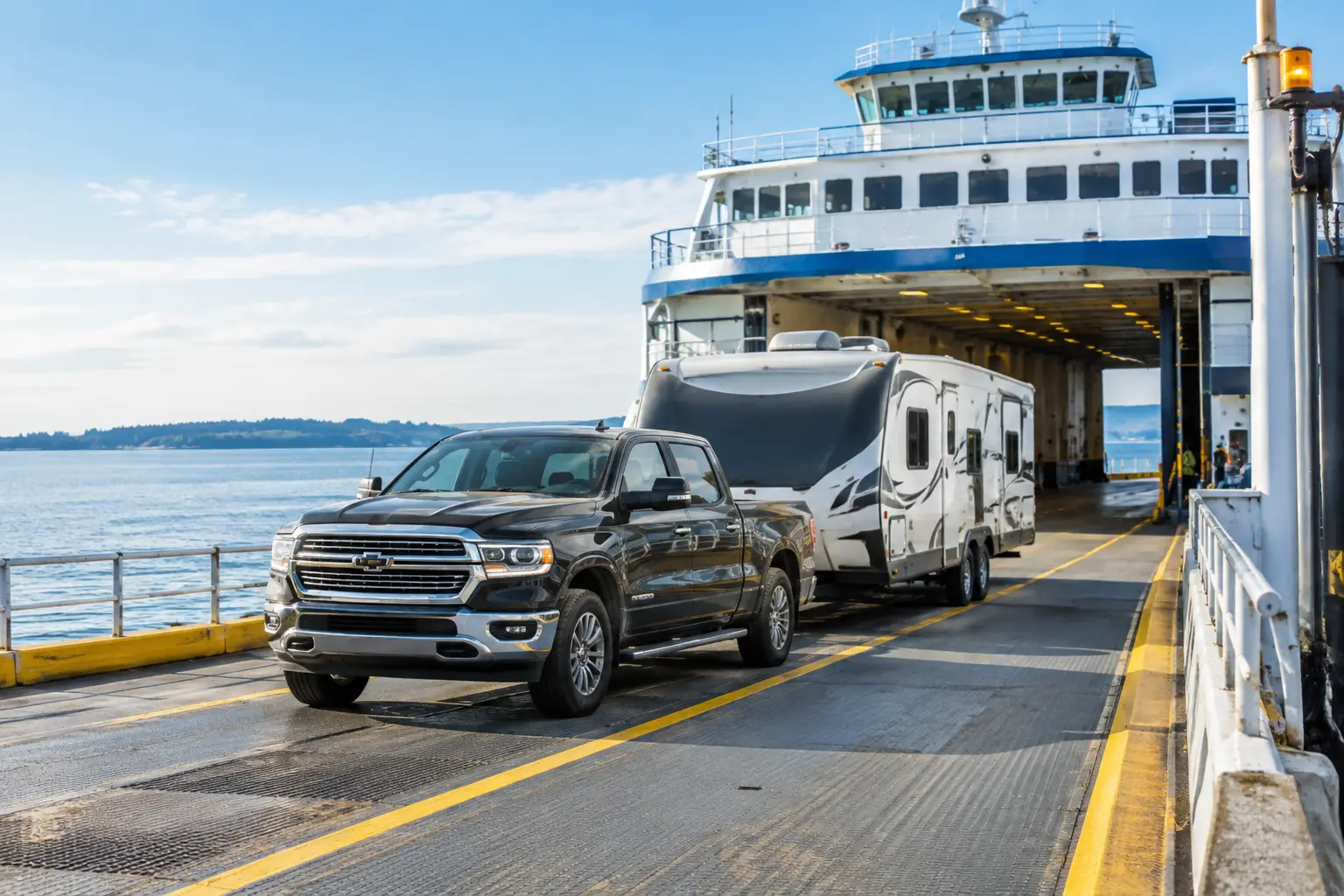
A ferry terminal is not the place to discover that your RV is longer, taller, or harder to maneuver than you thought. If you are figuring out how to tow an RV through a ferry terminal, the job starts well before you reach the lineup. Accurate measurements, the right reservation, a prepared trailer, and a calm approach to loading make the crossing far less stressful.
For travel trailer and fifth-wheel owners headed to an island campsite, seasonal site, dealership, or service appointment, ferry travel adds another layer of logistics to the move. The trailer has to fit the operator’s requirements, arrive at the correct time, board safely, and come off ready for the road. Treat it like a planned transport day, not a quick drive to the dock.
Start With Your Actual RV Measurements
Do not estimate your RV length from the model name or assume the paperwork reflects every add-on. Ferry operators use your measurements to assign space, calculate the fare, and decide what type of lane or deck can accommodate your rig.
Measure the full combined length from the front of the tow setup to the rearmost point of the RV, including bike racks, cargo trays, spare tires, or other rear-mounted equipment. Measure height from the ground to the highest fixed point, which may be the air conditioner, vent cover, antenna, or satellite equipment. Width should include any components that remain extended in transit.
A few inches can matter. An RV that is booked as a standard trailer but arrives substantially longer can require a reservation change, a different sailing, or extra charges. Fifth wheels also need special attention because their overall height and turning behavior differ from a conventional travel trailer.
Keep the measurements written down with your reservation details. If you are arranging professional transport, give the hauler the RV’s make, model, length, height, weight, hitch type, and any mounted accessories before the trip is booked.
Reserve the Ferry for the Entire Rig
Make a reservation as early as practical, especially for summer weekends, holidays, and popular routes. You are reserving space for the complete rig, not only the trailer. Enter the correct towing configuration and dimensions exactly as requested by the ferry operator.
Check the confirmation closely. It should reflect the correct sailing, terminal, arrival time, vehicle class, and RV dimensions. Ferry rules can vary by route, vessel, season, and operating conditions. A route that regularly accommodates long RVs may still have restrictions on a particular sailing or deck.
Arrive early enough to handle check-in without rushing. Longer rigs may be staged in dedicated lanes, and terminal staff may need to direct you around tighter corners or into a different holding area. Missing the check-in cutoff can mean losing a reserved sailing, even when you are already near the terminal.
It also helps to plan for delays on both sides of the crossing. Traffic, weather, vessel loading, and operational changes can affect departure times. Do not schedule a campground check-in, service appointment, or handoff with no margin after the ferry arrives.
Prepare the RV Before You Leave
A ferry crossing can involve ramps, uneven pavement, sharp terminal turns, close parking, and movement at low speed. Secure the RV as you would for a highway trip, then check the items ferry operators specifically address in their conditions of carriage.
Before departure, confirm that:
- Tires are properly inflated and in safe condition, and wheel lug nuts have been checked to the manufacturer’s specification.
- Hitch, coupler or fifth-wheel connection, safety equipment, breakaway system, lights, and electrical connection are working correctly.
- Slides, steps, awnings, vents, doors, storage compartments, and rooftop accessories are fully secured for travel.
- Loose items inside the RV are put away, heavy cargo is distributed correctly, and the trailer is not overloaded.
- Propane cylinders and appliances meet the ferry operator’s current rules, including any requirement to close cylinder valves or declare hazardous materials.
Propane is one area where assumptions cause problems. Many ferry operators permit properly secured propane cylinders under specific conditions, but the requirements are not identical everywhere. Turn off RV appliances before arriving and follow the operator’s instructions at check-in. Do not rely on what was allowed on a previous route or years ago.
If your RV has a low rear clearance, long overhang, or a heavy rear cargo carrier, inspect it carefully. Ferry ramps can change angle with tides and vessel loading. A setup that clears your driveway may still be vulnerable on a steep ramp transition.
How to Tow an RV Through a Ferry Terminal Without Stress
Once you enter the terminal, slow down and let staff control the flow. Ferry terminals are working transportation sites, with lane changes, pedestrians, commercial traffic, and last-minute loading instructions. Follow signs and staff direction even if it differs from the route shown on your reservation confirmation.
Stay in the assigned lane and leave enough room ahead to make gradual turns. Avoid cutting corners with a trailer. Watch the inside path of the RV and use mirrors continuously, particularly when moving around lane barriers or into a holding position.
Keep your paperwork, reservation number, identification, and any requested RV information easy to reach. At check-in, tell staff about anything unusual that affects loading, such as exceptional length, limited ground clearance, a disabled component, or propane cylinders. It is better to flag an issue early than create a problem at the ramp.
Do not unhitch unless ferry staff specifically instruct you to do so. In most cases, an RV remains connected for loading and the crossing, but crew instructions always take priority. They may position longer units in specific areas to manage deck space, weight distribution, and safe access.
Boarding the Vessel
When called forward, approach the ramp slowly and smoothly. Use a low, controlled speed and avoid abrupt steering, braking, or acceleration. Keep a generous following distance because the rig ahead may stop unexpectedly.
Pay attention to crew hand signals. Their directions may be different from what your mirrors suggest, especially when they are positioning your RV alongside other units. If you cannot see a signal or are unsure where to place the trailer, stop safely and wait for clear instruction.
Once parked, set the parking brake on the tow unit and place the transmission as appropriate for the grade and manufacturer guidance. Ferry crew will tell you whether wheel chocks, additional securement, or other actions are required. Do not move the RV, return to the deck, or remain in a restricted area once the crew has directed passengers off the vehicle deck.
Take valuables, medications, keys, and anything you may need during the crossing with you. Access to the vehicle deck is often restricted while underway.
Unloading at the Destination Terminal
The trip is not over when the ramp opens. Wait for crew direction, start up only when instructed, and leave space for the RV ahead. Unloading can feel rushed, but steady control matters more than being first off the vessel.
As you exit, watch for sudden grade changes and merge points near the terminal. Pull over at the first safe location outside the terminal if you need to inspect the hitch, lights, tires, or cargo. This is also a good time to confirm that any bikes, covers, or storage-door latches remained secure.
When Professional RV Transport Makes More Sense
Towing an RV through a ferry terminal can be manageable with the right equipment and experience. But it is not the right job for every owner, particularly when the RV is large, the route is unfamiliar, or the trip includes a tight delivery window at the other end.
Professional RV transport is practical when you are taking delivery from a dealership, moving to a seasonal site, sending the RV for service, or relocating without a suitable tow setup. The transport provider can coordinate the ferry reservation, provide the right towing equipment, manage terminal loading, and deliver the RV where it needs to go.
For RV owners traveling between the mainland and Vancouver Island, GoMax RV handles ferry-inclusive moves for towable RVs, including travel trailers and fifth wheels. That means you can focus on getting yourself and your family where you need to be rather than managing ramps, lineups, and a large trailer in a busy terminal.
Before any ferry crossing, confirm the dimensions, reserve enough space, prepare the RV properly, and leave room in the schedule. A well-planned crossing turns a potentially tense transport day into one more straightforward part of getting your RV to the place you actually want to use it.
Comments are closed