

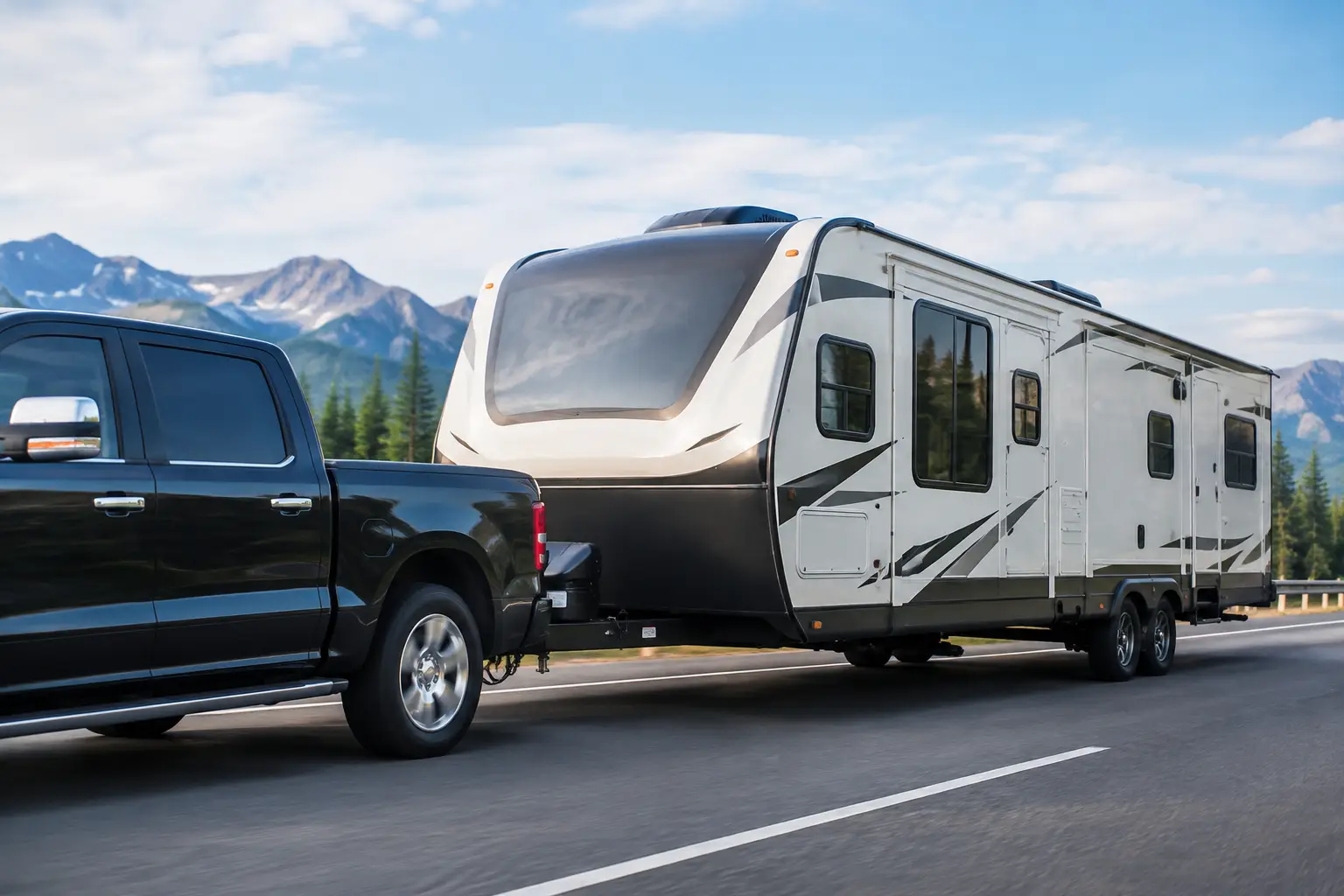
Buying an RV should mean more weekends away, not more time worrying about how to move it. RV movers give travel trailer and fifth wheel owners a practical way to get their unit where it needs to go without buying a heavy-duty truck, planning a difficult route, or spending a long day behind the wheel.
For many owners, professional RV transport is not just a convenience. It is the sensible choice when the route includes mountain grades, city traffic, ferry terminals, unfamiliar campgrounds, or a long-distance move. The right operator handles the hauling work while you keep the freedom to travel in your own car or SUV and arrive without the stress of pulling a large RV.
What RV Movers Actually Handle
Professional RV movers transport towable units from one point to another. That may be a dealership delivery to your driveway, a move from home to a seasonal site, a trip to a repair shop, or a relocation between provinces. The job is more involved than simply hooking up and heading down the road.
A proper transport plan considers the RV’s length, weight, hitch type, condition, pickup access, destination access, and the route itself. A fifth wheel requires different equipment and setup than a conventional travel trailer. Tight storage compounds, steep driveways, low branches, soft ground, and limited turning space can all affect how the pickup or delivery is handled.
At GoMax RV, the focus is on travel trailers and fifth wheels up to 44 feet. That specialization matters because an operator who regularly moves towable RVs understands the hitch systems, road behavior, loading considerations, and destination issues that come with them.
When Hiring RV Movers Is the Better Option
There is nothing wrong with towing your own RV when you have the right truck, experience, and comfort level for the trip. But it is not always the most economical or least stressful route. A professional move often makes more sense in a few common situations.
You just bought an RV
A new RV purchase can come with a long list of decisions: financing, insurance, storage, accessories, inspections, and campsite bookings. If you do not already own a properly equipped tow vehicle, arranging delivery can save you from making a rushed truck purchase or relying on an inexperienced friend.
Dealer delivery also gives you time to prepare the destination. You can be at home, at your seasonal lot, or at the dealership for the handoff rather than trying to coordinate a complicated first tow on the same day you take ownership.
Your RV is headed to a seasonal site
Many owners leave their trailer or fifth wheel on a seasonal lot for months at a time. In spring, it needs to get there. In fall, it may need to move to storage, winterization, or another site. Those trips can be routine until weather, work schedules, or a busy campground check-in window get involved.
Using a transport service for these moves means you can spend your time setting up the site rather than managing a long haul. It is especially useful when the seasonal location is several hours away or requires navigating a route you would rather not pull an RV through yourself.
The RV needs service or repairs
An RV that needs maintenance may not be in ideal condition for a long trip. A tire issue, brake concern, damaged hitch component, or unexpected mechanical problem changes the plan quickly. Moving the unit to a service center with an experienced hauler can be safer than trying to make the trip yourself.
Before booking, be clear about the RV’s condition. Mention any known concerns, whether the unit is stored on uneven ground, and whether it can be safely connected and moved. Good information upfront helps prevent delays on pickup day.
The route includes ferry travel
Vancouver Island moves add another layer of coordination. Ferry schedules, reservation requirements, terminal arrival times, and RV dimensions all need to be factored into the trip. Ferry-inclusive RV transport can simplify the process because one provider coordinates the hauling and crossing as part of the overall move.
This is not just about getting on the ferry. It is about making sure the timing works at both ends, particularly when campground access, dealer hours, or site check-in times are limited.
What Affects the Cost of RV Transport
Professional RV hauling is quote-driven because no two moves are exactly alike. Distance is a major factor, but it is not the only one. A short move with difficult access can require more planning than a straightforward highway route over a longer distance.
The biggest pricing factors usually include RV type and size, pickup and delivery locations, total route distance, travel conditions, timing, and whether ferry travel is required. A move from a dealership with wide access to a paved seasonal site is generally simpler than retrieving a fifth wheel from a tight storage lane and delivering it to a steep rural property.
The best way to get an accurate price is to provide the full picture from the start. Share the year, make, model, overall length, hitch type, pickup address, delivery address, preferred dates, and any access challenges you know about. Photos of tight entrances or unusual site layouts can also be useful.
Be cautious of a price that seems too low without questions. A professional transport quote should account for the actual work, equipment, route, and required coverage. The lowest number is not always the lowest-cost decision if it creates delays, damage, or a last-minute cancellation.
Questions to Ask Before You Book
Hiring an RV mover means handing over a valuable piece of equipment. Ask direct questions and expect direct answers. Confirm that the company is licensed for the work, carries appropriate insurance, and has real experience with your type of RV.
You should also ask what is included in the quote, how scheduling works, and what happens if weather or road conditions affect the delivery date. If ferry travel is involved, clarify whether reservations and ferry charges are included. For a cross-province move, ask about the expected travel window rather than assuming an exact arrival hour.
It also helps to discuss the handoff. Find out who needs to be present at pickup and delivery, how keys and paperwork will be handled, and whether the destination site is ready for access. These small details are often what separate an easy transport day from a frustrating one.
How to Prepare Your RV for Pickup
A little preparation protects your RV and keeps the move on schedule. Remove or secure loose items inside, latch all doors and compartments, and make sure windows and vents are closed. Emptying tanks is generally a smart step because it reduces weight and prevents spills during travel.
Check that the tires are properly inflated and in serviceable condition. If the battery is dead, the landing gear or trailer jack may not operate as expected, so mention that before pickup. The same goes for flat tires, damaged stabilizers, blocked access, or an RV parked where another unit must be moved first.
At the destination, make sure the site is accessible and someone can receive the RV if required. Move vehicles, clear low-hanging branches where possible, and confirm the route into the property. A professional hauler can manage a lot, but no one can create turning room where none exists.
Experience Matters on Western Canadian Routes
British Columbia and Alberta routes can change quickly with weather, elevation, construction, and seasonal traffic. Mountain passes demand careful planning, while rural destinations can involve narrow roads and limited turnaround space. The same applies to long runs into Saskatchewan or Manitoba, where distance and timing become major parts of the job.
That is why RV transport should be handled by someone who treats the route as part of the service, not an afterthought. Licensed, insured transport and years of towing experience provide peace of mind, but practical communication matters too. You should know what is happening, what is needed from you, and what to expect at delivery.
The easiest RV move starts before the truck arrives. Provide accurate details, prepare the unit, and choose an operator who understands the difference between getting an RV moved and getting it moved properly. When the hauling is handled by a professional, you can put your attention back where it belongs: planning the time you will spend at the destination.
Comments are closed