

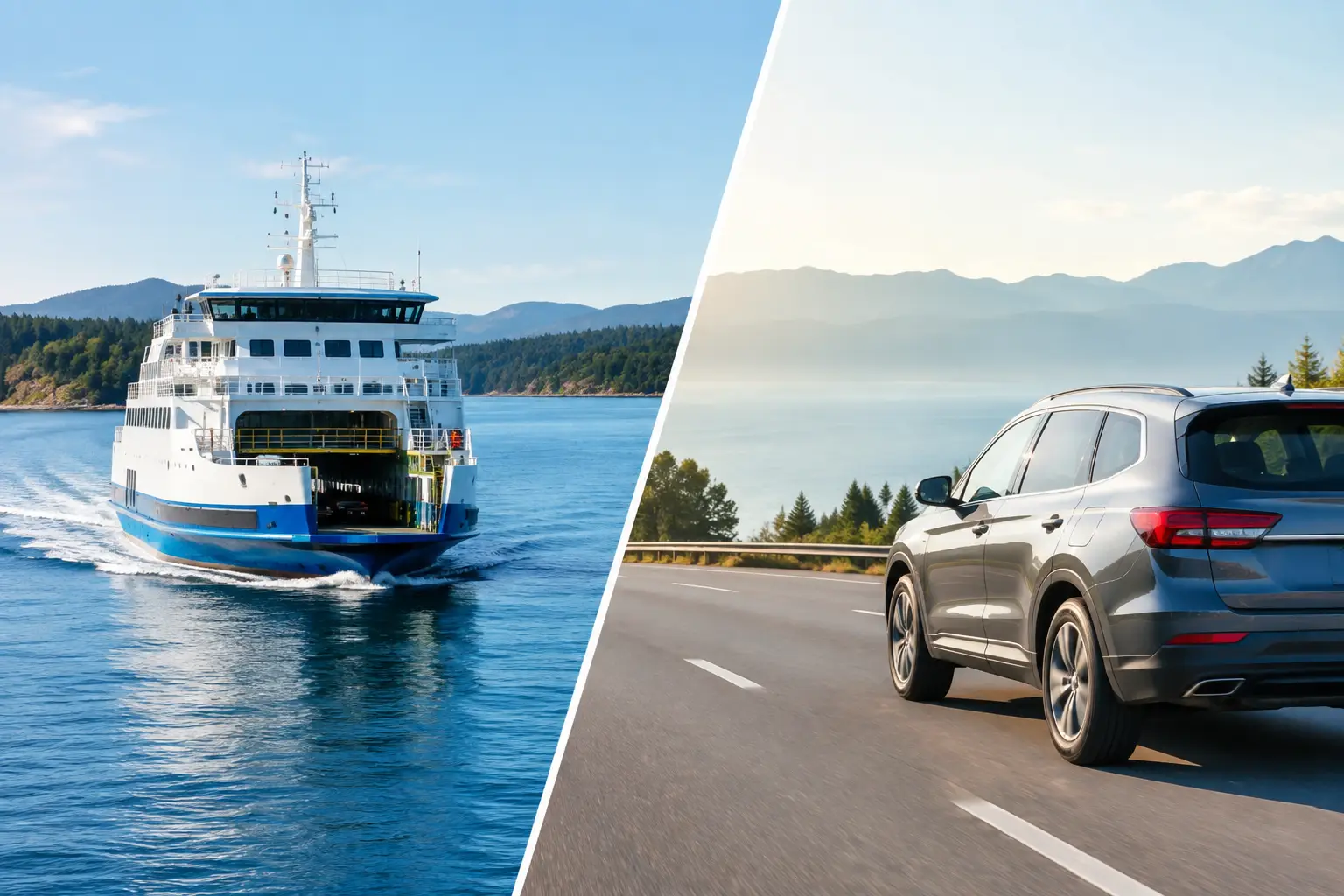
A travel trailer can be ready at a mainland dealership while its new site is across the water. That is where ferry transport versus mainland pickup becomes more than a pricing question. The choice affects who manages the terminal, how the RV gets onto the island, when it arrives, and whether you need to arrange the next leg yourself.
For RV owners headed to Vancouver Island, the right option depends on your schedule, your comfort level with handling a towable RV, and the access at both ends. A lower upfront price does not always mean less work. A ferry-inclusive move can cost more than a mainland handoff, but it may eliminate an extra day of travel, a complicated terminal appointment, and a stressful final delivery.
What the Two Options Actually Mean
Ferry transport generally means the transport provider moves the travel trailer or 5th wheel from its origin, boards the ferry, and continues to the agreed destination on the island. The ferry crossing is built into the transport plan. That may include a dealer pickup in the Lower Mainland, terminal timing, the crossing, and delivery to a seasonal site, storage compound, home, or service center.
Mainland pickup means the professional transport ends at an agreed mainland location. That might be a dealership, storage yard, ferry terminal staging area, or another accessible handoff point. From there, you arrange the next move, whether that means handling the crossing yourself or coordinating with another qualified party.
Those descriptions sound simple, but quote details matter. Before choosing either option, confirm the exact origin and destination, whether ferry costs are included, where the handoff occurs, and who is responsible if a sailing is delayed. A clear scope prevents the common problem of assuming the trailer is being delivered farther than the quoted route actually covers.
When Ferry Transport Versus Mainland Pickup Favors a Ferry-Inclusive Move
Ferry-inclusive transport is usually the practical choice when the whole point of hiring a hauler is to avoid handling the RV yourself. This is common for first-time trailer buyers, owners who do not keep a heavy-duty tow vehicle, and families setting up at an island campground for the season.
The ferry terminal adds a layer of logistics that is easy to underestimate. Trailer length, height, reservation requirements, terminal arrival times, sailing availability, and seasonal traffic all affect the plan. Missing a sailing can push delivery back significantly, especially during busy weekends and holiday periods. A professional operator plans the move around those constraints instead of treating the ferry as an afterthought.
There is also the matter of continuity. One operator picking up the RV, managing the crossing, and completing the delivery means fewer handoffs. That reduces the chance of confusion over condition reports, site access instructions, keys, paperwork, or who is waiting at the destination.
This option is particularly useful when the RV is being delivered directly to a seasonal lot. You can drive over in your personal car or SUV, arrive without managing a large trailer through terminal traffic, and meet the RV at the site. For many owners, that is the convenience they were paying for in the first place.
When Mainland Pickup Can Be the Better Fit
Mainland pickup can make sense when you already have a qualified driver, a properly matched setup, and a firm plan for the ferry crossing. It can also work well if your immediate need is simply moving the RV from a dealer to mainland storage, a service center, or an accessible handoff location.
Some owners prefer to control their own ferry reservation and travel schedule. They may be combining the crossing with family travel, waiting for a specific campsite check-in date, or planning to move additional equipment at the same time. In those cases, having the trailer delivered to the mainland can give you more control over the final leg.
That flexibility comes with responsibility. You need to confirm that the pickup location allows enough room to inspect, connect, and depart safely. Ferry bookings must match the actual RV dimensions, and the person taking possession needs to be prepared for terminal procedures and island roads. If any part of that plan is uncertain, ferry-inclusive transport is often the cleaner choice.
Compare the Full Cost, Not Just the Ferry Fare
A ferry-inclusive quote reflects more than the cost of a ticket. It may account for ferry reservations, terminal timing, driver travel time, route planning, and delivery after the crossing. Those are real operational costs, especially when sailing schedules limit how quickly an RV can move.
A mainland pickup quote may appear lower because the ferry and island delivery are not included. That can be the right choice, but only if you have already accounted for your own time, fuel, ferry booking, and the effort of getting the RV from the terminal to its final location. If you need to bring in another transporter after the handoff, the combined cost can narrow quickly.
The best comparison is based on the completed job: RV collected at the origin, delivered where you actually need it, with a clear handoff and no surprise gaps in responsibility. Ask for the quote to state what is included rather than trying to compare two routes by a single number.
Timing Depends on More Than Distance
A mainland route may look short on a map, but ferry schedules can determine the actual delivery day. A trailer can arrive at the terminal on time and still need to wait for the next available sailing. Weather, capacity limits, mechanical interruptions, and peak-season demand can also affect the crossing.
That does not mean ferry transport is unpredictable. It means the delivery window should be planned realistically. If the RV needs to arrive before a campsite check-in, a service appointment, or a moving date, provide that deadline when requesting a quote. An experienced transport provider can identify whether the date is workable and whether a little schedule flexibility will make the move easier.
Avoid booking a same-day commitment at the destination unless there is enough room for normal travel variables. Island delivery is usually most efficient when the receiving site can accept the RV within a reasonable arrival window.
The Final Delivery Can Be the Hardest Part
Getting across the water is only one part of the job. The final few miles may involve narrow roads, steep approaches, tight campground loops, limited turnaround space, gated storage facilities, or a site that requires a precise backing angle.
Share those details before transport is scheduled. Photos of the driveway or campsite entrance can help, along with gate codes, contact information, site numbers, and any restrictions on arrival time. For a 5th wheel or longer travel trailer, access conditions can matter more than the highway distance.
A good delivery plan also considers where the RV will be placed after arrival. If the unit needs to be positioned for seasonal use, serviced, or stored for winter, say so early. The destination is not just an address. It is a working space where the trailer must be delivered safely and practically.
Questions to Settle Before You Book
Before deciding between a ferry-inclusive move and mainland pickup, get clear answers to four practical questions:
- Is the final destination on the island, or is the mainland handoff truly your end point?
- Who will manage the ferry reservation, terminal arrival requirements, and any sailing changes?
- Is the person taking possession prepared to move the RV safely after the mainland handoff?
- Does the destination have the access, clearance, and turnaround space needed for delivery?
If those answers point to several separate arrangements, a ferry-inclusive transport plan may save more time and stress than it first appears. If you already have the final leg fully organized, mainland pickup may be an efficient way to keep the professional move focused on the portion you need.
Build the Quote Around Your Actual Route
The most useful quote starts with accurate information: RV type, length, pickup address, destination address, preferred dates, and whether the ferry crossing is part of the job. Mention dealership hours, campground rules, service appointments, and any access concerns that could affect delivery.
GoMax RV handles transport for travel trailers and 5th wheels with the practical details in mind, including ferry coordination when an island delivery is required. The goal is not to force every move into the same package. It is to set up a route that matches the RV, the destination, and the level of involvement you want.
Your RV should arrive ready for the reason you moved it – a weekend away, a full season at the site, a service visit, or the next stage of a relocation. Choose the handoff point that leaves you with the least unfinished work once the transport is complete.
Comments are closed