

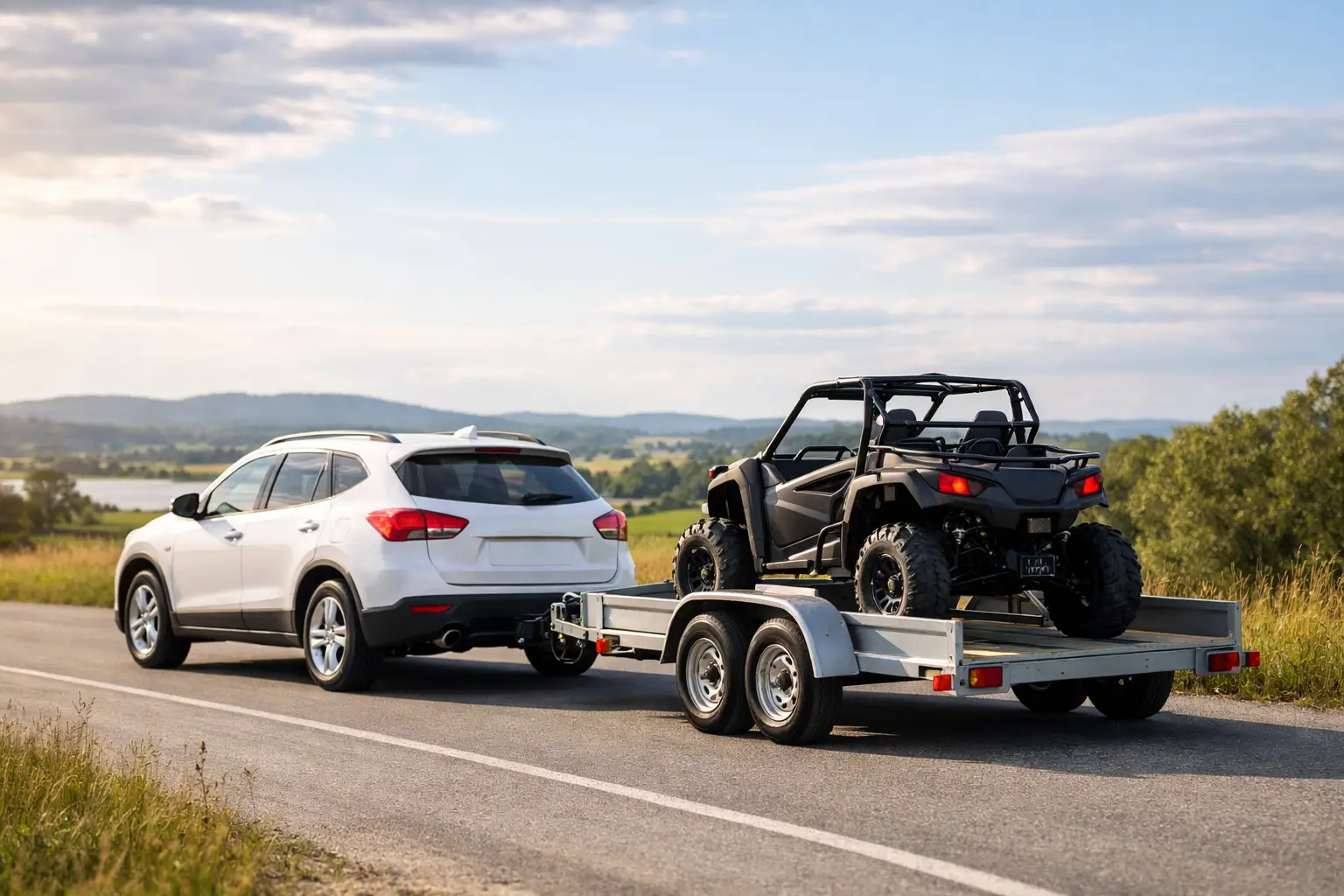
A new fifth wheel is waiting at the dealership. Your seasonal site is booked. Or your travel trailer needs to get to a service center before the next trip. The problem is not where the RV needs to go. It is trailer hauling: getting a large, valuable unit there safely without buying a heavy-duty truck, learning every towing rule the hard way, or spending a stressful day behind the wheel.
For many RV owners, professional transport is not a luxury. It is the practical way to use an RV without taking on the full responsibility of moving it. You can drive your own car or SUV, travel when it suits you, and have an experienced hauler handle the route, hookup, fuel stops, tight turns, and destination delivery.
When Trailer Hauling Makes Sense
Owning a travel trailer or fifth wheel does not automatically mean you need to haul it yourself. A properly matched tow vehicle is a major expense, especially when it will sit unused for much of the year. Beyond the purchase price, there is fuel, maintenance, insurance, storage, and the day-to-day cost of driving a large truck when you do not need one.
Professional hauling is often the better fit when the RV is moved only once or twice a year. This is common for seasonal campers, owners with a permanent lot, and buyers who want a new unit delivered directly from a dealership. It also makes sense when an RV needs to go to a repair shop, storage facility, winterization appointment, or new home after a move.
The decision is not only about cost. Some owners have the truck and still prefer not to pull a long trailer through city traffic, mountain grades, unfamiliar campgrounds, or busy ferry terminals. There is no prize for white-knuckling a difficult route. The goal is to have your RV where you want it, ready to use.
What a Professional RV Hauler Actually Handles
Good trailer hauling starts well before the hitch is connected. The hauler needs the correct information about the RV, including its type, length, approximate weight, pickup location, destination, and any access concerns. A fifth wheel requires a different setup than a conventional travel trailer, and a 40-foot unit demands more planning than a smaller weekend trailer.
Pickup and drop-off conditions matter just as much as highway miles. Is the RV parked in a storage compound with restricted hours? Is it at a dealership that needs advance notice? Does the seasonal lot have narrow roads, low branches, a steep approach, or a tight backing area? These details affect scheduling and help prevent surprises on delivery day.
A professional operator also plans the route around real-world towing conditions. That may include fuel access, grade changes, construction, ferry schedules, weather, and safe places to stop. On Vancouver Island routes, ferry coordination is part of the job, not an afterthought. A missed sailing or an improperly planned reservation can turn a straightforward move into a long and expensive delay.
The work should be backed by the right licensing and insurance. Your RV is a significant investment, and you should know that the person moving it is properly equipped and operating professionally. Ask direct questions. A reputable hauler will be comfortable explaining the type of transport they provide, the information needed for a quote, and how the move will be coordinated.
Travel Trailers and Fifth Wheels Need Different Planning
Travel trailers are commonly measured by overall length and loaded weight, but the details go further. Hitch condition, brake function, tire condition, clearance, and stabilizers all need to be checked before departure. Loose exterior items, unsecured doors, and slide-outs that are not fully retracted can create preventable problems on the road.
Fifth wheels require an appropriate hitch setup and a pickup truck capable of handling the pin weight and overall load. Their height and turning characteristics also deserve extra attention. That does not mean every fifth wheel move is complicated, but it does mean the hauler should know exactly what they are collecting before arriving.
A trailer that has been parked for a long time may need additional preparation. Tires can lose pressure, batteries can be low, brakes may need inspection, and awnings or accessories may have been left unsecured. If you are unsure about the unit’s road readiness, say so when requesting a quote. Clear information early is better than a delay at pickup.
The Cost Comparison Is Bigger Than the Price of a Truck
It is easy to compare a hauling quote with the cost of fuel for one trip and assume doing it yourself is cheaper. That comparison misses most of the real expense.
To move a larger RV safely, you may need a truck with sufficient payload, towing capacity, hitch equipment, brake controls, mirrors, and appropriate tires. Then come registration, insurance, servicing, parking, and depreciation. If the truck is purchased mainly to move an RV a few times each year, the annual cost can far exceed the price of professional transport.
There is also the value of your time. A long move can mean a full day or several days away from work and family, plus the need to arrange a second driver or return transportation. If the route includes a ferry crossing, remote destination, or difficult arrival window, the logistics become more involved.
That said, professional hauling is not automatically the lowest-cost option for every owner. If you already own the right truck, tow frequently, and are comfortable with the routes you use, handling short moves yourself may be practical. The value of a hauler is strongest when the move is infrequent, long-distance, logistically difficult, or simply outside your comfort level.
How to Prepare Your RV for Transport Day
A smooth move depends on the owner and hauler having the same plan. Before pickup, remove or secure loose items inside and outside the RV. Close and lock windows, storage compartments, and entry doors. Retract slide-outs and awnings completely, and make sure any steps are folded away.
Check that the RV has adequate tire pressure and that its battery and breakaway system are in working order. If there is damage, a known mechanical issue, or a concern about brakes, bearings, lights, or the hitch, disclose it before the scheduled move. The right solution may be simple, but it needs to be addressed before the RV is on the road.
You should also confirm access at both ends. Provide gate codes, site numbers, contact names, operating hours, and any special instructions for the destination. At a campground or seasonal lot, it helps to have the site cleared and ready. Moving an RV into place is much easier when there are no parked vehicles, stacked firewood, patio furniture, or unexpected obstacles in the approach.
For dealership pickups, make sure paperwork, keys, and any required release authorization are ready. For service-center delivery, verify who will receive the RV and whether they need advance notice. These small details are what keep a scheduled haul from turning into a wasted trip.
Choosing a Hauler for Western Canadian Routes
The right provider should specialize in towable RVs, not treat them as an occasional side job. Experience matters because travel trailers and fifth wheels behave differently on the road, and destination access can be more challenging than the highway portion of the trip.
Look for direct answers about licensing, insurance, equipment, scheduling, and service areas. A clear quote process is a good sign. The hauler should ask enough questions to understand your RV and route rather than offering a vague price with no discussion of length, pickup conditions, ferry requirements, or delivery access.
Regional knowledge also has value. Routes across British Columbia and Alberta can involve mountain weather, changing road conditions, remote stops, and seasonal access limitations. Ferry travel to Vancouver Island adds another layer of timing and space planning. An experienced operator anticipates these factors and communicates what is needed from you.
GoMax RV focuses on travel trailers and fifth wheels under 44 feet, with transport experience built around the routes and conditions RV owners actually face. Whether the move is from a dealership to your driveway, from storage to a seasonal site, or across provincial lines, the same principle applies: plan it properly, move it safely, and avoid unnecessary complications.
Start With the Details That Shape Your Quote
When you request a trailer hauling quote, have the RV year, make, model, length, pickup city, destination, and preferred timing available. Mention ferry travel, difficult access, storage-yard requirements, and any known condition issues. Photos can also be useful when the pickup or delivery location is unusually tight.
The best transport plan is rarely the one built on the fewest details. It is the one that gives the hauler a clear picture of the job before the scheduled day. Provide accurate information, prepare the RV, and let an experienced operator handle the miles while you focus on the reason you bought the RV in the first place: getting to where you want to be.
Comments are closed