

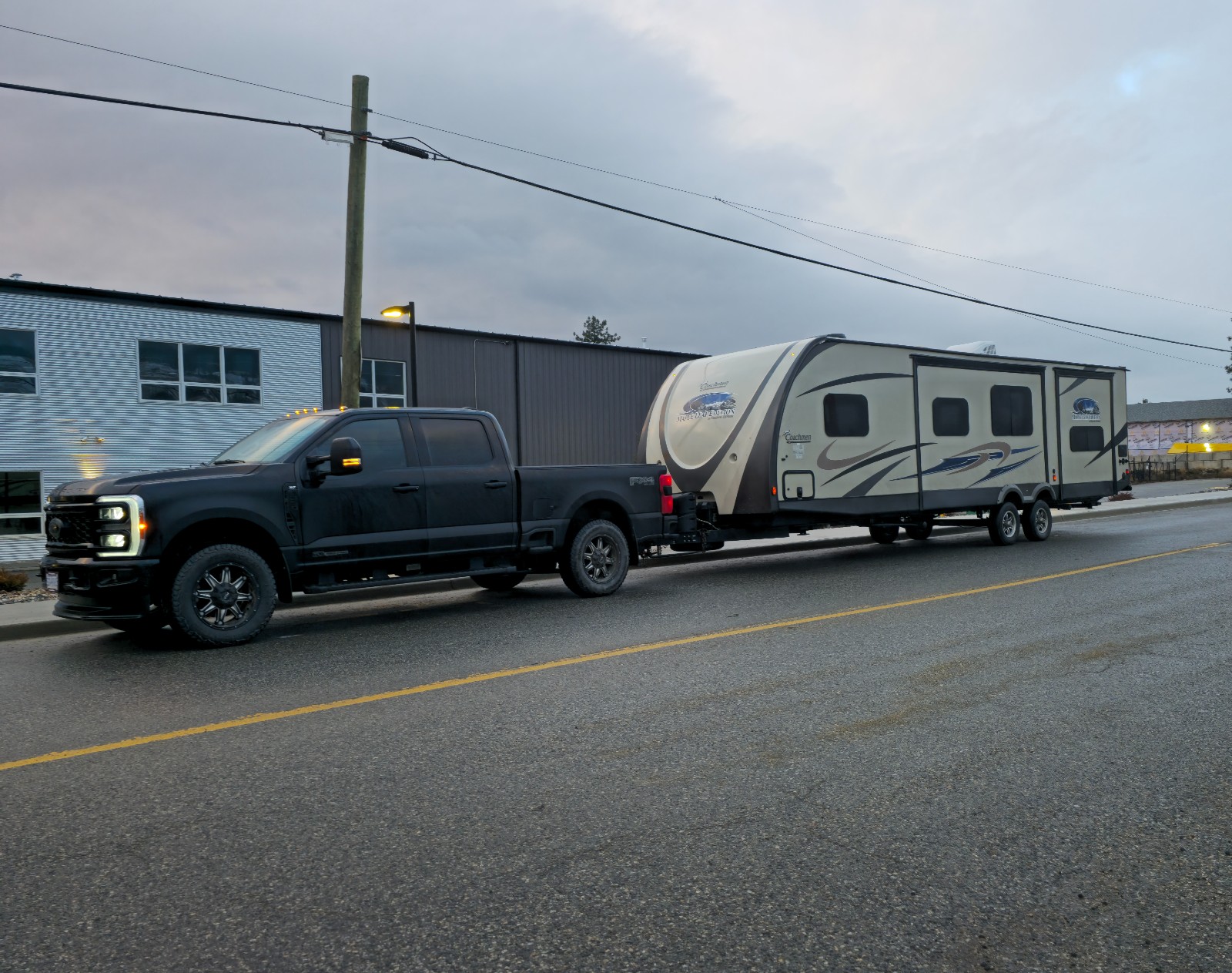
Your new trailer is waiting at the dealership, your seasonal site is hours away, or your RV needs to get to a service center. The question is straightforward: can a transport company deliver my camper? If your camper is a towable travel trailer or fifth wheel, the answer is generally yes.
Professional RV transport is built for owners who want the RV at the destination without buying, maintaining, and driving a heavy-duty pickup. You can drive your own SUV or car, fly ahead, or simply meet the trailer at the site when it arrives. The important part is choosing a carrier equipped and insured for the size, weight, and route involved.
Can a transport company deliver my camper?
A qualified RV transport company can move many towable campers point to point. That includes travel trailers and fifth wheels being moved from a dealership, home, storage facility, seasonal campground, service center, or private property.
There are limits, and they matter. “Camper” can mean several things. A transport company that specializes in towable RVs may not handle a motorhome, truck camper, or oversized trailer. Before requesting a quote, confirm the RV type, overall length, gross vehicle weight rating, hitch type, and current condition. GoMax RV, for example, focuses on travel trailers and fifth wheels under 44 feet.
The transporter will also need to know whether the unit is road-ready. Tires, brakes, lights, bearings, breakaway system, hitch components, and propane storage all affect whether the trailer can be safely moved. A trailer that has been sitting for several seasons may need inspection or service before departure.
When professional RV delivery makes sense
Many owners assume they need a large truck because they own a large trailer. That is one option, but it is not always the practical one. A capable truck is expensive to purchase and maintain, and pulling a long RV through mountain grades, busy cities, fuel stations, and tight campground roads takes confidence and experience.
Professional delivery is a sensible choice when you have just bought an RV and do not yet have the right tow setup. It also works well for seasonal moves, service appointments, winter storage, relocations, or one-way trips where you do not want to make the return drive with an empty truck.
For Western Canadian owners, route familiarity can make a real difference. Mountain weather, steep grades, changing road conditions, and ferry schedules all need to be considered. If the destination is on Vancouver Island, ferry coordination should be discussed when you request your quote. A carrier that regularly handles the crossing can plan the timing, reservation requirements, and related cost properly rather than treating it as an afterthought.
What a camper delivery quote is based on
There is no honest flat rate that fits every RV move. The distance is only one part of the job. A quote should reflect the actual equipment, route, access conditions, and timing required to deliver your trailer safely.
The biggest factors are typically the trailer’s length and weight, pickup and delivery locations, highway versus remote-road access, ferry costs where applicable, and the condition of the trailer. A fifth wheel may require a different hitch setup than a standard travel trailer. A site with narrow turns, soft ground, low branches, or a steep approach can also change what is involved at delivery.
Timing affects the price as well. If your move is flexible, a return-haul opportunity may offer a more efficient option. If the trailer must arrive on a specific day for a dealership handoff, campground reservation, or service appointment, the carrier has less flexibility in scheduling.
To get an accurate quote without several rounds of back-and-forth, provide the year, make, model, length, hitch type, estimated weight, pickup address, destination address, and preferred dates. Photos of the hitch, tires, and destination access can be useful, especially for rural properties and tight campsites.
Insurance and licensing are not details to skip
Your camper is a major purchase. The company moving it should be properly licensed and insured for commercial RV transport. Ask direct questions about coverage before you book, including what documentation is available and how the company handles a problem on the road.
You should also review your own RV insurance policy. Some policies have requirements around who may move the trailer, where it is stored, and how damage claims are reported. Knowing this before pickup avoids confusion later.
Experience matters just as much as paperwork. Long trailers react differently in wind, on grades, and during turns. A driver who works with travel trailers and fifth wheels regularly understands the loading approach, hitch connection, brake checks, fuel planning, route selection, and delivery-site assessment that the job requires.
How to prepare your trailer for transport
A professional driver handles the hauling, but the owner still has a role in preparing the RV. The goal is simple: make the trailer safe for the road and ready to be received at the other end.
Start by removing loose items from countertops, tables, beds, and exterior storage compartments. Secure doors, drawers, vents, antennas, steps, awnings, and slide-outs. Empty or properly secure tanks according to the transport plan, and make sure the propane system is shut off and cylinders are secured.
Check the basics before pickup. Tires should be inflated and free of visible damage. Wheel bearings, brakes, safety chains, breakaway cable, jack, coupler, lights, and battery should all be in working order. If the trailer has any known issue, disclose it before the driver arrives. A surprise flat tire or failed light can delay the move and may create additional cost.
At the destination, make sure someone can provide access if needed. Campground gates, storage facilities, and rural properties may have entry codes, office hours, or restrictions on arrival times. If you will not be there in person, give clear delivery instructions and a reliable contact number.
What delivery day usually looks like
On pickup day, the driver will inspect the RV’s visible condition, connect it using the correct equipment, test essential lighting and brake functions, and confirm the delivery details. The process should not be rushed. A careful pre-trip check is part of protecting the trailer and everyone sharing the road.
During transit, weather, road closures, ferry timing, and traffic can affect the schedule. A dependable transport provider communicates when conditions require an adjustment rather than making promises that ignore real road logistics. This is especially relevant for longer routes through British Columbia and Alberta, where conditions can change quickly by season and elevation.
At delivery, access is assessed before the trailer is brought into a tight space. The goal is to place the RV where it needs to be without forcing a difficult maneuver that risks damage to the unit, property, or surrounding site. If final placement requires special site preparation, such as clearing branches or opening gates, arrange it before arrival.
A few questions worth asking before you book
Ask whether the company regularly transports your type of RV, what insurance and licensing it carries, and whether it has experience on your specific route. Confirm what is included in the quote, including ferry charges, and ask what happens if the trailer is not road-ready at pickup.
It is also reasonable to ask how delivery timing will be communicated and whether the driver can access the destination at your requested time. Clear answers are a good sign. Vague pricing, missing paperwork, or a refusal to discuss the trailer’s condition are not.
Owning a trailer should not mean every trip begins with a white-knuckle drive or the cost of a truck you only need a few times each year. With the right RV transport company, your camper can get where it needs to go while you keep your time, travel plans, and peace of mind intact.
Comments are closed