

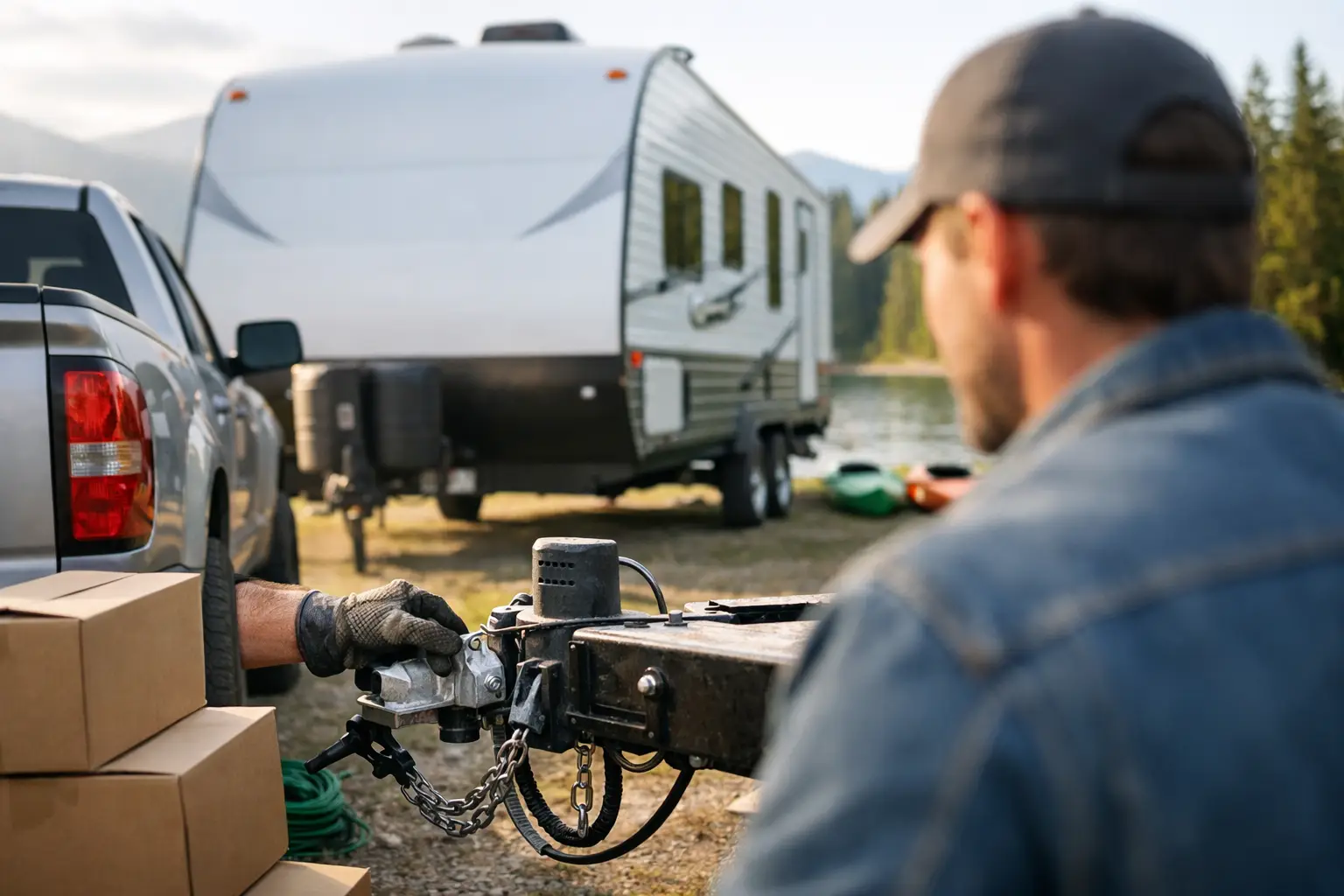
A seasonal move should not begin with a rushed hookup at the end of a long weekend. Whether your travel trailer or 5th wheel is heading to a summer site, winter storage, a service center, or back home, a good guide to seasonal trailer moves starts well before departure day. The more you prepare the route, the site, and the RV itself, the fewer surprises you face when it is time to move.
For many owners, the challenge is not simply getting from Point A to Point B. It is dealing with narrow campground roads, limited site access, ferry schedules, seasonal weather, storage deadlines, and a trailer that may have been sitting in one place for months. Professional transport removes much of the driving burden, but a smooth job still depends on clear planning from the owner.
A Guide to Seasonal Trailer Moves Starts With Timing
The best time to arrange a seasonal trailer move is before campgrounds and storage facilities get busy. Spring and fall are the most demanding periods for RV transport. In spring, owners are moving units onto seasonal lots and preparing for the first trips of the year. In fall, many campgrounds have firm closing dates, while storage compounds fill up quickly.
If your move involves Vancouver Island, timing matters even more. Ferry space, sailing times, terminal traffic, and seasonal demand can all affect the plan. Booking early gives the transporter more flexibility to coordinate the crossing and helps avoid last-minute schedule pressure.
Weather is another practical factor. A dry, clear day is ideal, but seasonal moves do not always happen under ideal conditions. Mountain routes, high-elevation passes, heavy rain, early snow, and wind can change travel times quickly in British Columbia and Alberta. Build some flexibility into your preferred delivery window rather than planning around one exact hour.
It also helps to ask your campground, storage yard, or service center about their access rules before confirming a date. Some facilities restrict arrivals after dark, limit large-unit movements during busy check-in periods, or require advance notice before a trailer can be placed on a site.
Confirm the Route and Both Ends of the Move
A route that looks simple on a map may not be simple for a long travel trailer or 5th wheel. Low branches, tight turns, steep approaches, narrow rural roads, and construction zones can all matter. The pickup and delivery locations deserve as much attention as the highway distance between them.
At pickup, make sure there is enough room for the transport rig to line up with the trailer. Remove parked vehicles, loose gear, and anything blocking access to the hitch area. If the trailer is stored behind a gate, confirm the gate width and make sure someone can provide entry when needed.
At delivery, think beyond the campground entrance. Can a long unit make the turn onto your row? Is the site approach soft after rain? Are there low branches over the road or a sharp corner near the pad? A seasonal site that was easy to reach with a small trailer can be much harder to access with a longer 5th wheel.
Photos and short videos are useful when access is questionable. A few clear images of the entrance, road, turns, and final site can help a professional hauler assess the job before arriving. This is especially helpful for rural properties, tight storage yards, and seasonal campgrounds with older road layouts.
Prepare the Trailer for Transport, Not for Camping
Before the move, your RV should be secured for the road rather than left in its usual campsite setup. This is where small details prevent damaged equipment, lost items, and avoidable delays.
Start with the basics: retract all slide-outs and awnings, raise and lock stabilizer jacks, disconnect utilities, and remove blocks, mats, chairs, and other loose items around the site. Make sure exterior compartments are latched and that any detachable steps or accessories are secured.
Inside the RV, secure anything that can shift. Cabinet latches should close properly, heavy items should be low and stable, and loose kitchen or bathroom items should be packed away. A trailer may travel over uneven roads, construction areas, and changing grades. What stays put on a quiet seasonal lot may not stay put during a highway move.
Pay attention to the roofline as well. Antennas, vent covers, solar accessories, and air-conditioning units should be checked for visible damage or loose hardware. A quick walk-around before departure can reveal a problem that is much easier to address while the trailer is still parked.
For 5th wheels, ensure the front landing gear is working properly and the hitch area is clear. For travel trailers, check that the coupler, safety equipment, breakaway cable, and jack are accessible and in usable condition. If you know about a mechanical issue, disclose it before the move. A professional transporter can plan around known conditions more effectively than unexpected ones.
Check Tires, Brakes, Lights, and Paperwork
Seasonal trailers often sit for long stretches. That makes a pre-move inspection worthwhile, even if the unit was in good condition when it was parked. Tires can lose pressure, weather-check, or develop flat spots. Batteries can drain. Electrical connections can corrode. Rodents can also create problems in wiring or underbelly areas.
Before transport day, check the tire condition and inflation, confirm that trailer lights work, and make sure the brakes and breakaway system are functional. If the RV has been sitting through winter, inspect it carefully for water damage, pest activity, or visible damage around the frame and suspension.
Have the key, registration information, and site contact details ready. If a storage yard or campground requires a gate code, permit, or signed release, provide that information in advance. Nothing slows down a delivery faster than arriving at a locked gate with no authorized contact available.
If the trailer is going to a service center, let the facility know it is arriving by professional transport. Confirm their receiving hours, where they want the unit placed, and whether they need any paperwork left inside. The same approach applies to dealerships and storage compounds.
Decide What Professional Hauling Solves for You
Some seasonal moves are straightforward. Others involve long distances, ferry travel, challenging terrain, or a new RV owner who has never handled a large trailer before. The right choice depends on your comfort level, your schedule, the unit size, and the route.
Professional hauling is often a practical option when you do not own a properly equipped heavy-duty pickup, do not want to spend a full day or more on the road, or need the trailer moved while you travel separately in your own car or SUV. It can also make sense when the move involves a tight deadline, a remote seasonal site, or a route you would rather not manage yourself.
The value is not only in having the trailer moved. It is in having an experienced operator handle the hookup, road logistics, route decisions, and delivery process. For owners moving between British Columbia and Alberta, or dealing with island ferry coordination, regional familiarity can make a real difference.
When requesting a quote, provide accurate details. The trailer year, make, model, length, pickup location, delivery location, preferred dates, and any access concerns all help create a realistic plan. Mention whether it is a travel trailer or 5th wheel, whether it is currently winterized, and whether the site has unusual conditions such as a steep driveway or limited turnaround space.
Plan for the Arrival, Not Just the Departure
A successful seasonal move ends with the RV placed where it needs to be, with enough room for your next steps. If it is going to storage, know whether the facility requires the propane to be shut off, batteries disconnected, or a cover installed. If it is heading to a seasonal lot, arrange for someone to handle leveling, utility connections, and setup after delivery if needed.
Do not assume every delivery can include precise final positioning on a difficult site. Ground conditions, trees, road width, and site layout may limit how close the trailer can be placed. Discuss expectations beforehand, especially if the RV needs to fit beside a deck, under a shelter, or into a narrow storage row.
A seasonal move is easier when it is treated as a scheduled operation rather than a last-minute chore. Have the site ready, give clear access information, and prepare the RV for the road. Then you can spend your time planning the season ahead instead of worrying about how your trailer will get there.
Comments are closed