

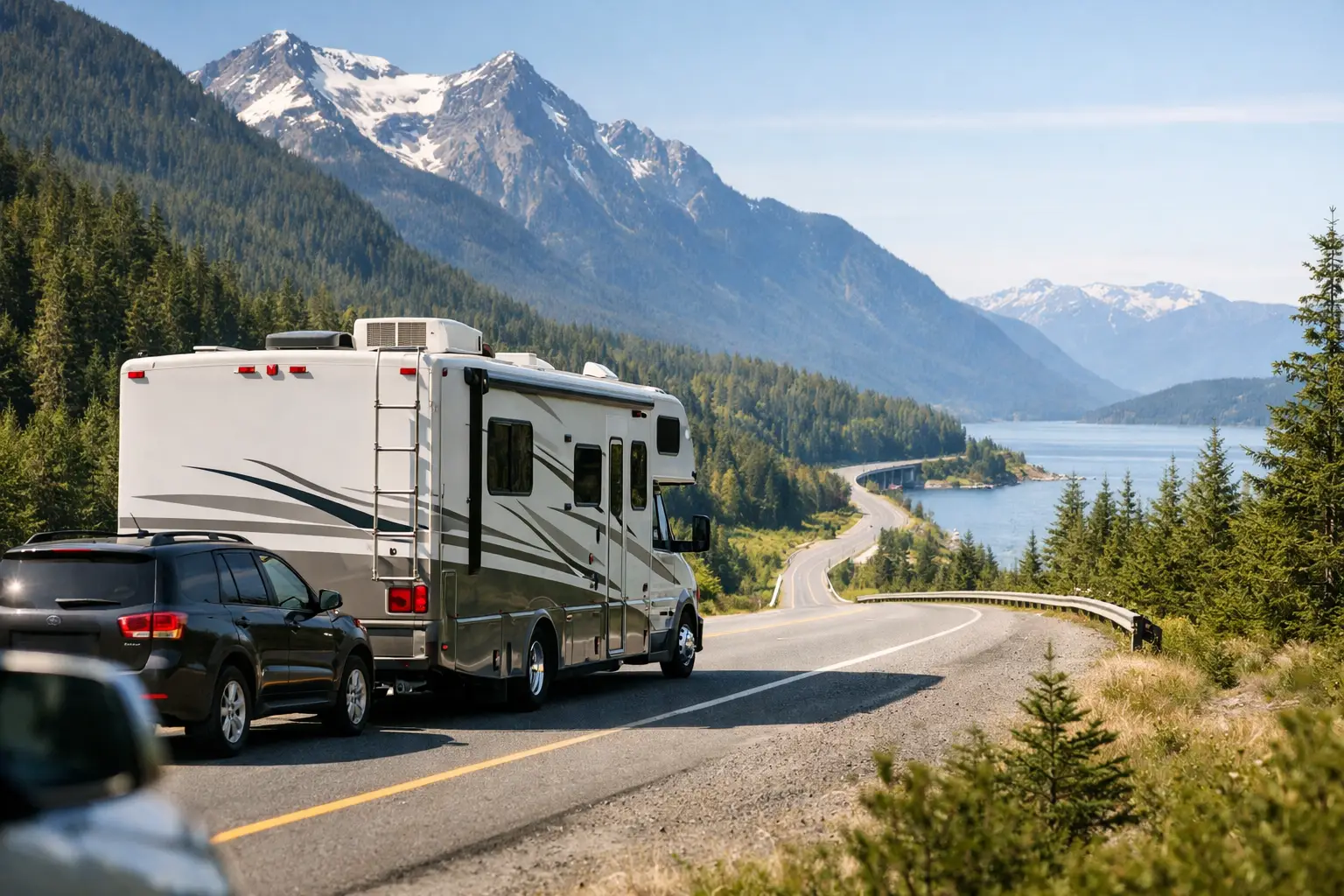
Buying a trailer in one province and setting it up in another sounds simple right up until the logistics show up. Suddenly you are dealing with registration timing, road conditions, weight limits, pickup windows, and the question a lot of owners ask too late – do I really want to handle this move myself? This guide to moving an RV between provinces is built for owners who want the move done properly, without turning delivery day into a long list of avoidable problems.
For many RV owners, the hardest part is not the distance. It is the chain of small details that can slow everything down. A trailer has to be ready for transport, paperwork has to match the unit, and the route has to make sense for the size and type of RV being moved. If you are relocating, taking delivery from a dealership, moving to a seasonal site, or sending your unit in for service, the process works better when you treat it like a transport job, not just a road trip.
What matters most when moving an RV between provinces
The first thing to get clear is what kind of unit you have and where it is going. A lightweight travel trailer headed from a dealership to a private property is one job. A larger 5th wheel going to a seasonal site with tight access is another. Length, height, weight, slide configuration, and delivery access all affect planning.
The next issue is timing. Interprovincial RV moves often depend on dealership release dates, campground intake schedules, service appointments, weather windows, and road restrictions. A move that looks easy on paper can get pushed around by ferry schedules, mountain conditions, or a destination that only allows arrivals during specific hours. If you plan early, those details are manageable. If you leave them to the last minute, they start deciding the schedule for you.
Paperwork also matters more than many owners expect. Registration, bill of sale, insurance confirmation, and any dealer handoff documents should be ready before the unit moves. If anything is incomplete, pickup can stall fast. That is especially true when the RV is new to you and the transaction is still being finalized.
A practical guide to moving an RV between provinces
If you are organizing the move yourself, start with the basics: where the RV is now, where it needs to go, and whether the pickup and drop-off locations are easy for a larger towable unit to access. Not every driveway, storage yard, dealership lot, or campsite is straightforward. Tight corners, soft ground, low branches, and steep approaches can all change how delivery needs to be handled.
From there, confirm the legal and operational side. The RV should be insured for transport, the ownership documents should be available, and any provincial requirements tied to the move should be checked in advance. Requirements can vary based on the origin, destination, and whether the unit is newly purchased or already registered. This is one of those areas where guessing creates expensive delays.
Then comes route planning. On a map, the shortest route may look best. In real transport, the best route is the one that fits the unit safely and avoids unnecessary complications. Mountain highways, construction zones, seasonal road issues, ferry coordination, and fuel-stop spacing all matter. For larger towable RVs, practical route planning is not about shaving an hour off the trip. It is about getting the trailer there cleanly and safely.
Preparation of the unit is another step owners sometimes underestimate. Loose items inside the RV should be secured. Exterior compartments should be latched properly. Awnings, steps, antennas, and slide-outs need to be fully stowed. Tire condition should be checked before departure, and the unit should be in transport-ready condition. If the trailer has been sitting for a while, this matters even more. A preventable mechanical issue on pickup day wastes everyone’s time.
DIY transport versus professional hauling
Some owners already have towing experience and the right truck. Even then, moving an RV between provinces is not always worth handling personally. Long-distance hauling adds fatigue, weather exposure, refueling challenges, tight turns in unfamiliar areas, and the pressure of managing a large unit through traffic and elevation changes. If you are already juggling a home move, work schedule, or family travel, doing it yourself can stop looking economical pretty quickly.
The trade-off usually comes down to control versus convenience. If you handle the move yourself, you stay fully hands-on. But you also take on the route, the risk, the timing, and the wear on your equipment. If you use a professional transporter, you are paying for experience, proper equipment, insurance alignment, and the ability to move the RV without needing to buy or use a heavy-duty tow vehicle yourself.
That matters for a lot of owners, especially newer buyers. Plenty of people buy a travel trailer or 5th wheel before they have any interest in towing it long distance. Others simply do not want to tow over mountain passes, through city traffic, or onto a ferry. In those cases, professional hauling is less about luxury and more about making ownership simpler.
The details that affect cost
People often ask for a quick price without realizing how many variables shape the job. Distance matters, of course, but it is not the only factor. Unit size, pickup flexibility, access difficulty, route complexity, and season all affect cost. A straightforward point-to-point move is different from a pickup at a dealership, a ferry crossing, or a delivery to a site with limited maneuvering room.
Timing can also change pricing. Peak seasonal periods are busier, and weather can narrow the safe and practical transport window. If you need a very specific pickup date or delivery day, that may limit scheduling flexibility. On the other hand, if your move can fit within a broader window, planning tends to go more smoothly.
This is why quote-based transport makes sense. A useful quote should reflect the actual job, not just the mileage. When you request pricing, be ready with the RV’s year, make, model, length, current location, destination, and any special access notes. Good information at the start usually leads to a more accurate plan.
Common mistakes owners make
One of the biggest mistakes is assuming the RV is automatically ready to move because it is parked and intact. Transport readiness is more specific than that. Tires may be aged out, batteries may be unsecured, compartments may not latch properly, or the destination may not be ready to receive the unit.
Another mistake is leaving paperwork until the day of pickup. If there is a registration question, an insurance gap, or missing purchase documentation, that can hold up the move. Even a simple scheduling issue at the pickup or drop-off location can cause delays if no one is available to release or receive the RV.
The last common mistake is choosing based on the lowest number instead of the clearest plan. With long-distance RV transport, experience matters. Licensing, insurance, route familiarity, and actual hands-on towing knowledge are what protect the unit and keep the move on track.
When professional transport makes the most sense
There are a few situations where hiring out the move is usually the smart call. New dealer purchases are one. Seasonal relocations are another, especially if the route includes mountain travel or the destination is several hours away. Service-related moves also make sense to outsource when your focus is getting the unit repaired, not figuring out how to tow it there and back.
This is especially true for owners in western provinces, where road grades, long distances, and ferry logistics can turn a routine move into a full-day or multi-day job. Companies like GoMax RV are built around that exact problem – moving towable RVs safely and efficiently so owners do not have to build their schedule around the haul.
What to have ready before requesting transport
Before you reach out for a quote, gather the basics. Have the pickup address, destination address, RV dimensions, and preferred timeframe ready. If the unit is at a dealership, storage yard, or service center, include the site contact and any release instructions. If the destination has narrow access, soft ground, gate restrictions, or limited delivery hours, say that upfront.
That kind of detail helps avoid vague pricing and last-minute surprises. It also makes it easier to confirm whether the route, timing, and site conditions fit the move you want.
Moving an RV between provinces does not need to become a test of patience or equipment. When the route is planned properly, the paperwork is in order, and the transport is handled by someone who understands towable RVs, the whole job gets a lot simpler. The best move is usually the one that lets you focus on where the RV is going, not on everything that could go wrong getting it there.
Comments are closed