

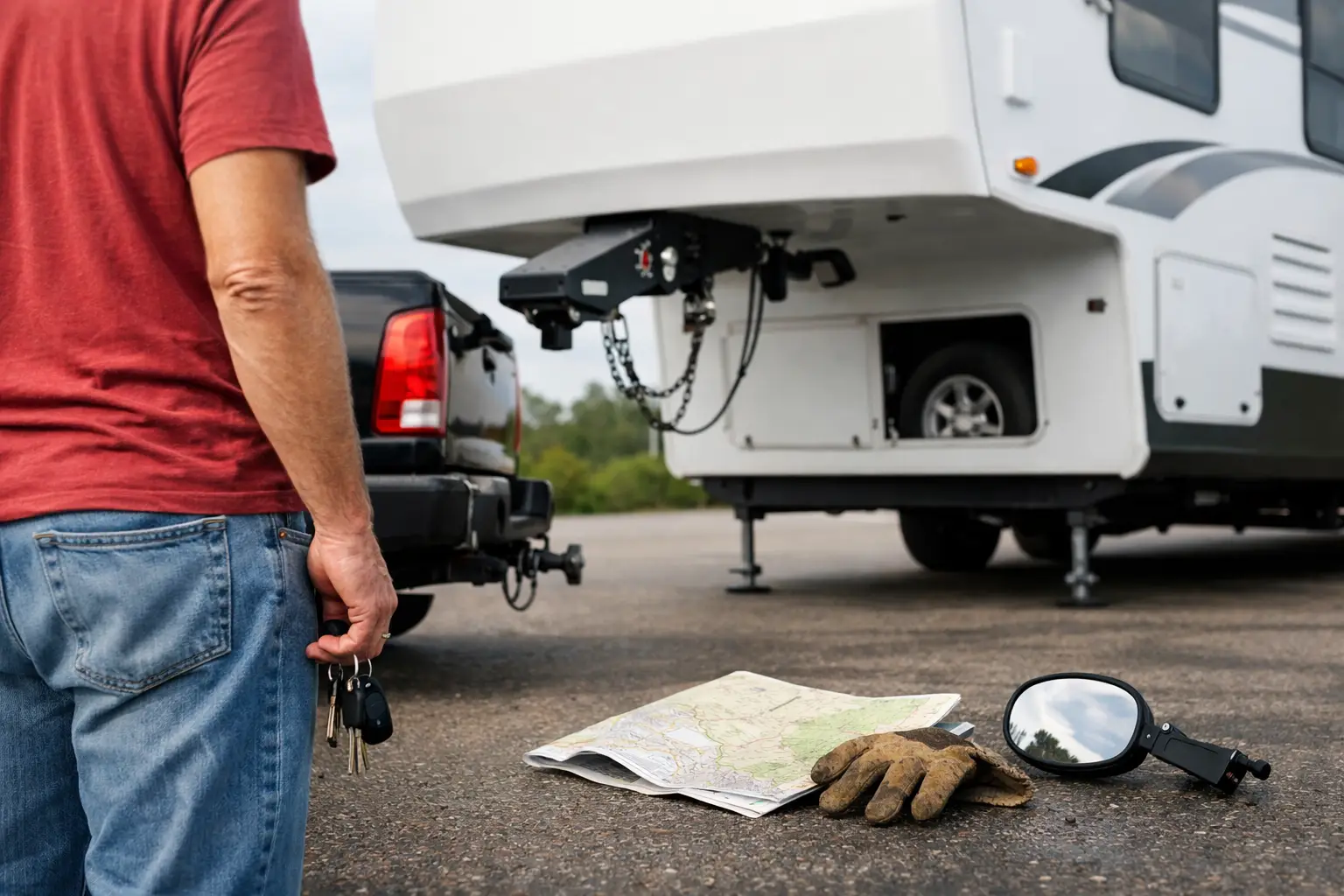
The biggest problems on transport day usually start a week earlier. Most top mistakes before RV hauling are not dramatic mechanical failures. They are small oversights – missing paperwork, blocked access, bad measurements, loose items inside the unit, or a delivery site that is harder to reach than expected.
If you are moving a travel trailer or 5th wheel, good prep matters because hauling is only part of the job. The pickup location, the condition of the RV, the route, and the final placement all affect how smoothly the move goes. A little planning saves time, avoids delays, and helps protect the unit from preventable damage.
Top mistakes before RV hauling that cause delays
A common mistake is assuming every RV is ready to move because it was recently used, bought from a dealership, or parked without issues. Transport readiness is different from camping readiness. The unit may look fine at a glance and still have a dead battery, soft tire, unsecured compartment, or slide issue that becomes a problem once it is being moved.
Another frequent issue is incomplete information at quote stage. If the RV length is off by a few feet, if aftermarket accessories were added, or if the pickup site has a steep driveway or tight gate, the plan may need to change. That does not always stop the move, but it can affect timing, routing, and equipment.
The easy way to think about it is this: a successful haul depends on accurate details, clear access, and a unit that is actually prepared for road travel.
Mistake 1: Not confirming the real size and setup of the RV
Owners often provide the model name and assume that is enough. Sometimes it is. Sometimes it is not. Published specs may not reflect what is actually on the unit, especially if there is a bike rack, rear cargo tray, upgraded pin box, lifted suspension, or other add-on equipment.
Length, height, and overall setup matter because they affect route planning, fuel stops, ferry coordination, and access into storage yards or campsites. If a driver is told the trailer is one size and arrives to find something larger or configured differently, it can slow everything down.
It is better to provide the exact year, make, model, and any modifications up front. A few photos from each side, plus front and rear, can clear up a lot before pickup day.
Mistake 2: Leaving paperwork until the last minute
This is one of the top mistakes before RV hauling because it tends to show up when the driver is ready to leave. Registration, ownership details, pickup authorization, insurance confirmation, gate access, ferry booking details, and service center release instructions all need to be clear before transport starts.
The exact paperwork depends on the move. A dealer delivery is different from relocating a seasonal unit. A service pickup may require approval from the shop. A move into a resort or storage facility may involve office hours, site maps, or arrival windows.
When those details are left until the last minute, a simple move becomes a coordination problem. Good hauling companies can work around a lot, but no one can load time back into the day once a handoff gets delayed.
Mistake 3: Assuming the pickup or delivery site is easy to access
This catches people off guard all the time. The RV may fit the site, but that does not automatically mean the site is easy to enter, turn around in, or exit safely. Narrow lanes, overhanging branches, muddy lots, soft shoulders, sharp turns, low wires, and parked vehicles can all create problems.
The same goes for campgrounds, acreage properties, storage compounds, and residential neighborhoods. Access in a half-ton pickup for casual use is one thing. Commercial hauling access is another.
If there is any doubt, share photos and be honest about the approach. Mention gates, slope, loose gravel, recent rain, or limited room to back in. This is especially useful on Vancouver Island routes or remote seasonal sites where timing and access matter more than people expect.
What to check before the driver arrives
Walk the approach route and ask a simple question: can a large truck and your RV get in and out without moving obstacles at the last second? If the answer is maybe, fix it ahead of time. Trim branches, move vehicles, confirm gate codes, and let the site know when the unit is arriving.
Mistake 4: Not securing the RV for road movement
A trailer can sit parked for months with loose contents inside and no immediate issue. That changes when it goes on the road for hundreds of miles. Cabinet doors can open. Pantry items can shift. Glass trays, coffee makers, and small appliances can turn into projectiles. Exterior compartments can also pop open if they are not properly latched.
Road-ready means more than hitch-ready. Secure the interior, lock down loose items, close roof vents unless they are designed and approved to remain open, retract steps, and make sure slides and awnings are fully secured. Remove anything mounted temporarily on the exterior.
If you would not want it moving around during a hard stop or rough section of highway, do not leave it loose in the unit.
Mistake 5: Ignoring tires, bearings, brakes, and battery condition
This is where owners sometimes assume a professional hauler can simply handle whatever shows up. Experience helps, but it does not change the condition of the RV. Tires with dry rot, weak wheel bearings, inoperative brakes, or a dead breakaway battery can turn a routine job into a roadside repair situation.
Even if the trailer has not been used much, time and storage conditions still matter. An RV that looks clean and well kept can still be overdue for basic running gear checks.
Before scheduling transport, make sure the tires are roadworthy and inflated properly, the wheel components are maintained, the lights work, and the battery supports required safety systems. If the unit has been sitting for a season or longer, this check becomes even more important.
Mistake 6: Giving vague timing instead of real scheduling details
“Anytime Friday” sounds flexible, but it often creates avoidable confusion. Pickup and delivery timing depends on route planning, distance, business hours, traffic, ferry windows, and destination access. The more precise the information, the better the move goes.
This matters even more when a service department, campground office, storage yard, or property manager is involved. If someone needs to open a gate, assign a site, inspect the unit, or receive keys, those details should be confirmed in advance.
A good schedule does not mean forcing an unrealistic time. It means making sure everyone involved understands the workable window and what happens if there is a delay from weather, road conditions, or earlier appointments.
Mistake 7: Forgetting the destination setup
Owners put a lot of effort into getting the RV picked up and not enough into what happens at the other end. Is the site level enough for placement? Is there enough room to back in? Will someone be there to receive it? Are there site-specific rules? Does the destination require advance check-in or proof of reservation?
If the RV is going to storage, service, or a seasonal lot, confirm who is responsible for final placement, where the keys go, and whether the site is available that day. If the trailer is being delivered after a purchase, make sure the handoff process is clear and that the receiving party is expecting it.
Why destination details matter more than most people think
A clean pickup can still end in frustration if the site is blocked, the office is closed, or the assigned space is not accessible. Final delivery is part of the transport job, not an afterthought. When the destination is organized, the whole move feels simple.
How to avoid these mistakes without overcomplicating the job
Most of this comes down to being specific early. Share the real dimensions, explain the route in and out, confirm paperwork, and prepare the RV as if it is going on a long highway trip – because it is. That gives the hauling company what it needs to plan properly and gives you fewer surprises on move day.
If you are new to RV ownership, this can feel like a lot. It does not need to be. An experienced hauler will usually tell you exactly what details matter most, especially for travel trailers and 5th wheels. The key is not waiting until the truck is on the way to start sorting them out.
At GoMax RV, that is why quote requests work best when owners include clear unit details, pickup and delivery information, and any site challenges up front. It saves time for everyone and helps keep the move safe and efficient.
A well-prepared haul is rarely the one people talk about afterward, and that is the point. The best move is the one that shows up, gets handled properly, and lets you focus on where the RV is going next.
Comments are closed