

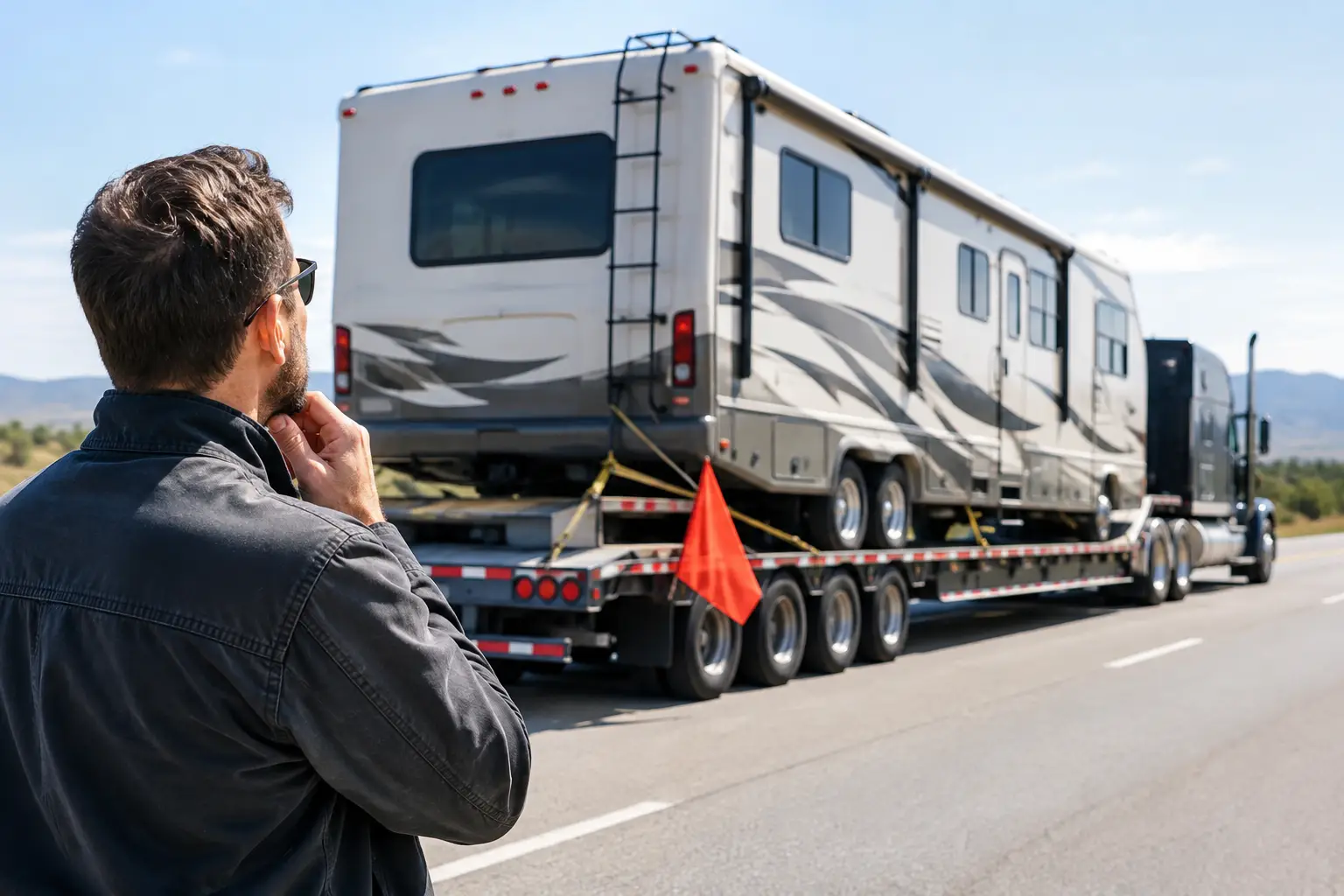
A travel trailer or fifth wheel can represent years of family trips, a major purchase, and a lot of carefully chosen upgrades. Handing it over for transport should not come down to a star rating alone. Knowing the RV transport review red flags to look for can help you separate a dependable operator from one that creates more stress than it removes.
Reviews are useful because they reveal what happens after the quote is accepted: whether the driver communicates, arrives prepared, handles the unit carefully, and follows through at delivery. But reviews need to be read with context. A short complaint is not automatically a deal-breaker, and a page full of five-star ratings is not automatically proof that every detail is covered.
RV transport review red flags that deserve a closer look
Reviews that sound copied, vague, or unusually perfect
A handful of brief reviews saying only “great service” or “highly recommended” is not much to work with. Positive feedback is more meaningful when it includes real transport details, such as a dealer pickup, a seasonal-site move, a ferry crossing, a service-center delivery, or careful placement on arrival.
Be cautious if every review uses similar wording, was posted in a tight time frame, or offers no indication of what type of RV was moved. That does not prove the reviews are false, but it does mean you should not rely on them as your only screening tool. Ask the company how often it handles travel trailers or fifth wheels similar to yours, including your unit’s length and setup.
Repeated complaints about communication
Transport timing can change because of weather, road conditions, ferry schedules, destination access, or an issue discovered during pickup. A professional operator cannot control every delay. They can control whether they keep you informed.
Look for patterns in reviews mentioning missed calls, unclear pickup windows, unexplained delays, or a driver who disappeared once the RV was loaded. One unhappy review may reflect an unusual situation. Several reviews describing the same communication problem point to an operating habit.
Clear communication matters even more when your RV is being moved between a dealership, storage compound, service facility, or seasonal site. The right provider confirms the pickup contact, delivery contact, route considerations, and any access instructions before the move starts.
No details about the type of work performed
RV transport is not one-size-fits-all. A company may receive good reviews for local utility work or general hauling while having little experience with larger towable RVs. That is a concern if your trailer requires the right hitch arrangement, careful turning room, a weight-aware route, or coordination with a site manager.
Read for evidence that the operator understands RV-specific work. Useful review details may include backing into a tight site, managing a fifth-wheel connection, inspecting equipment at pickup, or coordinating a Vancouver Island sailing. A review does not need technical language to be credible, but it should show the customer received the service they actually needed.
What reviews cannot verify for you
Even excellent reviews do not replace direct questions about licensing and insurance. These are not minor details when someone is transporting a valuable RV over a long distance.
Ask what insurance applies while your unit is in transit, what documentation can be provided, and whether there are limits or conditions you need to understand. Do not assume that a statement such as “fully insured” answers every question. The operator should be able to explain the coverage in plain language and tell you what information they need about your RV before confirming the job.
Also ask whether the company is properly licensed for the route and the work involved. This matters on interprovincial moves and when a route includes ferries, mountain passes, or remote destination roads. A company that treats these questions as inconvenient is giving you a reason to keep looking.
Watch for pricing that is too simple or too good to be true
A low quote can be attractive, especially when you are comparing the cost of hiring transport against buying, fueling, and maintaining a heavy-duty truck. But a quote that is dramatically lower than the others deserves a careful review.
The concern is not simply the price. It is whether the scope is clear. Ask what the quote includes and what could change it. Distance, RV length, pickup and delivery access, ferry costs, timing, route requirements, and return-haul availability can all affect the final price. A straightforward quote explains those factors rather than leaving room for surprise charges later.
Be equally wary of a provider that refuses to give any meaningful estimate until the last minute. Transport work has variables, but an experienced operator should still be able to ask the right questions and set realistic expectations.
Pay attention to how they discuss your RV’s condition
A dependable transport provider will want accurate details before pickup. That includes the make and model, overall length, approximate weight, hitch type, tire condition, brake and light operation, slide-out status, and any accessories that affect clearance or width.
If a company barely asks about the RV, that is a red flag. The details affect equipment choice, route planning, safety checks, and delivery access. It is also reasonable for a provider to ask you to secure loose items, close and lock compartments, retract steps and slides, and make sure the RV is ready to move. Those requests are signs of a careful process, not unnecessary hassle.
For fifth wheels, ask how the connection will be handled and whether there are any site or clearance considerations. For travel trailers, ask about the hitch setup and pre-departure inspection. The goal is not to quiz the driver. It is to confirm that the company has a process that fits your particular unit.
Read negative reviews with context, not panic
No transport company can promise that every customer will be happy in every situation. A delivery delayed by a winter storm, a closed ferry sailing, or an inaccessible campsite is different from a preventable problem caused by poor planning.
When you find a negative review, look for three things: what happened, whether the issue was within the provider’s control, and how the company responded. A calm, specific response that acknowledges a problem and explains the resolution can be more reassuring than a business with no visible criticism at all.
The strongest warning sign is a repeated pattern of avoidable issues: damaged equipment with no accountability, unexplained price changes, missed delivery commitments, or customers who say they could not get a straight answer. Patterns matter more than isolated comments.
Questions to ask before you book
Reviews should lead to a conversation, not replace one. Before committing, ask the provider:
- What insurance coverage applies while my RV is being transported?
- Have you moved travel trailers or fifth wheels comparable to my unit’s size and setup?
- What is included in the quote, and what circumstances could change the price?
- How will pickup, progress updates, and delivery confirmation be handled?
- What do you need from me to make the RV ready for transport?
- Are there route, ferry, site-access, or seasonal conditions that could affect timing?
A capable operator will answer directly and ask useful questions in return. They should want the destination address, site instructions, pickup contacts, and realistic details about the RV’s condition. That preparation protects everyone involved.
For owners moving a trailer between British Columbia and Alberta, or arranging a delivery to a seasonal site, local route familiarity can also make a real difference. Mountain weather, ferry schedules, limited-turnaround campsites, and service-yard procedures are everyday logistics, not afterthoughts.
GoMax RV approaches RV transport with that practical mindset: understand the unit, confirm the route, clarify the coverage and quote, then move the trailer with a plan. When you request estimates, choose the provider that gives you clear answers before your RV ever leaves the driveway. That is usually the best sign that they will still be accountable when it reaches its destination.
Comments are closed