

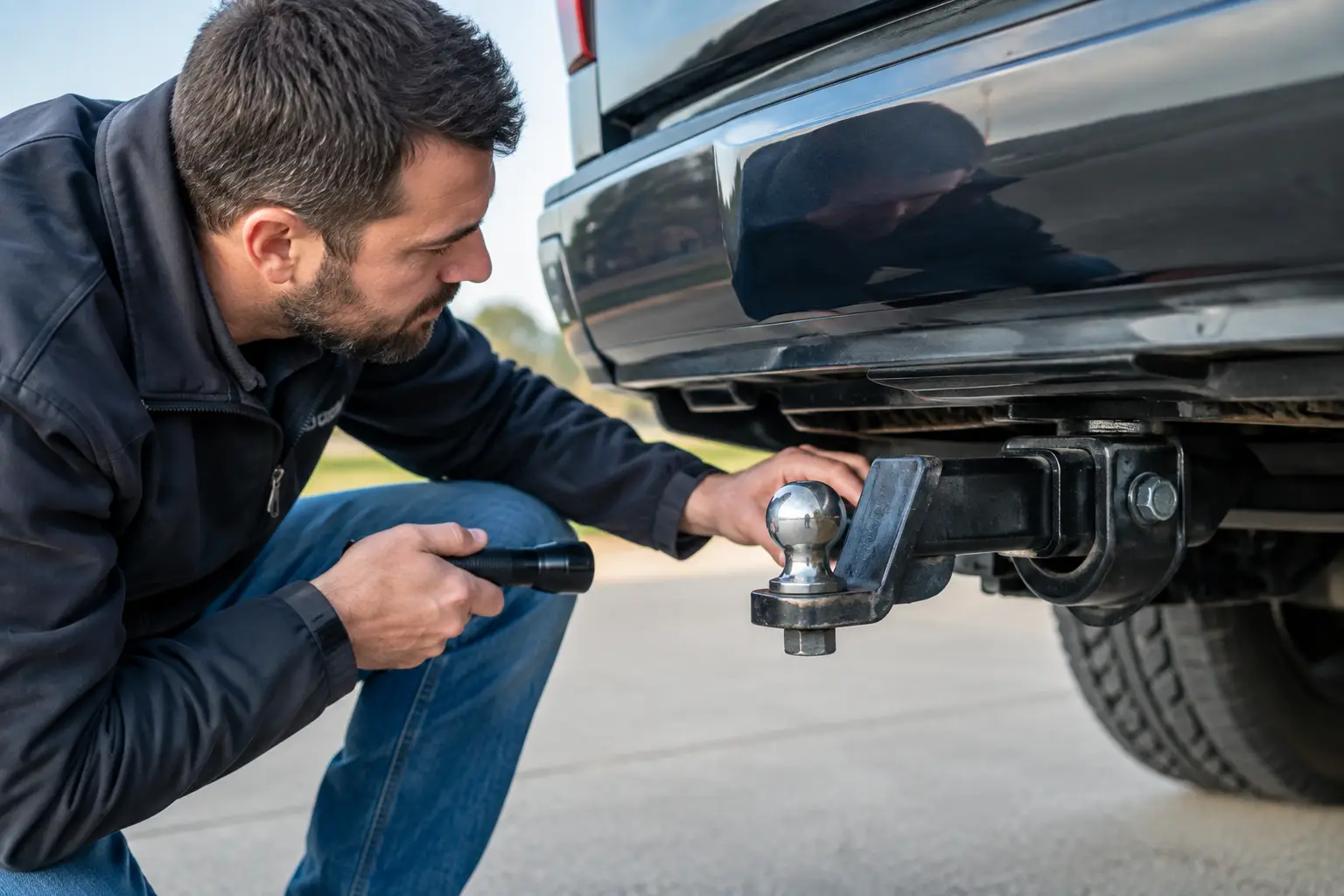
A trailer can look ready to move from ten feet away and still have a hitch issue that changes the whole job. A worn coupler, loose breakaway cable, damaged king pin, or missing retaining clip can delay pickup, create unnecessary risk, and leave you scrambling on moving day. Taking time to inspect trailer hitch components before your scheduled RV transport gives you a chance to deal with small problems while they are still small.
For travel trailer and fifth-wheel owners, this is not about becoming a mechanic. It is about knowing what should be clean, secure, and functional before your RV leaves a dealership, storage yard, service center, or seasonal site.
Inspect Trailer Hitch Components Before Pickup Day
Start the inspection when the RV is parked on level, firm ground with the landing gear or tongue jack supporting it properly. Good lighting matters. Dirt, road film, and old grease can hide cracks, worn metal, or missing hardware, so wipe down the connection points before deciding everything looks fine.
If you see obvious damage, do not assume it can wait until after the move. Let your transport provider know before pickup. A clear photo and a quick description of the issue can prevent a wasted trip and help determine whether the RV needs repair before transport.
For travel trailers: Check the coupler and A-frame
The coupler is the main connection point at the front of a travel trailer. Look closely at the latch mechanism, safety pin, handle, and the inside of the coupler where it contacts the ball. The latch should move fully into position and lock positively. It should not feel loose, bent, jammed, or held together by improvised hardware.
Surface rust is common, particularly on trailers stored outside through wet seasons. Rust alone does not always mean the part is unsafe. Deep corrosion, flaking metal, distorted edges, or visible cracks around the coupler welds are different. Those are reasons to pause and have the trailer assessed.
Also inspect the A-frame itself. Pay attention to the welds where the coupler and frame members meet, along with the area around the tongue jack. Cracks can begin in these high-stress areas and may be easier to spot once mud and loose rust are cleaned away.
Safety chains deserve the same attention. They should be rated for the trailer, securely attached to the frame, and free of stretched links, severe corrosion, or damaged hooks. Check that the hooks close properly and that no link has been used as a makeshift repair point.
For fifth wheels: Check the king pin and pin box
A fifth wheel uses a king pin and pin box rather than a ball coupler. Start by looking at the king pin itself. It should be straight, smooth where it engages, and free of deep grooves, cracks, heavy corrosion, or signs of grinding. A thin layer of appropriate lubricant may be normal, but excessive buildup can hide wear.
Move to the pin box, which connects the king pin assembly to the front of the RV. Inspect the mounting bolts, brackets, and surrounding frame area. Bolts should be present and seated correctly, with no elongated holes, cracked brackets, or rust trails that suggest movement between parts. If the pin box appears twisted, shifted, or poorly repaired, it needs professional attention before transport.
Many fifth wheels use an extended or cushioned pin box. These systems can make for a smoother ride, but they add moving parts. Check for leaking shock components, torn rubber sections, loose fasteners, and unusual play. A little movement may be normal depending on the design. Metal-on-metal knocking, visible damage, or a component sitting out of alignment is not.
Do Not Skip the Breakaway System
The breakaway system is easy to overlook because it is a small cable and switch mounted near the front of the trailer. It is also a critical safety item. The cable should be attached to the switch securely, free of fraying, and long enough to function without dragging on the ground or becoming tangled during turns.
Check that the breakaway switch housing is not cracked or loose. Confirm the battery that powers the system is connected and maintained. A dead or disconnected battery can leave the system unable to perform as intended.
Avoid looping the cable through safety chains or attaching it to a weak point. During professional RV transport, the cable needs a clear, independent connection point. If you are unsure whether the setup is correct, mention it before pickup rather than guessing at the last minute.
Look Beyond the Main Hitch Connection
The hitch assembly does not work alone. Several nearby components affect whether an RV can be connected and moved safely.
The tongue jack on a travel trailer or landing gear on a fifth wheel must raise and lower the front of the RV reliably. Run the equipment through a short test before the transport appointment. Listen for grinding, binding, or a motor that struggles under normal load. Inspect foot pads, mounting points, wiring, and manual crank provisions. If the power system fails, knowing whether a manual override works can save considerable time.
Check the electrical cord and plug as well. Bent terminals, cracked insulation, exposed wire, or a plug packed with corrosion can interfere with the trailer lights and brakes. The cord should reach the connection point without being stretched tight, pinched, or allowed to drag.
Finally, inspect the front storage area if it contains batteries, propane cylinders, or loose gear. Batteries should be secured. Propane cylinders should be properly mounted with valves closed for transport. Heavy cargo should not be able to shift forward against the trailer frame or hitch area.
Know the Difference Between Wear and a Stop-Work Issue
Not every mark on a hitch component means the RV cannot be transported. Light surface rust, old grease, minor paint wear, and normal scuffing can be expected on equipment exposed to weather and road use. The question is whether the part still has its intended strength, alignment, and locking function.
Treat the following conditions as reasons to stop and get advice before moving the RV:
- Cracks in the coupler, A-frame, pin box, king pin area, or mounting brackets
- Missing, bent, or loose locking hardware
- Severe corrosion that has eaten into metal or weakened chain links
- A coupler latch that will not close and lock fully
- A bent king pin or pin box that appears shifted or twisted
- Broken landing gear, tongue jack, safety chains, electrical plug, or breakaway cable
A repair shop may be able to correct a straightforward issue quickly. Structural damage can require a more thorough inspection. Either way, finding it before a scheduled move gives you more control over the timeline.
Prepare the RV So the Hitch Area Is Accessible
A professional transporter needs clear access to the front of the trailer. Before pickup, remove personal items stored around the hitch, unlock the front compartment if batteries or electrical connections are inside, and make sure the landing gear controls are accessible. Do not leave bicycles, bins, patio furniture, or other gear blocking the approach to the RV.
If the trailer has been sitting for months, check for nests, mud buildup, or debris around the wiring and hitch area. Storage yards and seasonal sites can create surprises, especially after winter. A five-minute cleanup is better than discovering an obstructed connection after the transport truck arrives.
It also helps to have the RV keys, gate codes, site contact information, and destination details ready. For moves involving ferry schedules, narrow lots, or service-center drop-offs, clear access details matter just as much as the mechanical inspection.
When to Call Before Your Transport Is Scheduled
Call ahead if you have bought a used RV and do not know its maintenance history, if the trailer has sat unused for a long period, or if you notice anything unusual at the connection point. Photos are useful, especially for corrosion, damaged wiring, pin box concerns, or a coupler that does not appear to latch correctly.
At GoMax RV, clear information before pickup helps keep the move efficient and avoids surprises at the site. An experienced transporter can explain what needs to be ready for connection and what should be repaired first.
Your RV is meant to get you to the lake, the campground, or the seasonal site without adding stress to the trip. A careful hitch inspection is one practical step that helps the move start on solid ground.
Comments are closed