

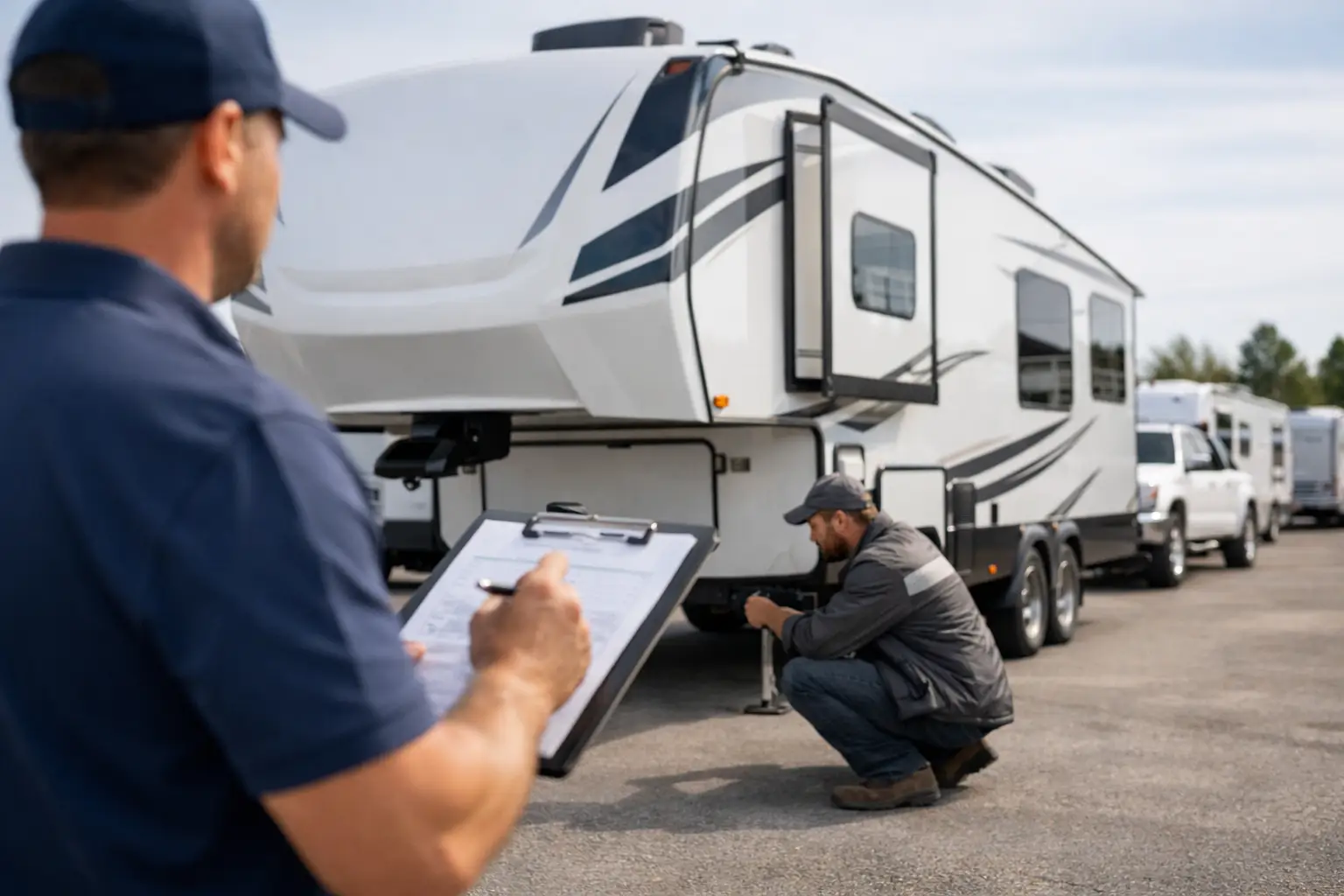
A travel trailer can look perfectly ready from the campsite, then reveal a loose compartment latch, flat battery, or unsecured slide-out when it is time to move. That is why owners often ask, does RV transport include inspections? The practical answer is yes, a professional carrier should complete a condition and road-readiness check around pickup. But that check is not the same thing as a full mechanical inspection, a safety certification, or a repair diagnosis.
Knowing the difference protects you from surprises. It also helps the transport day go faster, whether your RV is leaving a dealership, storage yard, service center, home, or seasonal site.
What an RV Transport Inspection Usually Covers
Before moving a travel trailer or fifth wheel, an experienced transport operator needs to confirm that the unit can be connected, moved, and delivered safely. The pickup inspection is focused on visible condition, hookup requirements, and obvious issues that could affect the trip.
A typical check starts with the exterior. The driver may look for existing dents, scrapes, cracked lenses, damaged siding, loose awnings, open roof vents, and unsecured baggage doors. Photos or notes can document the RV’s condition before it leaves. This creates a clear reference point if there is a question at delivery.
The operator will also inspect the items directly related to transport. That commonly includes the coupler or fifth-wheel pin box, safety chains where applicable, breakaway cable, electrical connection, landing gear or tongue jack, tires, wheels, and visible suspension components. Lights and brake-controller operation should be checked before departure.
On a fifth wheel, the driver will pay close attention to the hitch area and clearance between the RV and the transport truck. On a travel trailer, proper coupler engagement, locked latch position, chain connection, and jack clearance matter just as much. These are not minor details. A secure, correctly set up connection is the foundation of a safe haul.
What It Does Not Include
The inspection performed for transport has a specific purpose: determining whether the RV can be moved safely at that time. It does not replace a service appointment or a comprehensive pre-purchase inspection.
A transport driver is generally not taking apart wheel bearings, testing every appliance, inspecting roof seals inch by inch, checking propane-system pressure, or diagnosing a brake issue hidden inside the hub. They are also not certifying that the RV meets every registration, insurance, campground, or provincial requirement.
That distinction matters when an RV has been sitting for months. Tires may appear fine but have internal aging or low pressure. Brakes may function during a quick test but still need scheduled service. A battery may power the breakaway system long enough for a check but be near the end of its life. If you have concerns about mechanical condition, arrange a service inspection before scheduling the move.
Why a Pre-Transport Walk-Around Matters
A documented walk-around protects both the owner and the carrier. It establishes the visible condition at pickup, identifies items that need attention before departure, and gives everyone a chance to agree on what is being moved.
For the owner, it is a chance to point out anything unusual. Maybe a compartment door needs to be closed a certain way, a power tongue jack has a manual override, or a leveling system must be retracted in a particular sequence. A driver with decades of hauling experience can spot many common problems, but the owner still knows the individual RV best.
For the carrier, the walk-around helps prevent avoidable road delays. Discovering that a tire is badly underinflated, a breakaway cable is missing, or a slide-out is not fully retracted is far better at the pickup location than on the highway or at a ferry terminal.
Condition Photos Are Worth Requesting
Photos at pickup and delivery are a simple, practical safeguard, especially for longer routes. They should show broad exterior views as well as any existing damage that has been identified. There is no need to turn the process into a lengthy photo shoot, but clear records reduce uncertainty.
If you are not available at pickup, ask whether the carrier can send photos or complete the condition report with your designated contact. This is particularly useful for dealer pickups, storage facilities, and service-center transfers.
Your Responsibilities Before the Driver Arrives
The carrier handles the transport process, but the owner is responsible for making the RV ready to move. A few minutes of preparation can prevent a failed pickup or an unnecessary delay.
Before your scheduled time, make sure the RV is accessible and that there is enough room to connect and exit safely. Clear low branches, parked equipment, and other obstacles from the route. Tell the transport company ahead of time about tight turns, steep driveways, soft ground, gate codes, ferry bookings, or restricted access hours.
You should also prepare the unit by taking care of these essentials:
- Retract and secure all slide-outs, stabilizers, steps, awnings, antennas, and roof vents.
- Close, lock, and latch exterior compartments, entry doors, windows, and storage hatches.
- Remove or secure loose items inside, including dishes, chairs, tools, and anything stored in cabinets.
- Confirm that the tires are properly inflated and that the battery, brakes, lights, and breakaway system are operational.
- Empty holding tanks unless you have specifically discussed a different arrangement with the carrier.
If the RV needs a special hitch adapter, has nonstandard electrical wiring, or has a known issue with landing gear or brakes, say so when requesting your quote. Straight answers upfront allow the operator to bring the right equipment and decide whether the unit needs service before transport.
Does RV Transport Include Inspections at Delivery?
A good delivery process includes another walk-around once the RV reaches its destination. The purpose is to confirm that the unit arrived, note its visible condition, and make sure it is placed where you need it. If the destination is a seasonal lot or storage compound, placement can be just as important as the highway portion of the job.
Delivery checks are usually straightforward. The driver will disconnect the RV safely, position it on a suitable surface when access allows, and give you an opportunity to review the exterior. If an issue is noticed, document it immediately with photos and notes while the driver is present.
Keep expectations realistic. Delivery does not usually include campsite setup, leveling, connecting utilities, opening slide-outs, or checking every onboard system. Those services require time, site-specific knowledge, and sometimes separate arrangements. If you need more than placement and disconnect, ask before booking rather than assuming it is part of standard transport.
When You May Need a Separate RV Inspection
There are situations where a transport-focused check is not enough. If you are buying a used RV sight unseen, arranging an independent pre-purchase inspection is smart. If the unit has been in an accident, suffered water intrusion, sat unused for several seasons, or has a suspected axle, brake, tire, or frame problem, have a qualified RV technician assess it first.
The same applies when a dealership or service center tells you the unit is ready but you have not seen the completed work. Transport can move the RV to your location, but it cannot verify the quality of repairs that are not visible during a pickup walk-around.
Ask the Right Questions Before You Book
Rather than asking only whether inspections are included, ask what kind of inspection the company performs. Find out whether pickup and delivery photos are available, whether the driver checks lights and brakes, and what happens if the RV is not safe to move on arrival.
Also confirm insurance coverage, the route, estimated timing, and any access details that could affect the job. For routes involving Vancouver Island, ferry scheduling and RV dimensions should be discussed in advance. Good planning is part of safe transport, not an extra step.
A professional transport inspection gives you confidence that obvious condition and hookup issues are addressed before the RV heads down the road. For everything beyond that, the best approach is simple: prepare the unit honestly, arrange service when needed, and give your carrier the details they need to move it safely.
Comments are closed