

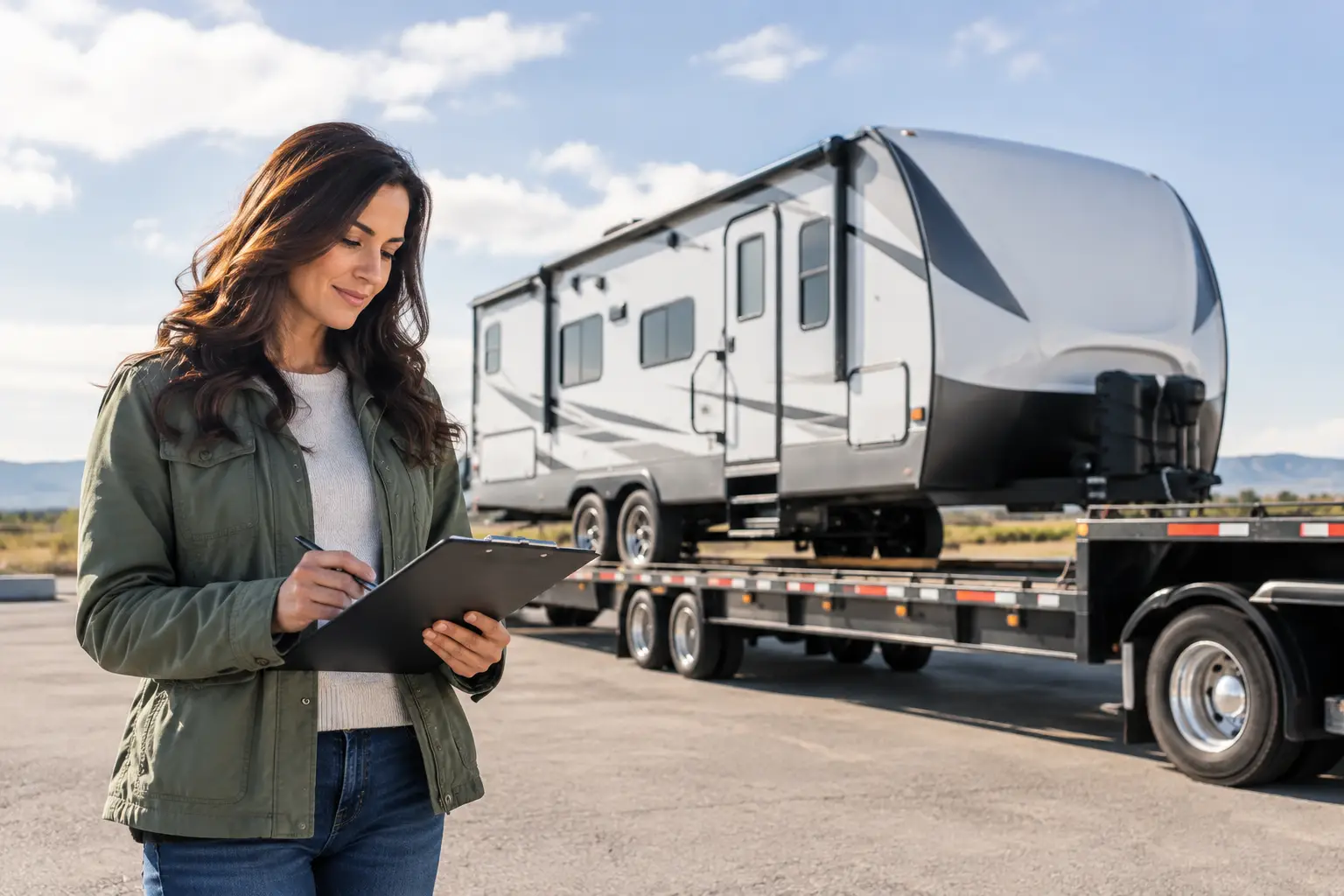
A transport contract is the paperwork that turns a verbal quote into a clear plan for moving your RV. Before a travel trailer or fifth wheel leaves your driveway, dealership, storage lot, or seasonal site, this guide to RV transport contracts can help you understand what you are agreeing to and what questions need answers. A good agreement protects both sides. A vague one can leave you guessing about costs, timing, damage reporting, or whether ferry charges were included.
For most owners, the goal is simple: get the RV moved safely without buying a heavy-duty truck, taking time off to tow it yourself, or dealing with unfamiliar roads. The contract is where that simple goal gets specific.
Start With the Exact RV and Route Details
A transport agreement should accurately identify the unit being moved. That means the year, make, model, VIN, trailer type, length, and, where relevant, pin weight or gross vehicle weight rating. These details affect the equipment required, route planning, and price. A 22-foot travel trailer does not create the same transport requirements as a 42-foot fifth wheel.
Check the pickup and delivery locations carefully. “Vancouver Island” or “a campground near Kelowna” is not enough for a reliable quote. The agreement should show the actual addresses, site numbers if applicable, contact names, and phone numbers for access. It should also account for conditions that can affect the job, such as a narrow rural driveway, a steep lot, a locked storage compound, low branches, construction, or restricted campground arrival hours.
This matters even more when the route includes a ferry. Ferry timing, terminal procedures, sailing availability, and the RV’s dimensions all affect scheduling. If your move involves Vancouver Island, confirm whether ferry fares and reservation-related costs are included in the quoted amount or billed separately.
Make Sure the Price Means What You Think It Means
The total price should be clear, but the wording behind it matters just as much. A contract may offer a fixed price for a straightforward point-to-point move, or it may use a base rate with additional charges for conditions outside the original scope. Neither approach is automatically better. What matters is that you know which one you are accepting.
Ask whether the amount includes fuel, ferry costs, tolls, permits when required, taxes, and normal loading and delivery work. Also ask what could trigger extra charges. Common examples include waiting time because an RV is not ready, a failed battery or brake issue, inaccessible pickup locations, delays at a service center, last-minute destination changes, or required detours caused by road restrictions.
A reputable transporter should not promise that every possible complication is covered at one low price. Long-distance hauling has real operating costs, and conditions can change. But the agreement should explain the likely extras in plain language, not bury them in a broad clause that gives no guidance.
If you are comparing quotes, compare the scope, not just the number at the bottom. A lower quote that excludes ferry travel, insurance details, or difficult-site delivery can become more expensive than an all-in quote once the move is underway.
Insurance and Responsibility Need Plain Answers
Your RV is a significant asset. The contract should state that the transporter carries the appropriate commercial licensing and insurance for the work being performed. It should also explain what happens if damage occurs while the RV is in transit.
Do not assume that every type of loss is handled the same way. Ask what insurance coverage applies during transport, whether there is a deductible, what exclusions may apply, and how a claim is reported. Your own RV insurance policy may also have requirements, so it is worth checking with your insurer before the scheduled date.
The agreement should distinguish between damage caused during transport and pre-existing issues. For example, a cracked window, worn tire, loose compartment latch, or water damage present before pickup should be documented before the RV moves. That is not about avoiding responsibility. It is about creating an honest record of the unit’s condition.
A condition report with photos is one of the most useful parts of an RV transport contract. Review it at pickup if possible. Photograph the exterior, roofline where practical, awnings, slide-out areas, hitch components, wheels, doors, and visible interior items. At delivery, inspect the RV before signing that it was received in acceptable condition. If something looks wrong, note it immediately and take photos.
Read the Pickup and Delivery Terms Closely
Transport dates are often estimates, especially when a route covers long distances or ferry crossings. Weather, road closures, service-center delays, and site access can affect the schedule. The contract should explain whether you are receiving a firm appointment, a delivery window, or an estimated timeframe.
This is where expectations matter. If your campground only allows arrivals between certain hours, tell the transporter before the quote is finalized. If a dealership needs advance notice, make sure the right contact is named. If you will not be present, arrange for someone authorized to release or receive the RV.
The agreement should also spell out what “delivery” means. In some situations, delivery means placing the RV at a site that is reasonably accessible and safe for the transport setup. It does not necessarily mean maneuvering into an extremely tight spot, leveling the unit, connecting utilities, or moving it across soft ground. Those services may be possible, but they need to be discussed in advance rather than assumed.
For seasonal sites and storage facilities, ask who is responsible for opening gates, confirming the site is clear, and ensuring enough room to turn and position the trailer. A few minutes of planning can prevent a long wait at the destination.
Know What You Must Prepare Before Transport
A contract often includes customer responsibilities. Read these carefully because they are practical, not just legal language. The RV should be ready to travel before the driver arrives.
That usually means securing loose items, closing and locking windows and exterior compartments, retracting slides and awnings, checking that the breakaway cable and hitch area are accessible, and making sure tires are serviceable. Personal belongings should be secured inside. Heavy items left loose can shift on the road and cause damage that has nothing to do with the actual hauling work.
You should also disclose mechanical or operational concerns before pickup. If the brakes are weak, a tire is leaking, a landing gear system is unreliable, or the RV has a clearance issue, say so early. A professional transporter can plan around known facts more effectively than surprises at the pickup location.
For a fifth wheel, confirm that the front landing gear operates properly and that the unit can be safely coupled. For a travel trailer, ensure the coupler, safety chains, breakaway system, and electrical connection are in workable condition. If the RV is at a repair shop or dealership, ask them to confirm it is road-ready before the scheduled transport date.
Cancellation, Delays, and Changes Are Worth Reading
Plans change. Purchase dates move, repairs take longer than expected, campground sites become unavailable, and weather can interrupt travel. Your agreement should explain cancellation terms, rescheduling options, deposits, and how notice should be given.
Pay attention to the difference between a customer cancellation and a delay outside either party’s control. If the transporter arrives and the RV cannot be released, is not ready, or cannot be accessed, there may be a standby or wasted-trip charge. On the other hand, weather and road conditions may require a schedule adjustment for safety. That is frustrating, but it is better than pushing an oversized load into poor conditions just to meet a date.
If the destination changes after the contract is signed, get the revised price and timing in writing. Even a shorter change in distance can alter ferry arrangements, route permits, or the time needed for delivery.
A Guide to RV Transport Contracts That Works in Real Life
The best contract is not the longest one. It is the one that leaves no practical question unanswered: what is moving, from where to where, when it is expected to move, what it costs, what is included, and what happens if conditions change.
Before you sign, take five minutes to read the agreement alongside the quote. Confirm the RV details, route, insurance information, pricing, pickup readiness requirements, delivery access, and cancellation terms. If a line is unclear, ask for an explanation before the move is booked.
GoMax RV works with owners who want the freedom of RV ownership without the work of hauling their trailer themselves. A clear contract helps make that handoff straightforward, whether the RV is headed to a service appointment, a seasonal site, a new home, or a dealership pickup. The right questions now make for a calmer delivery day later.
Comments are closed