

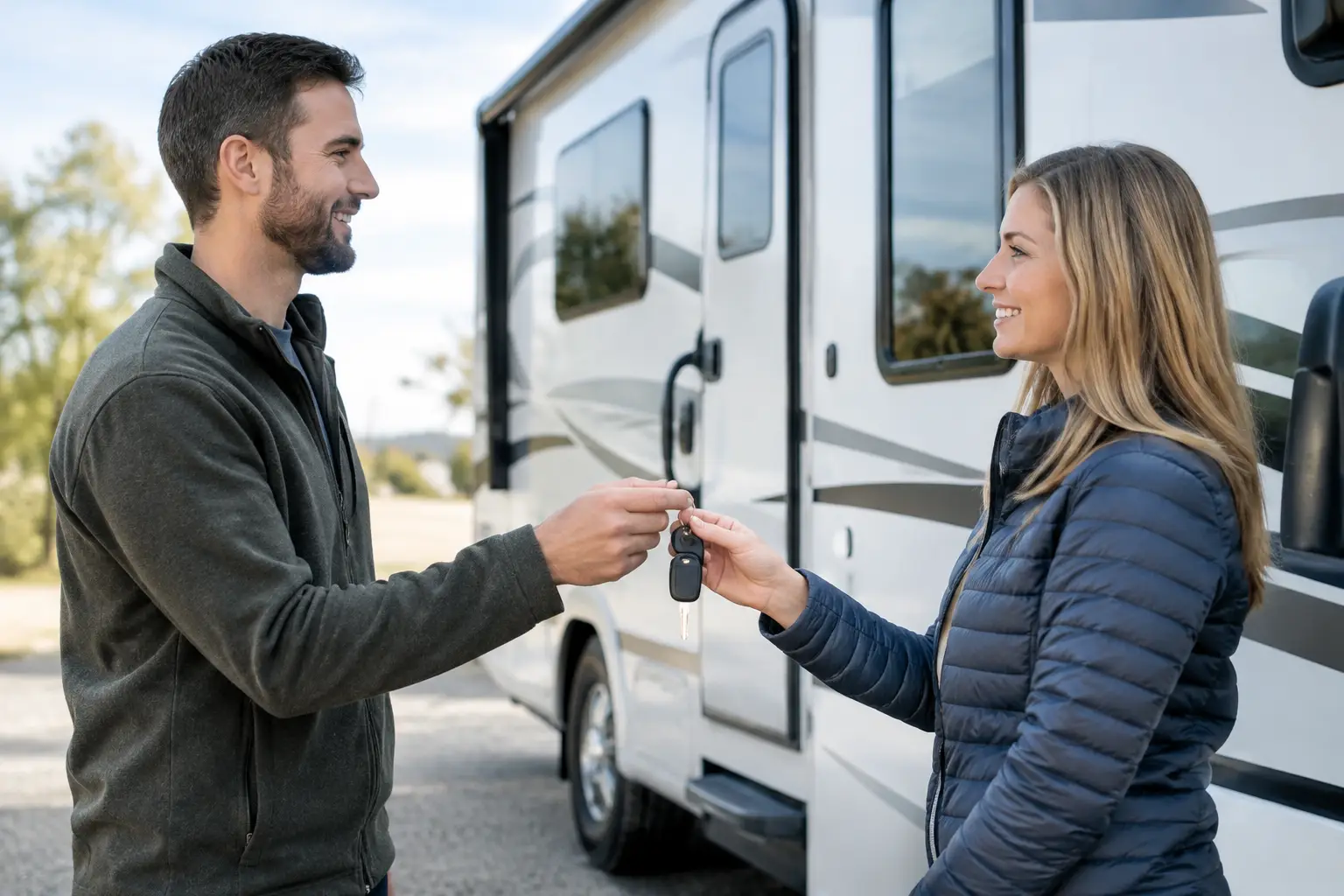
A missed key handoff can turn a straightforward RV move into a wasted day. When you coordinate RV key handoff before pickup, your transport driver can inspect the trailer, connect safely, and get moving on schedule. It is a small part of the job, but it affects every part that follows.
Whether your travel trailer is leaving a dealership, storage yard, repair facility, or seasonal site, the goal is simple: make sure the authorized person, the keys, the paperwork, and the RV are all available at the same time. A little planning prevents gate delays, unanswered calls, and uncertainty about who is responsible for the unit.
Confirm Who Can Release the RV
Start by naming one primary contact at the pickup location. This person should have the authority to release the RV and be reachable when the driver arrives. If a dealership, campground office, storage facility, or service center is involved, do not assume every staff member knows the trailer is scheduled to leave.
Give the facility the transport date, expected arrival window, RV make and model, plate number if applicable, and the name of the transport company or driver. Ask whether there are site-specific rules for releasing an RV. Some facilities require a signed work order, account clearance, advance notice, or identification before they will open a gate or release keys.
If you cannot attend in person, confirm that the person handing off the keys understands exactly what they are releasing. They should know the destination, the scheduled transport, and how to reach you if a question comes up. Clear instructions matter more when the RV is being picked up from a busy dealer lot or a storage compound where several similar trailers may be parked.
Put Every Required Key in One Place
A towable RV can have more than one key. The entry-door key is often not enough. Depending on the unit and pickup location, the driver may need keys for storage compartments, hitch or pin-box locks, wheel locks, battery disconnects, and gate access. If the RV has an electronic entry system, make sure the code is available and tested.
Place the keys in a labeled envelope or lockbox and tell the driver where they will be. Avoid vague directions such as “the keys should be at the office.” Confirm the employee holding them, the office hours, and whether a photo ID or release authorization is needed.
Keep a spare set yourself whenever possible. Keys get misplaced, staff changes happen, and a spare can prevent a simple issue from becoming a rescheduled move. If a lockbox is used, provide the code directly to the authorized driver or dispatcher rather than leaving it in a public note or voicemail.
Do Not Forget Access Codes and Gate Procedures
Keys are only useful if the driver can reach the RV. Storage yards and seasonal parks may have controlled gates, narrow access roads, visitor rules, or restricted pickup hours. Provide the gate code or arrange for someone to meet the driver at the entrance.
It also helps to share practical directions inside the property. Include the lot number, nearest landmark, site loop, and any turn restrictions that affect a long RV. A driver who knows where to go can focus on safely getting the unit out, rather than searching a large property with limited room to turn around.
Make the RV Ready Before the Handoff
The key handoff works best when the RV is ready to move. Remove personal items that could shift, secure interior doors and cabinets, retract slides, raise stabilizers, and make sure awnings are fully stowed. Exterior storage doors should be latched, windows closed, and loose accessories removed or secured.
For a travel trailer, the hitch area needs to be accessible. For a fifth wheel, clear access around the pin box and make sure there is enough room for the transport truck to line up. If the RV is parked tightly between other units, trees, posts, or buildings, disclose that before pickup. It may affect the equipment, timing, or site plan needed for a safe departure.
Check the tires, lights, battery condition, breakaway cable, and brakes before transport. A professional driver can identify concerns during the pre-trip inspection, but advance notice of known issues is always better than discovering them at the pickup site. Tell the transporter about low tires, a weak battery, damaged landing gear, inoperable lights, or any previous mechanical concern.
Do not leave propane cylinders unsecured or storage compartments packed so tightly that doors cannot latch. If there are removable steps, portable ramps, or other items that could be left behind, make a final walk-around part of your handoff routine.
Share the Right Documents and Contact Details
A professional RV transport move is easier when the paperwork is sorted before pickup. Keep the registration, insurance information, ownership documents as needed, and any facility release forms available. You may not need to hand over every original document, but the transport company should know what documents are required for the route and the destination.
Provide a current phone number for both the pickup and delivery contacts. The driver may need to confirm a gate opening, report a delay, or coordinate the final arrival time. If you will be out of cell range, name a backup contact who can make decisions.
It is also wise to document the RV’s condition before it leaves. Take dated photos of all sides, the roofline if practical, the hitch area, tires, windows, and any existing damage. Note the odometer reading for a motorized accessory only if relevant, but for a towable RV the key record is the unit’s visible condition and equipment status. This is not about expecting a problem. It is about making sure everyone starts with the same clear record.
Coordinate RV Key Handoff Around Real Pickup Timing
Pickup windows are more realistic than exact minute-by-minute promises. Traffic, weather, road construction, ferry schedules, previous delivery access, and required breaks can affect a driver’s arrival time. This is especially true on longer Western Canadian routes or trips involving Vancouver Island ferry crossings.
Ask for the expected pickup range and make sure the key holder can be available for that entire period. If the office closes early or the facility has limited access, say so when requesting your quote and again before the move. The driver can plan around a firm restriction only if it is known in advance.
Avoid scheduling a handoff for the final few minutes before a lot closes. There needs to be time for an inspection, hookup, and safe exit. A rushed release creates avoidable pressure and can lead to a missed pickup if an issue is found.
If the pickup contact changes, notify the transport company immediately. Do not rely on a note left with an office or a message passed through several people. One direct update is the best way to keep the plan intact.
Plan the Delivery Handoff Too
The same coordination is needed at the destination. Confirm who will receive the RV, where it should be placed, and whether the site is accessible for delivery. A seasonal lot may require an escort, a specific arrival time, or permission from park management. A residential driveway may have narrow turns, overhead branches, soft ground, or limited backing space.
Give clear placement instructions, but be realistic about what the site allows. Exact positioning depends on safe access, ground conditions, and the room available to maneuver. If you need the RV backed into a particular spot, share photos or a simple site sketch before delivery. This gives the driver useful information before arriving with the unit.
Make sure the receiving contact has keys if the RV needs to be opened, inspected, or secured after delivery. They should also be ready to confirm that the unit is in the correct location and that the handoff is complete.
A Simple Handoff Prevents an Expensive Delay
Most RV transport delays are not caused by the miles between pickup and delivery. They start with a locked gate, missing key, unavailable contact, or RV that was not ready to move. Those details are manageable when addressed early.
Before your scheduled transport, confirm the contact, keys, codes, paperwork, RV readiness, and destination access in one final call or message. GoMax RV handles the hauling, but a well-organized handoff gives the move the clean start it needs and lets you get back to enjoying where your RV is going next.
Comments are closed