

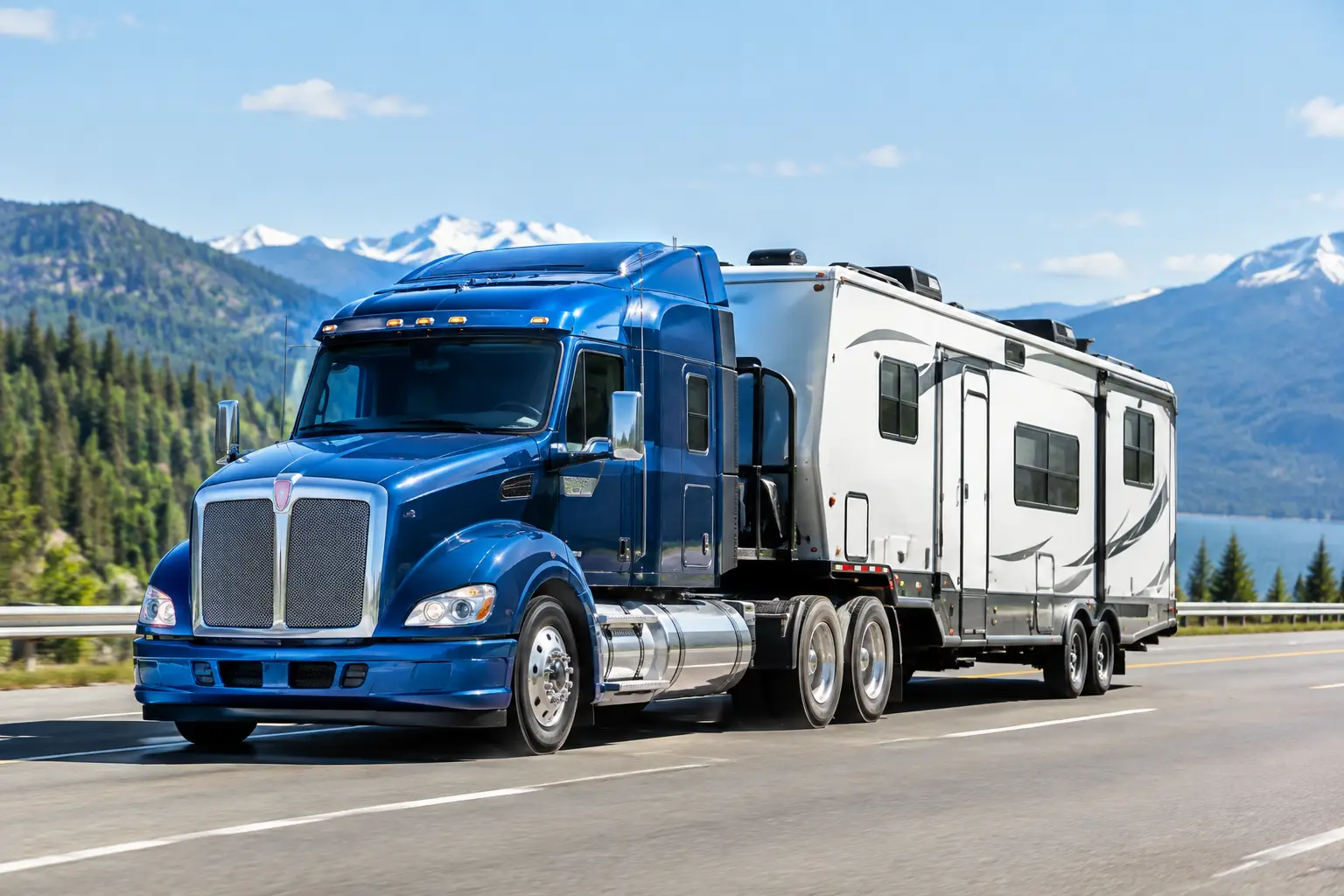
Buying a travel trailer or fifth wheel is supposed to create more freedom, not leave you planning fuel stops, mountain grades, ferry schedules, and tight turns in an unfamiliar rig. The best reasons to hire RV transport come down to a simple fact: moving a large towable RV is a specialized job, and you do not have to do it yourself to enjoy owning one.
For a dealer pickup, a seasonal move, a service appointment, or a relocation across Western Canada, professional transport can save time, reduce risk, and keep the trip from becoming the hardest part of RV ownership.
What Are the Best Reasons to Hire RV Transport?
1. You can avoid buying a heavy-duty pickup
A properly matched heavy-duty pickup is a major expense, and the purchase price is only the start. There is also insurance, maintenance, tires, fuel, parking, and the reality that a large truck may not fit your everyday life. If you only move your RV a few times a year, owning that equipment may not make financial sense.
Professional RV transport lets you keep the SUV, crossover, or personal vehicle that works for your daily needs. Your trailer or fifth wheel can be delivered to a campground, storage facility, dealer, service center, or seasonal site without forcing you into a truck purchase just to make a handful of moves.
This is especially useful for new owners who bought the right RV for their family but did not want the added cost and responsibility of a dedicated hauling setup.
2. Experience matters on grades, in traffic, and at fuel stops
A large RV changes the way every part of a trip has to be planned. Grades require proper speed control. Wind, rain, construction zones, and busy highway traffic demand more room and more attention. Fuel stations have to be selected for access, not just price. One poor turn can put a long trailer in a difficult position.
An experienced transport operator understands how a towable RV behaves on the road and plans accordingly. That does not mean every route is easy, but it means the person moving the unit is prepared to manage its length, height, weight, turning radius, and hitch requirements.
For owners who have little towing experience, this can be the difference between enjoying the RV at the destination and spending days worrying about getting it there.
3. You get your time back
A long-distance RV move can consume an entire weekend or several days. You may need to arrange pickup, map suitable fuel stops, work around weather, coordinate campground check-in times, and then find a way back home. If the destination is on Vancouver Island, ferry timing adds another layer of planning.
Hiring transport separates the RV move from your own travel plans. You can drive your personal vehicle, fly if appropriate, meet the unit at the destination, or simply focus on work and family while the logistics are handled. For seasonal campers, that extra time can be better spent opening the site, stocking supplies, and getting ready to use the trailer.
The value is not just the driving hours. It is the planning, loading checks, route decisions, arrival coordination, and return-trip logistics you no longer need to manage alone.
4. A professional move can reduce preventable damage risks
Travel trailers and fifth wheels are valuable, and they are not forgiving when setup or handling is rushed. Proper hitching, breakaway equipment, tire condition, lights, landing gear, and secure exterior compartments all matter before the RV begins moving. So does choosing a route that suits the unit.
Professional transport is not a guarantee that nothing unexpected will happen on the road. Weather, road closures, and other drivers are factors no one controls. But using an operator with relevant towing experience, proper licensing, and insurance gives you a far better foundation than guessing your way through a first major move.
Before booking, ask clear questions about the unit’s length, weight, pickup condition, destination access, insurance coverage, and any equipment or site limitations. Good information upfront helps prevent problems later.
5. Dealer pickups become much simpler
Many buyers find the right trailer or fifth wheel at a dealership that is not close to home. The unit may be ready before you are ready to travel, or you may not have the equipment to bring it back. Delaying pickup can create storage issues, scheduling pressure, and unnecessary back-and-forth.
A transport service can collect the RV from the dealership and deliver it where you need it. That may be your driveway, storage compound, seasonal lot, or a service location for an additional installation. It is a practical option when the sale is complete but the transport plan is not.
It also gives you time to prepare the destination. Make sure gates are unlocked, site access is clear, and any campground or storage office knows when the unit is expected. A smooth delivery depends on both ends of the trip being ready.
6. Seasonal moves do not have to disrupt your schedule
For many RV owners, the trailer stays at a summer site, gets moved for winter storage, then heads back when the season returns. Those moves can be predictable, but they still demand the same equipment and skill as a one-time relocation.
Professional transport makes this routine easier to manage. Instead of arranging a truck, taking time off, and hoping conditions cooperate, you can schedule the move around site availability and your own calendar. This is particularly helpful when the RV needs to go from a campground to storage, then later from storage to a service appointment or seasonal location.
If your dates have some flexibility, ask about return-haul opportunities. On certain routes, coordinating with an operator’s existing schedule may provide a more cost-efficient option. Flexibility helps, but it should never come at the expense of a realistic delivery window.
7. Difficult destinations require local route awareness
Not every destination is a wide-open RV park with easy pull-through sites. Rural properties, storage yards, campgrounds, ferry terminals, and service centers can all have access restrictions. Low branches, narrow entrances, sharp corners, soft ground, and limited turnaround space can affect whether delivery is straightforward.
Regional familiarity matters here. In British Columbia and Alberta, routes can involve mountain passes, changing weather, busy corridors, and remote destination access. Vancouver Island deliveries also require careful ferry coordination, including the RV’s dimensions and sailing availability.
You can help the process by providing accurate photos and details before the move. Share the unit’s make, model, overall length, hitch type, approximate loaded weight, pickup address, destination address, and anything unusual about access. If the final site is tight, say so early. The right plan is much easier to make before the RV is on the road.
When Hiring Transport Makes the Most Sense
Professional RV transport is not necessary for every owner. If you already have a properly equipped truck, regular towing experience, the right insurance, and a manageable route, moving the RV yourself may be the practical choice. Some owners enjoy that part of RV life.
Hiring makes the most sense when you do not have the right equipment, the route is long or demanding, the destination involves ferry travel, or you simply want to avoid the stress and time commitment. It is also a strong option when the RV needs to move unexpectedly for service, repairs, storage, or a property change.
The key is to treat transport as part of the cost of ownership, not as an afterthought. A clear quote should account for the route, unit size, timing, pickup and delivery conditions, and any special coordination required.
A trailer is meant to take you somewhere worth being. Let the road logistics be handled by people who do this work regularly, then meet your RV where the actual trip begins.
Comments are closed