

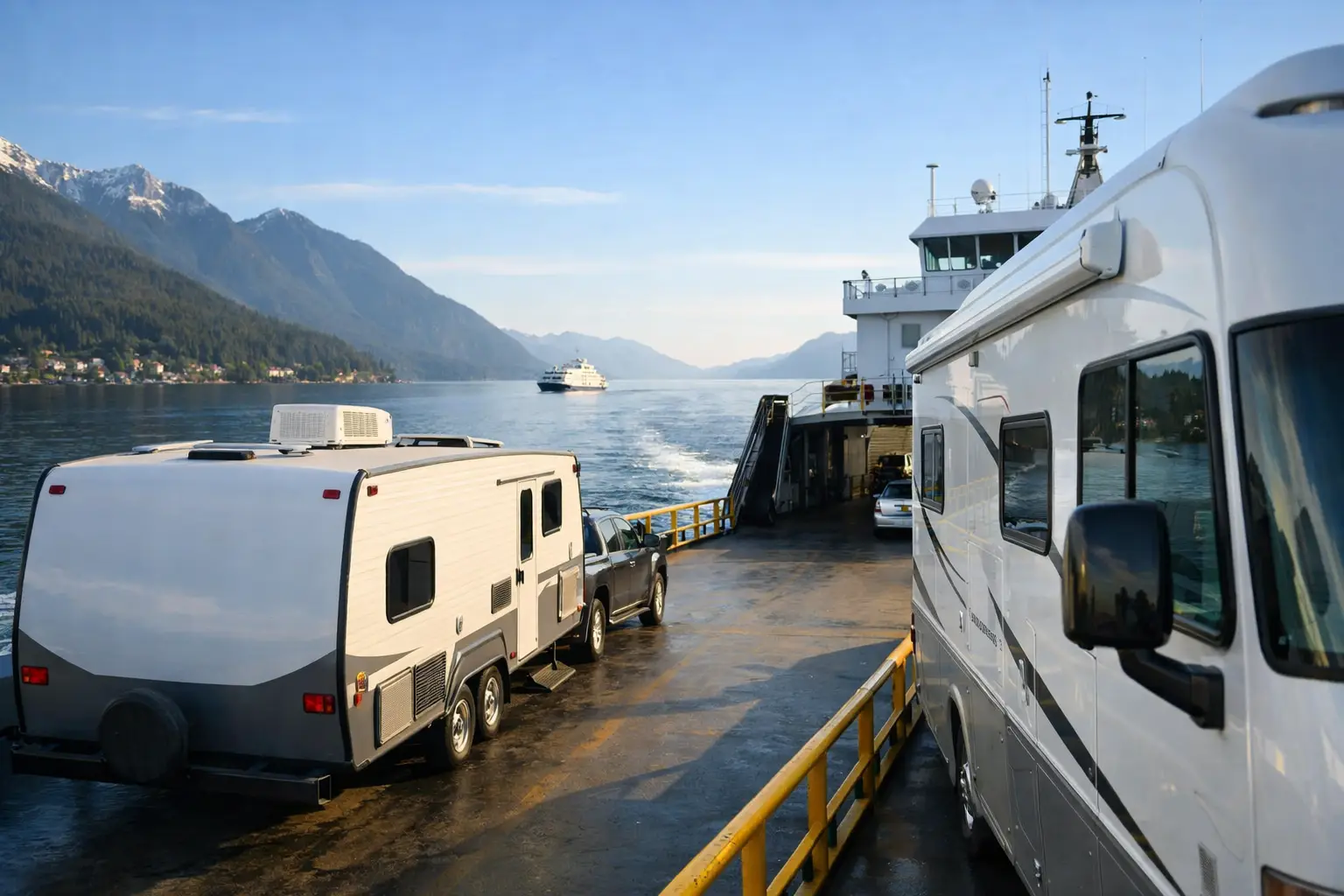
A ferry crossing can turn a straightforward RV move into a job with fixed sailing times, length limits, staging lanes, and no room for last-minute guesswork. This guide to RV ferry logistics is built for travel trailer and 5th wheel owners who need their unit moved safely to or from an island destination without taking on the work themselves.
For many owners, the ferry is the part of the move that causes the most concern. The trailer must arrive at the right terminal, in the correct booking category, with enough time to check in and load properly. A professional RV transport plan handles those details before the rig reaches the terminal, not while everyone is waiting in the lineup.
Why RV Ferry Moves Need More Planning
Ferry operators sell space based on the dimensions of the full combination, not just the trailer. That means the overall length of the tow vehicle and RV matters, as do height, weight, and the type of unit being moved. A 30-foot travel trailer may require considerably more deck space once the tow vehicle is included. A 5th wheel can also have different clearance considerations than a conventional travel trailer.
The right reservation protects the schedule. The wrong one can lead to added charges, rebooking, or a missed sailing if the available deck space does not match the actual rig. This is why accurate measurements are not paperwork details. They are the basis for the entire crossing.
Ferry schedules also introduce a hard deadline. Road construction, weather, traffic near the terminal, and longer fuel stops can all affect arrival time. A transport provider needs enough buffer to get the RV to the terminal without rushing, while still avoiding an unnecessarily early arrival that leaves the driver and equipment sitting for hours.
Guide to RV Ferry Logistics: Start With Accurate Details
Before requesting a transport quote, gather the information that affects the route, equipment, and ferry booking. The RV’s make, model, year, overall exterior length, and height are a good start. Include the dry weight and gross vehicle weight rating if available, along with whether the trailer is loaded for travel.
It also helps to describe the pickup and delivery locations clearly. A dealership with a wide staging area is different from a storage compound with restricted access. A seasonal site may have narrow roads, low branches, soft ground, or a backing challenge at the final pad. Those conditions can affect which equipment is appropriate and how much time the move requires.
For ferry travel, the transport company also needs to know whether the unit will cross one way or require a return move later in the season. Booking both directions is not always necessary, but discussing the return early can help if the schedule is tight or if you are trying to coordinate a seasonal relocation.
Measure the Unit as It Will Travel
Measurements should reflect the RV in travel position. Retract slide-outs, secure awnings, lower antennas where applicable, and account for any racks or accessories that extend beyond the standard body of the unit. If the manufacturer’s listed length excludes a rear ladder, bike rack, or spare tire carrier, that extra space can matter at the ferry terminal.
Height deserves the same attention. Most ferry decks can accommodate common towable RVs, but route restrictions before or after the crossing may be more limiting. Tree-lined access roads, covered storage areas, and certain service entrances can create issues that are not visible on a standard map.
When in doubt, provide photos of the front cap, rear of the unit, hitch area, and any unusual accessories. Good information up front prevents surprises later.
Booking the Right Sailing
A ferry booking should be made under the correct commercial or oversized vehicle category when required. Do not assume a reservation intended for a personal RV trip will fit a professional transport combination. The ferry operator’s rules, vehicle classifications, check-in times, and change policies can vary by route and season.
Summer weekends, holiday periods, and popular move-in dates for campgrounds are especially busy. A sailing that looks available a few weeks ahead can fill quickly, particularly for longer combinations that need more deck space. If your RV has a fixed delivery date, such as a campground opening, service appointment, or possession date for a new purchase, start planning early.
The lowest fare is not always the best choice. An early sailing might require an overnight staging plan, while a late sailing can leave too little daylight for a difficult final delivery. The best booking is one that gives the move enough time on both sides of the water, with a realistic margin for road conditions and terminal procedures.
What Can Change a Ferry Reservation
Reservations sometimes need adjustment because the RV is not ready at pickup, a dealership delivery is delayed, weather affects the route, or the owner changes the destination. Flexibility depends on the ferry operator and the type of reservation. Changes may involve new fares or limited availability, especially during peak travel periods.
A practical transport plan accounts for that possibility. It does not promise that every variable is controllable. It does make sure the owner understands the timing, the reservation requirements, and the options if the original sailing no longer works.
Preparing Your RV for Ferry Transport
The RV should be ready for highway travel before the driver arrives. Loose items inside should be secured, drawers latched, doors locked, and exterior compartments closed. Remove or secure items that can shift in wind, including portable steps, outdoor furniture, and unsecured cargo stored in exterior bays.
Check the tires, wheel bearings, brakes, lights, breakaway system, and hitch components. A trailer that has been parked for months may need attention before a long move, even if it only appears to need a short trip to the terminal. Ferry travel does not reduce the need for proper road readiness on either side of the crossing.
Owners should also make sure the RV has appropriate registration and insurance documentation available. A professional transporter should be properly licensed and insured for the work, but the owner’s RV coverage still matters. If there are special instructions for a warranty, service center, or campground office, provide them before pickup.
What Happens at the Terminal
At the terminal, the driver checks in according to the reservation instructions and follows staff direction into the assigned staging lane. Ferry crews control the loading sequence, lane placement, and deck positioning. The driver must be ready to follow their instructions, including spacing requirements and any limits on access to the unit during the crossing.
Loading an RV onto a ferry is not the time to improvise. The ramp angle, deck surface, traffic flow, and surrounding vehicles require attention. Experienced transport matters here because the driver is managing a long combination in a controlled, busy space rather than an open campground road.
Once parked on board, the unit is secured according to ferry procedures. Owners should not expect to access the trailer during the crossing unless the operator specifically permits it. Pack essential personal items separately if you are traveling independently and may need them before the RV is delivered.
Plan the Delivery Side Before You Sail
The ferry crossing is only one stage of the job. The destination needs a workable arrival plan, particularly on Vancouver Island and other areas where campground roads and residential access can be tight. Confirm the site number, gate code, contact person, arrival window, and whether the location can accept a long RV transport combination.
If the trailer must be backed into a pad, clear the approach and remove obstacles before delivery. Low branches, parked vehicles, loose gravel, and soft ground can turn a routine placement into a delay. For service-center deliveries, confirm that the receiving department knows the unit is arriving and has room to accept it.
This preparation is just as valuable for the return trip. When the season ends, a winterization appointment or storage move may fall during poor weather and reduced daylight. Having the next destination, access details, and preferred ferry timing organized ahead of time makes the move easier to schedule.
When Professional RV Transport Makes Sense
Owners often choose professional transport because they do not want to purchase and maintain a heavy-duty tow vehicle for a few moves each year. Ferry travel adds another layer of scheduling and handling that can make a do-it-yourself move less appealing. You can travel separately in your own vehicle, meet the RV at its destination, and avoid managing terminal lineups with a long trailer behind you.
GoMax RV coordinates towable RV moves with the real conditions of Western Canadian travel in mind, including ferry-inclusive routes when needed. The goal is simple: get the trailer where it needs to be with accurate planning, proper equipment, and clear communication from pickup through delivery.
A well-planned ferry move starts with the dimensions of your RV and ends with a destination that is ready to receive it. Share the details early, allow room in the schedule, and treat the ferry reservation as a key part of the transport plan rather than an afterthought.
Comments are closed